The Cryogenic Society of America and Cold Facts celebrates distinguished women who embody the expertise and drive that is putting cryogenics and superconductivity at the forefront of energy, aerospace, quantum, and myriad other fields of industry. Congratulations!
- Cynthia Annema
- Maria Barba
- Ashley Blasiole
- Dr. Melissa Gooch
- Ioana Craiciu
- Tisha Dixit
- Roza Doubnik
- Patricia Jovičević-Klug
- Hanna Krueger
- Sukanya Sagarika Meher
- Cassie Kirkconnell Smith
- Dr. Wenjuan Song
- Eve M. Vavagiakis
- Izzy Yeomans
- Zhuo Zhang
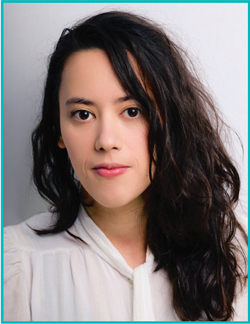
Cynthia Annema
Researcher, University of Twente
What projects are you working on now?
I am developing an affordable small-scale hydrogen liquefier. Currently, the main focus is on the conversion of orthohydrogen into parahydrogen using hydrous ferric oxide catalysts.
What accomplishments are you most proud of?
I started working in January 2023, after I finished my master’s assignment in the same research as I am working on right now. Therefore, I haven’t made any great accomplishments yet, but I feel this creates a space for accomplishments to come.
What advancements in cryogenics are you hoping to make in the future?
I hope to achieve a great innovating breakthrough in our research in the liquefaction of hydrogen with our research team. However, it is hard to say because I have been working on it for a short amount of time. I believe personal, professional and intellectual growth is gained during every project I’m working on now and projects I hope to work on in the future. Another goal I would like to achieve is to bring more recognition to cryogenics and all other STEM fields, and to show that with a bit of creativity and a fresh view on projects, the greatest achievements can be made.
What advancements for women would you like to see in the industry, and what is the best approach to attracting more women into the field?
Representation from highly motivated women that can show their motivation and hard work to other girls and women is key, but also promotion for the cryogenics and superconductivity fields, in general, is an important component to drawing more women into the field. To be honest, I didn’t know a lot about our industry, and I found a course about it accidentally. However, it was the best mistake I made during my studies. Luckily in our research group, the number of highly motivated women increases every year. Even if some are just students, like I was a year ago when I did my master’s assignment in this research group, female representation and just pure “girl power” from an associate professor motivated me, and possibly such choices will motivate other women to continue to work in and join the field of cryogenics and superconductivity.
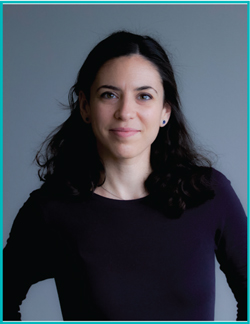
Maria Barba
Ph.D. in Cryogenics, cryogenic engineer, Fermi National Accelerator Laboratory (Fermilab)
What projects are you working on now?
The field in which I work is performing cryogenic operations and engineering support in two large cryogenic facilities. One facility is used to test cryomodules for particle accelerators such as SLAC and PIP-II. The other facility supports several testing systems going from superconducting magnets for the HiLumi project at CERN to superconducting cavities for several applications including accelerators, fundamental materials research and quantum technologies.
What accomplishments are you most proud of?
Either at the end of my Ph.D. or the end of my Post-Doc, after a few years working on each experimental test stand, it was a pleasure to realize all the work done when summarizing everything in a final writing or transferring your knowledge to the next student. When you realize that you know every single inch of your experimental facility, every type of sensor, and when you recognize every single noise of your entire system, and you know every weak point, mastering the whole system is fascinating. The main challenge is always related to the equipment and the applications: dealing with expensive and complex equipment (and, moreover, cryogenic fluids!) while trying to push different technologies to their limits.
What advancements in cryogenics are you hoping to make in the future?
My Ph.D. and postdoctoral experiences were both in cryogenics, the first one focused on cryocoolers to cool HTS and the other focused on liquid argon detectors. Now I am working on large-scale helium refrigeration systems, a completely different topic but still in cryogenics, which shows the large variety of the field of low temperatures. With this new position, I hope in the coming years to have solid experience in large scale cryogenic systems. New scale, bigger systems, new challenges!
What advancements for women would you like to see in the industry, and what is the best approach to attracting more women into the field?
Creating a large and accessible community of women in cryogenics and superconductivity, communicating and discussing frequently and exchanging different ideas, will probably help in finding new ways of communicating to the general public about our jobs and the transfer of our passion to the next generations of girls. Motivating and stimulating little girls since the very early stages, not only in cryogenics and superconductivity, but in any engineering field is key. How can you get curious about how a plane flies if you never played with a miniature one when you were a child?
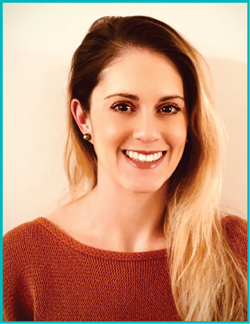
Ashley Blasiole
Operations Engineer, Commonwealth Fusion Systems (CFS)
What projects are you working on now?
My current projects are building up, developing and implementing operational processes for SPARC, projects that specifically include the superconductive magnets and cryo-distribution systems.
What accomplishments are you most proud of?
My professional accomplishments include developing the CONOPs and outlining the operational modes for superconductive magnets and cryo-distribution systems for CFS; sitting as a launch conductor for two successful launches, most notably: Straight Up Launch, where I acted as the responsible engineer for the power, RP1 and service (helium, nitrogen, liquid nitrogen, compressed air and water) subsystems of ground support equipment; and developing the novel methodology for testing benzo[b]furan in smoke tobacco products.
What advancements in cryogenics are you hoping to make in the future?
For future cryogenics, I hope to run and optimize the cryo system for our tokamak successfully where we reach our objective of Q >1. I would like to make the cryogenic system more robust, reduce complexity and create optimized operational functionalities for all future tokamaks. One of the most important factors for superconductive magnets inside a tokamak is maintaining cryogenic temperatures across the system. Achieving temperature gradients can be operationally challenging for large systems, being able to pull concepts and knowledge from my past experiences and streamline SPARC for future tokamaks.
What advancements for women would you like to see in the industry, and what is the best approach to attracting more women into the field?
I would like to see more women publicly recognized for their achievements in the fields of cryogenics and superconductivity. I want to be a part of an all-women controls and operational team, recognizing the women who design, test and build controls systems, fluid systems and superconductive magnets. I want to see more women recognized for being successful at work and at home. Advancements start with changing the narrative on who can be an engineer, scientist or technician and by diversifying and supporting the talent already in the field.
One of the most challenging concepts as an adult woman in STEM has been redefining the bias centered around women in STEM. I have been fortunate enough to have female influences in my family who have helped pave the way for my achievements, including my grandmother who started as a draftswoman during a time when this wasn’t favorable. Throughout my career, I have encountered challenges without having supportive mentors, hands-on experience, encouragement and resources. To redefine the bias for women in a control room, in a laboratory or any field where representation is lacking, requires outreach. Outreach can be programs for underprivileged areas, science and engineering camps, social media, podcasts, or any outward facing platform that focuses on all-encompassing groups in STEM. Creating a new narrative should start at home, but society should focus on redefining what the future will look like, and that is the responsibility we all have.
Dr. Melissa Gooch
Research Associate 2, The Texas Center for Superconductivity at the University of Houston

What projects are you working on now?
These are constantly evolving but consistently there is always the characterization of new superconductors and novel magnetic materials as well as the in-depth characterization of existing materials through thermodynamic, resistivity, magnetic and pressure-dependent measurements.
What accomplishments are you most proud of?
Graduating on time, followed closely by appearing on NOVA in David Pogue’s series: “Making it Colder” were accomplishments I am grateful for every day. Graduating on time was a challenge for two reasons, with the biggest hurdle occurring in my personal life as my husband suddenly passed away two years into my graduate program, and the second, finding a research project that would lead to a successful dissertation. Both challenges not only added to the hardships of going to graduate school, but in many ways, gave me a unique set of skills that have allowed me to successfully tackle a variety of difficult problems not only in my personal life but also in the lab as my career has advanced.
With that said, I wish I could say that all my mentors and colleagues helped advance me throughout my career. Many did not. I understand that opportunities for women have greatly improved, but sadly, I know many have encountered problems and barriers that ultimately resulted in having them leave research and sometimes science altogether. I fought so hard to get my degree that it is important to me, personally, to stay active in science. I feel it is my duty to help others see they can also be a scientist and even get their Ph.D.
What advancements in cryogenics are you hoping to make in the future?
I am excited to be part of the future with all the new cryo-free systems that are coming onto the market. The problems of obtaining adequate quantities of liquid helium for our low temperature measurements of superconductors and novel magnetic systems have been challenging.
What advancements for women would you like to see in the industry, and what is the best approach to attracting more women into the field?
Hiring equality that is based on experience rather than gender is important. I have personally experienced this throughout my career, and I know my fellow colleagues have as well. It would be an amazing start if we were all given the same opportunities as our male counterparts. More of us in positions across the board is number one. I feel in my industry there are so few women that it makes it very difficult to convince new students to even try to start an advanced degree, let alone make a career out of it.
I started my career as a professional ballerina. My mother wanted us to have art in our lives. Growing up with a father who was a research chemist and a classical organist, I was always encouraged by his example. When injuries necessitated that I pursue another path, I obtained an associate’s degree in music production from Houston Community College. The chemistry professor at HCC suggested that I transfer to the University of Houston, and I actually enrolled as a computer science major. I quickly determined that was not my cup of tea and enrolled in physics. Two professors influenced my decision to obtain my undergraduate degree in physics, and another student in Dr. Paul Chu’s group and I became friends. Stephen Tsui, now a professor at Cal State San Marcos, convinced me to join Dr. Chu’s group. I received my Ph.D. in 2010…and on schedule!
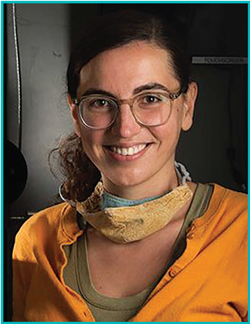
Ioana Craiciu
Postdoctoral Scholar, NASA JPL
What projects are you working on now?
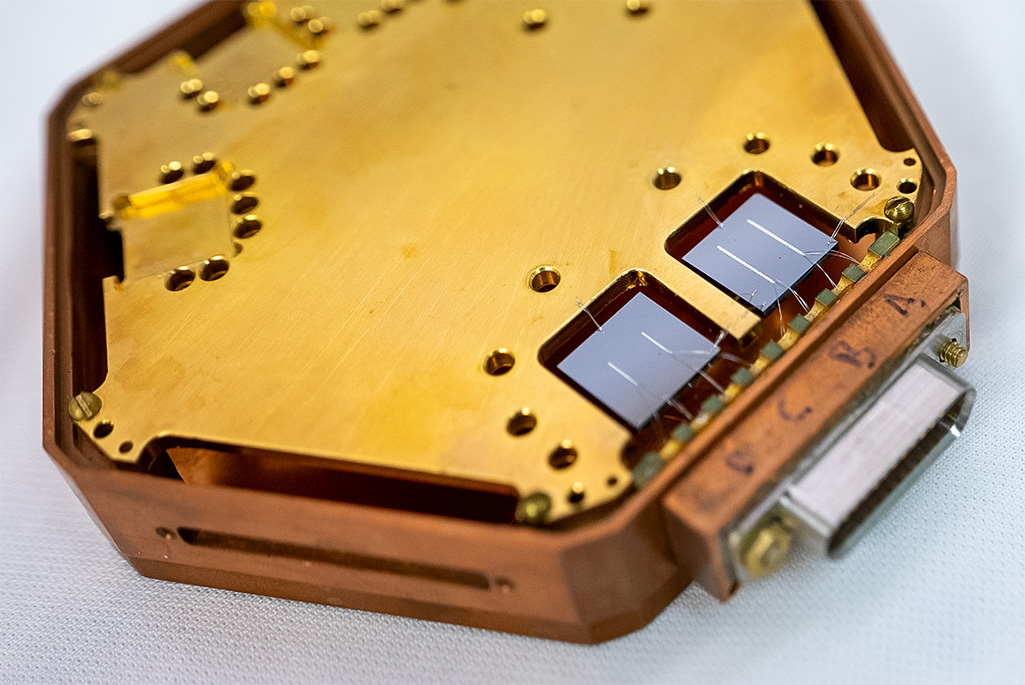
I work on optimizing superconducting nanowire single photon detectors (SNSPDs) for quantum communication and quantum information. We are currently working towards building a ground-based receiver for quantum communication. This is a cryostat which uses a pulse tube and sorption cooler to reach a base temperature of 1 Kelvin, in which we will install multiple Performance-Enhanced Array for Counting Optical Quanta (PEACOQ) detectors and cryogenic readout electronics (featured in this issue of Cold Facts). We are also working on improving the PEACOQ detector design. We would like to increase its efficiency, characterize and improve the photon number resolution of the detector and decrease the system timing jitter. These improvements will boost data rates and reliability in quantum communication demonstrations.
What accomplishments are you most proud of?
I am only one of eleven authors on our recent manuscript describing the PEACOQ detector, and while I am definitely proud of my contribution to that work, I am also very proud of all of my colleagues who contributed. There’s a lot of talent among them. Another source of pride has been mentoring younger scientists and seeing them take off in unexpected and exciting directions. I’m also proud that I got my Ph.D., and I’m pretty proud that I unofficially ran a marathon during the pandemic.
What advancements in cryogenics are you hoping to make in the future?
Such a big question! For the near future, I’m excited to work on superconducting nanowire single photon detectors, and seeing what new applications we can enable by improving their performance across several dimensions, like efficiency, count rate, timing resolution and photon number resolution. This technology is only about 20 years old, and already so much has been demonstrated. SNSPDs are now commercially available, and they have made their way into research labs around the world. However, there is still not one SNSPD detector that can do it all. There are tradeoffs between active area and timing resolution, between sensitivity and maximum count rate, and there are areas where SNSPDs still need development, like readout for large arrays. There is still a lot of work to be done.
What advancements for women would you like to see in the fields of cryogenics and superconductivity?
One of the things I love most about my job is the people with whom I work every day. They have some important things in common, such as inquisitive minds and a willingness to work hard, but mostly they are very different from one another and contribute to our work in unique ways. I hope that people of all kinds, including women, can choose a career as a scientist or engineer in cryogenic technologies because it’s the opportunity to solve problems with a diversity of minds, personalities and perspectives that makes the job wonderful.
What would be the best approach to getting more women into your field?
The barriers women have to overcome to be part of a field like cryogenic technologies have become smaller over the years, and I have hope they will become smaller yet. The next generation of scientists, boys and girls, have grown up with many female role models in STEM roles, and I think that will make a big difference. One area that still needs a lot of work here in the US is support for families. Women are disproportionately affected by this because they are often the primary caregiver for children. This can lead women to choose careers based not on their ability or affinity for the work, but based on the work schedule. For example, in many states, new parents have only three months of leave, and yet the CDC recommendation is that infants breastfeed exclusively for six months. For jobs that require you to physically be in a lab, that equation just doesn’t add up.
Tisha Dixit
Research Engineer (Physical Measurement and Cryogenics), Ph.D., French Alternative Energies and Atomic Energy Commission (CEA), Paris-Saclay Centre, France

What projects are you working on now?
I am currently engrossed in the investigative studies of cryogenic pulsating heat pipes (PHPs). Experimental investigation of cryogenic PHPs is presently conducted by only a handful of research groups around the world. At the Laboratory of Cryogenic Test Stations (LCSE) of the Department of Accelerators, Cryogenics and Magnetism (DACM) within the Institute of Fundamental Research of the Universe (IRFU) at CEA Paris-Saclay, we have developed a multi-objective experimental test rig for this purpose. We have the ability to experimentally characterize cryogenic PHPs of varying physical dimensions such as length ranging from several centimeters to a few meters, different capillary diameters and various cryofluids. Our recent design includes development of a nearly half-meter-long, 18 W class neon PHP.
What accomplishments are you most proud of?
Thanks to the opportunities I have received along my career path, I am proud to be a hands-on experimentalist. Slightly more than a decade ago, after completing my bachelor’s in mechanical engineering, I joined the field of cryogenics by happenstance. This unique domain captivated my interest such that not only my master’s, but I even pursued my doctoral research in cryogenic engineering from the Cryogenic Engineering Centre, IIT Kharagpur, India. My doctoral supervisor, Dr Indranil Ghosh, molded me with theoretical, computational and mainly experimental abilities. I observed myself to be most absorbed while materializing a concept into apparatus. After joining CEA, I have gained the real skill sets to call myself a cryogenic experimentalist. The credit goes to my current mentor, Dr. Bertrand Baudouy, and an extremely knowledgeable team of cryogenic engineers and technicians. I am happy to stand out as a female cryogenic experimentalist in this advancing digital age.
What advancements in cryogenics are you hoping to make in the future?
The goal of my current research on cryogenic PHPs is to employ these as thermal links to cool high temperature superconducting (HTc) magnet using a cold source (cryocooler in our case). For this purpose, a customized 10 T demonstrator magnet is under development at our associated Laboratory of Superconducting Magnet Research (LEAS) within DACM. Spearheading a team of seven engineers and two technicians, we are in the process of amalgamating the two technologies. It has been challenging as the successful implementation involves addressing several complexities. Nevertheless, this advancement – that has been developing for the last few years – will play a crucial role in next-generation HTc magnets. In parallel, I will continue conducting in-depth research on cryogenic PHPs with the aim to expand their deployment in space applications and clean technologies (for instance, hydrogen PHPs).
What advancements for women would you like to see in the fields of cryogenics and superconductivity?
Numbers-wise, women constitute less than 10% (perhaps even less) of the total cryogenic and superconductivity fraternity. This can be seen during the cryogenic conferences or in cryogenic laboratories and industries around the world. An attempt is necessary to increase this percentage. This could be achieved by having more women join as core professors and researchers in cryogenics and superconductivity laboratories, who can, in succession, mentor more women. Industries could offer their support to encourage women entrepreneurs wanting to expand their business acumen in this field. We recently celebrated our first woman head of LCSE. It would be inspiring to see more examples of such “cryogenic women” in executive roles as well.
What would be the best approach to getting more women into your field?
We must initially start by identifying all the women associated in this field around the world. This statistic is essential for creating inspirational cryogenic women role models. Second, we should reach out to the young minds at the undergrad and graduate level. At CEA, we frequently host educational visits from students who are awestruck not just by the cryogenics, magnet and accelerator test facilities, but also at the sight of liquid nitrogen and levitation train demonstrations.
However, one hindrance attached to this field is that the job opportunities are scarce location-wise. Some women choose to leave cryogenics at this stage to retain work-family balance. And this is where the need of progressive men arises, that ideally must begin at home. For instance, my husband has broken all norms while unconditionally supporting and appreciating my cryogenic career, to the extent that we both work in different countries. My current mentor is a true follower of feminism. I have been encouraged by a male junior to submit my candidature for this feature. Acceptance by men is crucial for women to work professionally at par. I believe that the work environment is steadily evolving to welcome more women. Recently, the option of teleworking – that was unimaginable for an experimentalist before the pre-covid era – is an added boost, especially for women to balance both professional and personal lives.
Roza Doubnik
Ph.D., Senior Mechanical Engineer in the Cryogenics Group, Fermi Research Alliance, LLC. FRA manages Fermi National Accelerator Laboratory (Fermilab) for the US Department of Energy’s Office of Science

What projects are you working on now?
I work in the Far Detector and Cryogenics subproject of LBNF/DUNE-US, supporting the international Deep Underground Neutrino Experiment (DUNE), a mega-science high energy physics project hosted by the US Department of Energy’s Fermi National Accelerator Laboratory. The cryogenics infrastructure will support the first two 17.5-kiloton liquid argon mass detector modules. The scale of the LBNF/DUNE-US project is uniquely large, and a sizable portion of the equipment is in a mile underground in Lead, S.D. It is an interesting challenge for engineers, designers, scientists, project managers, administrative support, and technician specialists in cryogenic, mechanical, electrical, control and other fields from more than 30 countries to collectively participate in the installation process. I develop engineering drawings, documentation, calculations, cost estimates and specifications for proximity and infrastructure cryogenics, that will be located on top of and inside the cryostats, respectively. Additionally, I act as a point of contact for colleagues from Brazil, providing support, information and communication.
What accomplishments are you most proud of?
I was central to the successful pressure testing of the two cryostat vessels, installation of the cryogenics system, and operation of the ICARUS liquid argon neutrino hunter experiment at Fermilab. The ICARUS collaboration is investigating signs of physics that may point to a new kind of neutrino called the sterile neutrino. The challenge was effectively collaborating during the pandemic with remote contributors, who had limited access to their local university or to Fermilab. The pandemic also extended delivery time for cryogenics equipment and caused shortages in the supply chains for the test experiment, and it limited the availability of people to perform hands-on work in person. It took longer than initially planned to accomplish the test and get the results.
What advancements in cryogenics are you hoping to make in the future?
The advancement in cryogenics I see will be in the size of the equipment, all custom made. The largest prototype is 760 tons of liquid argon vessel, and by comparison these cryostats will be 17,500 ton. The filtration system will be uniquely large, suitable to purify the volume of cryostats. And the elevator to the shafts has limited dimensions, creating a challenge to deliver it underground and install, pressure test and operate it.
What advancements for women would you like to see in the industry, and what is the best approach to attracting more women into the field?
I would like to see more opportunities, challenges and support for young professional women to start and grow careers in cryogenics. Getting more women in the cryogenics field is achievable via outreach, starting with middle and high school, and continuing into college via social media activity by young professional women in the field. I would love for women to get an exciting perspective of the social life, support and a sense of community in the workspace, like what we have at Fermilab. I also recommend recruiting talent at Society of Women Engineers annual conferences and similar events.
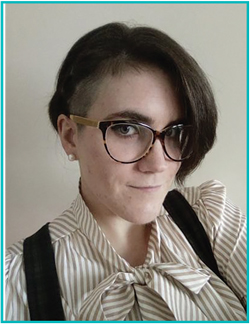
Patricia Jovičević-Klug
Guest Researcher (Ph.D. in Nanosciences and Nanotechnology), Max-Planck-Institute for Iron Research, Düsseldorf, Germany-EU
What projects are you working on right now?
I am currently working on my own project, funded by the Alexander von Humboldt Foundation. In this project I am researching how cryogenic treatment of metallic materials can be used in applications for energy sector.
What accomplishments are you most proud of?
I am proud of all my work that I am conducting now and that I conducted during my Ph.D. When I started with my Ph.D., the biggest challenge was that I was the only one left in the given project. This required me to not only plan and organize my measurements for my doctoral research, but also for the whole project, which was planned for five people. Despite that, I pushed my own ideas and myself (where possible) beyond the set limitations.
What advancements in cryogenics are you hoping to make in the future?
I would like to successfully implement cryogenic treatment for the applications in the energy sector and to provide guidelines for its applications. I would also like to make advanced in-situ measurements of cryogenic treatment, which will probably ch