Stanisław (“Stan”) was my mentor, business partner, and dear friend. He was a distinguished colleague, a visionary trailblazer, and a true leader in cryogenics. Stan played a pivotal role in the Cryogenic Society of America as Director of International Affairs and Board Member, and he served as VP-USA for the International Institute of Refrigeration, Commission A1/2, Cryophysics and Cryoengineering. He opened up a whole new world—and mindset—for me. Stan always advocated for using cryogenics in ways that were productive and beneficial for the human being.
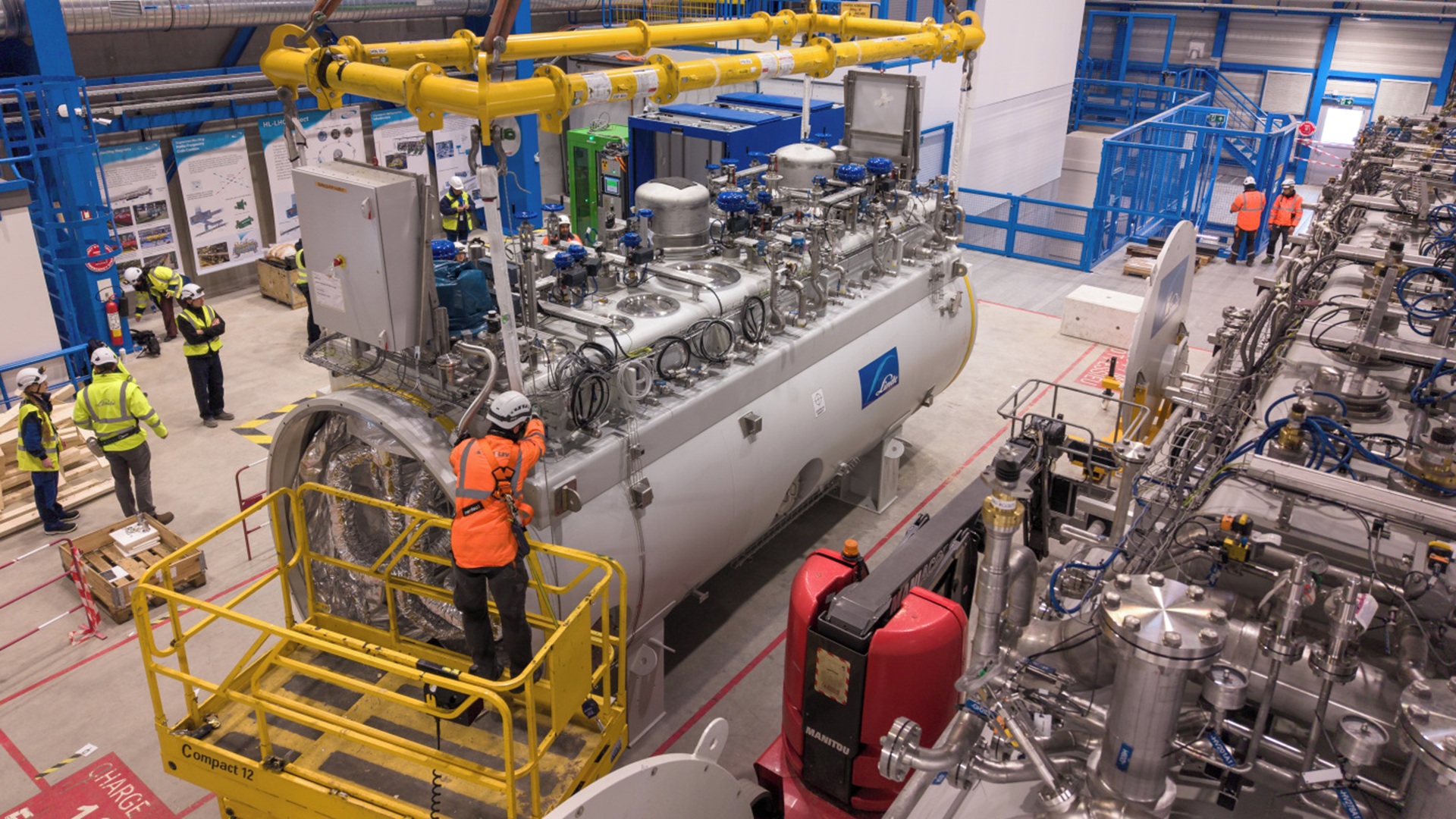
Together, we founded the Cryogenics Test Laboratory (CTL) at NASA’s Kennedy Space Center in 1997, with an official ribbon-cutting in 2000 by then-Center Director Roy D. Bridges [see Cold Facts, N36, N2]. Stan’s decade of cryostat invention and thermal insulation systems testing at CTL laid the groundwork for new technical standards under ASTM International. He also contributed to problem-solving efforts during the Space Shuttle Return-to-Flight mission, following the tragic loss of Columbia in 2003 due to a piece of cryogenic foam insulation breaking off the External Tank. Stan authored more than 230 publications, articles, and patents.
Stanisław Dyonizy Augustynowicz was born in Warsaw, Poland, on May 8, 1932, the only child of Ludwik and Stanisława (Zygmuntowicz) Augustynowicz. The family owned a furrier shop and lived a comfortable life until the Nazi occupation. In 1942, Ludwik was arrested for harboring a Soviet paratrooper and was ultimately executed. Stanisław and his mother remained in Warsaw, surviving its near-total destruction in 1944 as punishment for the Warsaw Uprising. They were rounded up for transport to the Dulag 121 transit camp but managed to escape from the train into the surrounding woods after his mother bribed a guard with her gold jewelry.
After the war, Stanisław’s mother reopened her fur shop in Łódź, and they later returned to Warsaw. Stanisław graduated in 1951 from the Prince Józef Poniatowski State Secondary School and went on to study at the Warsaw University of Technology, eventually earning a Ph.D. in cryogenic engineering from Wrocław University of Technology. He married Barbara Wielgomas in Warsaw in 1958, and their daughter, Karolina, was born in 1976.
In 1981, the family came to the U.S. for a short cultural exchange program, with Stanisław working at Frigitronics in Connecticut. Soon after they arrived, martial law was declared in Poland, and the family decided to stay. Stan’s career took the family across the U.S.: Ansonia, CT (Frigitronics – cryosurgical probes); Charleston, SC; Nashua, NH; Bethlehem, PA (Union Carbide – deployment of Polarstream refrigerated trucks); Mountainside, NJ (Cryodynamics – R&D Manager, medical refrigeration, 1986–88); Chicago, IL (Fermilab and Liquid Carbonic – Senior Testing Project Engineer, 1989); Waxahachie, TX (Superconducting Super Collider – Senior Mechanical Engineer, 1990–94); and New Prague, MN (MVE Inc. – Senior Engineer and leader in thermal insulation systems and vacuum, 1994–98).
At NASA/KSC on Florida’s Atlantic coast—where he capped off his remarkable career—is where I had the privilege of knowing and learning from Stan for ten years. A joint industry development program with MVE (now Chart Industries) under a Space Act Agreement was instrumental in launching the CTL. Together, we built it under the theme of Energy Efficient Cryogenics – on Earth and in Space, designing and testing cryostats and thermal insulation systems of all kinds, producing extensive data libraries, standard designs, patents, and publications. Upon being awarded five patents, Stan received the Gold Dollar ACE Award from Roy Bridges. He also represented the U.S. State Department in monitoring cryogenic projects supported by Russia.
Stan’s wife Barbara passed away in 2000, shortly after attending the CTL ribbon-cutting ceremony. In retirement, Stan settled in Mississauga, Canada, among the Polish community, and took up building PCs as a hobby. He passed away on October 23, 2024. He is survived by his daughter Karolina (Ben) King and grandchildren Baxter and Beatrice, as well as his second wife, Zofia Sochacka—the mutual friend who had introduced him to Barbara decades earlier.
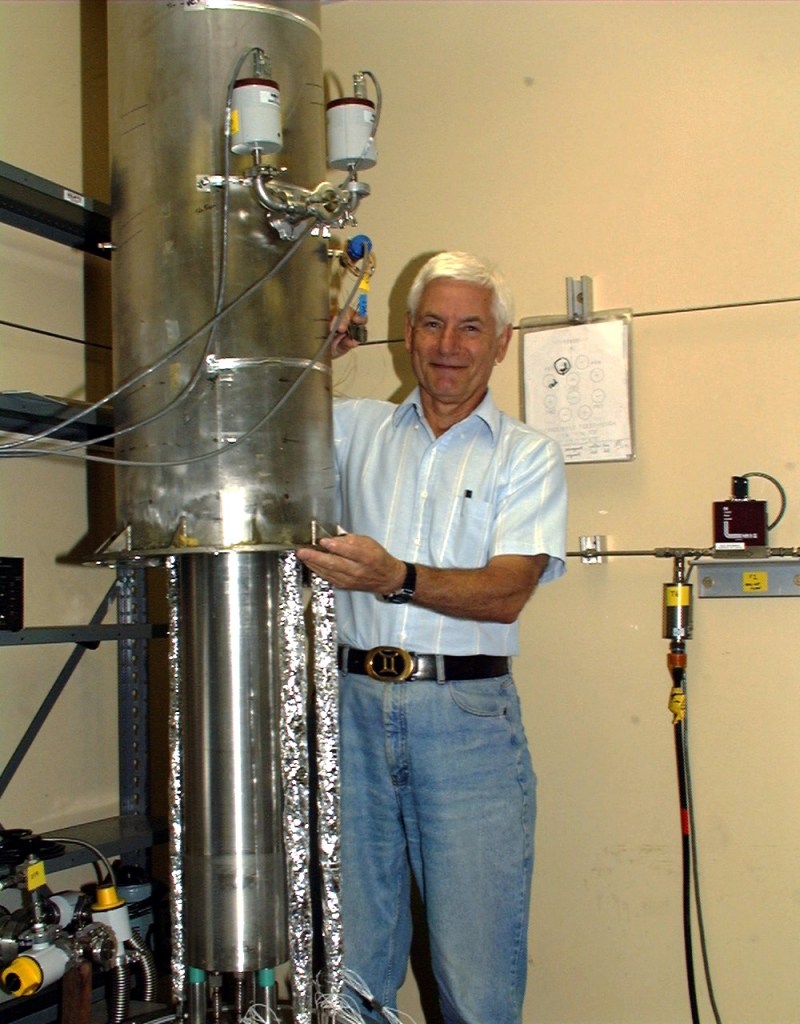
Stan’s scientific grounding was matched by his practical insight and ability to inspire action. He had a gift for turning vision into real-world problem-solving. His hands-on approach is evident in the selected photos included here. Among his many sayings—both in Polish and their English equivalents—one stood out: “Don’t just talk about it but do something with your two hands connected to one brain.” It was a call to action: have vision and start with yourself and your environment as your first resource. One of our lab mottos grew from that: “Don’t just talk about it—do something. Don’t just do something—think about it.”
And my personal favorite, especially for adapting to change: “Only a cow doesn’t change its mind.”
- by James Fesmire, President, Energy Evolution LLC