by Prachi Patel
Materials advances in the past decade have led to key breakthroughs in fusion energy. The past five years have seen the launch of numerous start-ups and a surge of investment into the long-sought clean energy source. Whether fusion becomes viable in the next decade depends on continued materials innovation and consistent financial support.
It all began in 2012 when Dennis Whyte, a professor at the Massachusetts Institute of Technology, challenged his fusion engineering students to design a reactor using a new class of high-temperature superconductors (HTSs). These materials could conduct electricity with zero resistance at more practical temperatures, enabling the creation of powerful, compact magnets capable of sustaining fusion reactions.
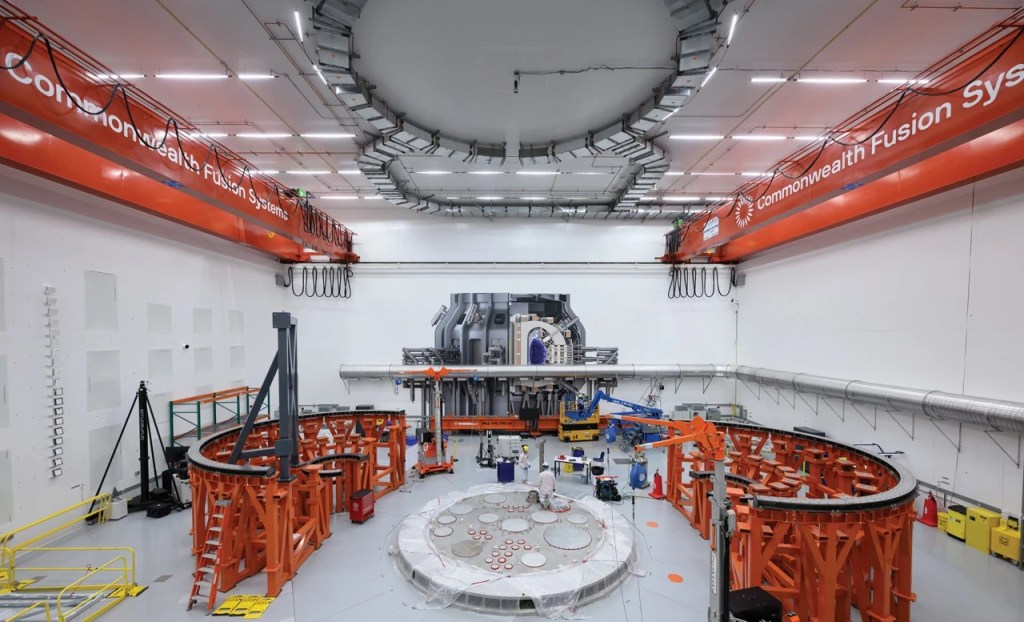
The resulting concept, a smaller and more cost-effective tokamak reactor, led Whyte and his team to found Commonwealth Fusion Systems (CFS) in 2018. Within three years, CFS demonstrated a record-breaking magnet with a 20-tesla field strength—strong enough for fusion reactors. The start-up has since raised nearly $3 billion in capital, with plans to switch on its SPARC demonstration reactor in Devens, Massachusetts, by 2026. CFS also signed major deals with Google and Eni for future fusion power generation.
Over 50 fusion start-ups are now active worldwide, with five planning test reactors before 2030. In 2022, scientists at Lawrence Livermore National Laboratory (LLNL) achieved ignition—producing more fusion energy than the input—via laser confinement. Advances in superconductors and laser technology have pushed fusion closer to practicality.
Key Concepts in Fusion Energy
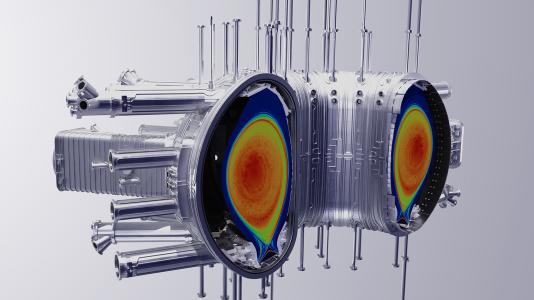
Fusion, the process that powers the Sun, involves fusing light atomic nuclei—typically hydrogen isotopes deuterium and tritium—at extreme temperatures exceeding 100 million °C to form helium and release vast energy. Two major methods exist for confining the plasma necessary for this process: magnetic confinement, using superconducting electromagnets in doughnut-shaped tokamaks, and laser confinement, which relies on intense, synchronized laser pulses.
New materials are essential to managing the intense radiation, heat, and plasma conditions inside reactors. The first wall of a reactor, which directly faces the plasma, must withstand extreme stress and temperature. Researchers are experimenting with tungsten composites, high-entropy alloys, and ceramic compounds such as silicon carbide and hafnium nitride.
Behind this wall, the breeder blanket—which both breeds tritium fuel and transfers heat—requires further innovation. Candidate materials include lithium-lead alloys, lithium ceramics, and molten mixtures like FLiBe (lithium fluoride and beryllium fluoride).
Building the Materials of the Future
Commonwealth Fusion Systems’ use of yttrium barium copper oxide (YBCO) tape has transformed magnet design. This flexible, high-temperature superconducting tape enables compact and powerful electromagnets by stacking and winding the material into D-shaped coils, forming the tokamak’s magnetic field structure.
Meanwhile, laser fusion efforts at LLNL’s National Ignition Facility rely on materials like neodymium-doped phosphate glass, fused silica, and deuterated potassium dihydrogen phosphate to handle intense laser pulses and convert light into ultraviolet wavelengths. Achieving ignition in 2022 was made possible by diamond-coated fuel capsules and ultra-pure optical materials.
At Kyoto Fusioneering and Oak Ridge National Laboratory, scientists are developing vanadium alloys and silicon carbide composites to serve as structural materials capable of operating at temperatures exceeding 800–1000 °C.
The Global Race Toward Fusion
Public and private investment in fusion is accelerating. Germany, the UK, Japan, China, and the US have all increased funding for fusion research. The US Department of Energy recently allocated $134 million to public-private fusion programs. China’s rapid construction of fusion devices, such as Energy Singularity’s spherical tokamak, demonstrates the competitive global push.
As fusion development progresses, the materials and technologies created for these reactors may also transform other industries, including MRI systems, wind turbines, and magnetic levitation technologies.
Fusion remains high-risk but carries immense potential. As Yutai Kato of Oak Ridge National Laboratory puts it, “Fusion is still high risk, but an extremely high-reward energy source. If we have a 1% chance of success, we should pursue it.”