ADVERTISEMENT

New Superconductive Materials Have Just Been Discovered

In 2024, superconductivity—the flow of electric current with zero resistance—was discovered in three distinct materials. Two instances stretched the textbook understanding of the phenomenon, while the third defied it entirely. “It’s an extremely unusual form of superconductivity that a lot of people would have said is not possible,” said Ashvin...

WCS Redefines Boundaries in Cryogenics

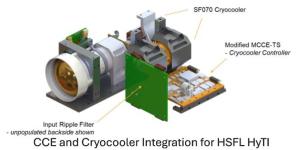
West Coast Solutions (WCS) has experienced remarkable growth since its founding in 2015 by Dr. Carl Kirkconnell. From its origins as a one-person operation, the company has expanded to a team of over 40, 80% of whom are engineers. Anchored by a core group of seasoned professionals—many former Raytheon colleagues—and...

Meet Our New Board Members

As the Cryogenic Society of America moves into an exciting era of innovation and exploration, we’re thrilled to introduce the talented professionals who will help guide our organization forward. This year’s new board members bring a wealth of expertise from diverse sectors within the field, as well as a shared...

CoolCAD Electronics Pioneers Precision in Cryogenic Testing and Modeling

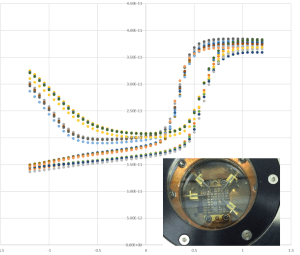
CoolCAD Electronics is a leading provider of electrical test services (current-voltage, capacitance-voltage, noise, transients, etc.) and compact modeling (SPICE) for companies and agencies fabricating and/or designing electronics for low temperature operation. CoolCAD Electronics is a leading-edge company specializing in cryogenic electronics design, testing, and characterization of semiconductor devices operating at...

INFICON’s Cryo Tech Uncovers Volcanic Secrets on Vulcano and Stromboli

Volcanism is one of Earth’s most powerful forces, reshaping landscapes and impacting ecosystems in dramatic ways. To advance the prediction of volcanic eruptions, INFICON GmbH, a leader in measurement and sensor technologies, is partnering with scientists and research institutions to monitor volcanic activity on Italy’s Vulcano and Stromboli islands. This...

Stirling Cryogenics’ World Tour

Given the theme of this issue of Cold Facts, Stirling Cryogenics would like to take you on a tour of our 70-year history, telling about our recent and vintage cryogenerators and systems all around the world. Universities worldwide have been our customers from the very beginning, cheering in the 1950s that...

ADVERTISEMENT

Dewar

A dewar is a type of cryostat named after Sir James Dewar, the researcher who first developed the concept of a vacuum insulated container with silvered walls to reflect thermal radiation. Dewar was the first to liquefy hydrogen, and he created the device to store his discovery. The thermos bottle...

Stirling and Gifford-McMahon Cryocoolers

Stirling and Gifford-McMahon (GM) cryocoolers are two of the most commonly used cryocoolers in cryogenics. Both devices have a significant industrial base and operate at a wide range of temperatures and capacities. The thermodynamic cycles for both of these cryocoolers are quite similar. The Stirling cycle consists of a compressor,...

Liquefied Natural Gas (LNG)

A significant commercial application of cryogenics is the liquefaction, transport and storage of natural gas. Liquefied Natural Gas (LNG) is generally 95 percent methane with a few percent ethane and much lower concentrations of propane and butane. LNG liquefies at 111.6 K. Unlike many applications of cryogenics, the motivation for...

Magnetic Levitation

From http://www.superconductors.org. Magnetic-levitation is an application where superconductors perform extremely well. Transport vehicles such as trains can be made to “float” on strong superconducting magnets, virtually eliminating friction between the train and its tracks. Not only would conventional electromagnets waste much of the electrical energy as heat, they would have...

Superconductivity

From Superpower website. History of Superconductivity Superconductivity was discovered in 1911 by the Dutch physicist, Heike Kammerlingh Onnes when he was able to liquefy helium by cooling it to 4 Kelvin, or -452°F. This enabled him to cool other materials close to absolute zero and investigate their electrical properties. He...

Medical Applications of Cryogenics

Neutron Therapy Cryogenics is at the heart of nuclear accelerators. Accelerators such as Fermilab’s Tevatron make neutron therapy for cancer possible. From Fermilab Today 4/20/09: Fermilab currently offers neutron therapy. But staff at Fermilab designed and built the proton accelerator used by the nation’s first hospital-based treatment center to use...

Nuclear Physics

Al Zeller National Superconducting Cyclotron Lab (NSCL) at Michigan State University zeller@nscl.msu.edu Cryogenics has a long history in nuclear physics. The technology has its origins in the use of cold traps for maintaining a vacuum, which is required to prevent beam loss and for generating high voltages used in acceleration....

Need help with temperature dependent model

I am a fourth-year student at New Zealand University. My name is Xu Ke. I have a project to generate a temperature dependent model for inductor, capacitor and diode by using PLECS. PLECS is software which acts as a toolbox for MATLAB. In my models, the temperature is very low,...

In what form is water available in LN2?

Does anybody know in what form water is available in LN2? There probably is a block of ice in the bottom of the tank. But as water comes in many shapes, I can imagine snow or crystals floating free in the LN2. When water is available in LN2, could small...

Separating gases using cryogenics

We are looking for some consulting engineers who understand how to separate gases using cryogenics. We have a new process which takes biomass and converts it to 5 gases and we need to separate these gases into their pure forms. Thanks for your help. Malcolm Draper Energy Research Group LLC...