ADVERTISEMENT

OPW’s White Paper Inspires New Standard in LH2 Refueling Operations

It’s a fact of life in industrial processing that in order to accomplish “good” things you must sometimes have to work with potentially “bad” things. Such is the case with liquid hydrogen, or LH2. For example, as the industrial world continues to look for new ways to move away from...
NASA’s Hubble, Webb Probe Surprisingly Smooth Disk Around Vega

CSA April Newsletter SponsorHigh-performance, highly reliable, long-lasting storage tanks for transporting hydrogen & helium molecules around the globe.​https://www.gardnercryo.com [Contact Jamie Luedtke for Newsletter Sponsorship] Home About Membership Login Calendar Cold Facts Buyer’s Guide News Publications Cryo Careers Resources Donate Join now Log in Cryogenic Society of America, Inc. Twitter Facebook...

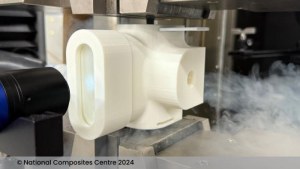
Unlocking Cryogenic Material Behaviour with Novel Cryostat

Multiple cryostats have been developed and released including; microcrack fracture toughness and shear fixtures, with others, such as impact, under development. Understanding properties of materials at cryogenic temperatures is time consuming and costly, with limited existing UK capability. Driving transformational change in the field of cryogenics, the capability introduced by NCC...

TransTech Acquires Cryogenic Technology Resources to Strengthen Cryogenic Gas Solutions

TransTech Group, a portfolio company of Bridge Industries, has acquired Cryogenic Technology Resources (CTR), a provider of engineered solutions for the industrial gas sector. The buy-out aims to strengthen TransTech’s position in the cryogenic and high-pressure gas storage and transfer market, including advanced automation and control technologies. Known for designing, fabricating,...

University of Houston Researchers Awarded New Funding for Superconductivity Project

Researchers at the Texas Center for Superconductivity and the Department of Physics at the University of Houston have received second-year funding from Intellectual Ventures, a global leader in the business of invention, to continue their important study of the retention at atmospheric pressure of high-pressure-induced/enhanced superconductivity. The project, which has...

Researchers Use High-Performance Computing to Break New Ground in Quantum Photonics

For the first time, scientists at Paderborn University in Germany have utilized high-performance computing (HPC) to perform large-scale analysis of quantum photonics, marking a significant step forward in the field. By employing customized open-source algorithms, they conducted quantum tomography on a photonic quantum detector at an unprecedented scale. This integration...

ADVERTISEMENT

Dewar

A dewar is a type of cryostat named after Sir James Dewar, the researcher who first developed the concept of a vacuum insulated container with silvered walls to reflect thermal radiation. Dewar was the first to liquefy hydrogen, and he created the device to store his discovery. The thermos bottle...

Stirling and Gifford-McMahon Cryocoolers

Stirling and Gifford-McMahon (GM) cryocoolers are two of the most commonly used cryocoolers in cryogenics. Both devices have a significant industrial base and operate at a wide range of temperatures and capacities. The thermodynamic cycles for both of these cryocoolers are quite similar. The Stirling cycle consists of a compressor,...

Liquefied Natural Gas (LNG)

A significant commercial application of cryogenics is the liquefaction, transport and storage of natural gas. Liquefied Natural Gas (LNG) is generally 95 percent methane with a few percent ethane and much lower concentrations of propane and butane. LNG liquefies at 111.6 K. Unlike many applications of cryogenics, the motivation for...

Wind Tunnels

Dr. Robert Kilgore The development of the cryogenic wind tunnel is one of many significant breakthroughs in both cryogenics and wind-tunnel technology made during the past millennium. Interest in the development of high-speed commercial and military aircraft resulted in a review of problems of flow simulation in transonic wind tunnels...

History of Cryogenics

From the Fall 1999 issue of Cold Facts magazine Millennium Breakthroughs A variety of CSA members give different perspectives on the past millennium: What were the most significant breakthroughs in cryogenics during the past millennium? Prof. R.G. Scurlock, Kryos Technology, scurlock@soton.ac.uk (“Breakthrough” = way through obstacles — Oxford English Dictionary)...

Cryobiology

Andreas Sputtek Past President Society for Cryobiology sputtek@uke.uni-hamburg.de or http://www.sputtek.de/. The word cryobiology (from the Greek words “cryo” = cold, “bios” = life, and “logos” = science) literally signifies the science of life at low temperatures. In practice, this field comprises the study of any biological material or system (e.g.,...

Cryogenic Insulation

James E. Fesmire Cryogenics Test Laboratory NASA Kennedy Space Center james.e.fesmire@nasa.gov Introduction In today’s world, the use of cryogenics and low-temperature refrigeration is taking a more and more significant role. From the food industry, transportation, energy, and medical applications to the Space Shuttle, cryogenic liquids must be stored, handled, and...

Power usage: cryogenic systems vs. regular refrigerators

A recent project highlighted to me that closed cycle cryogenic cooling systems use far more electrical power to reduce temperatures by a few watts than regular refrigerators. I am sure it must be something to do with the extra difficulty of removing the heat from the liquid nitrogen or similar...

Redundancy strategies for mechanical -80C freezers

I was wondering what kind of redundancy strategies are people using for their mechanical -80C freezers? I am aware of the following. Please add if you are doing something different. 1) 1 Backup freezer for every 10 freezers – Empty and maintained at -80C at all times 2) Backup C02...

Method to move components in a cryogenic environment

Does anyone know of a method with which to reliably move components in a cryogenic environment? We are interested in moving detectors in a cryogenically cooled (2K) vacuum chamber, which is contained within a larger cryostat/isolation vacuum with thermal shields. As the desired horizontal or vertical displacement is between 10...