ADVERTISEMENT

Fives Pioneers Renewable Energy Storage and Hydrogen Mobility

The Largest Renewable Energy Storage Project-Fives, a global industrial engineering group, has been selected by Zhonglv Zhongke Energy Storage Technology Co. to supply cryogenic equipment for the largest renewable energy storage project on an industrial scale. This project, located in Golmud, Qinghai province, China, is set to be operational by...

Frozen Imaging: How Cryogenic Cameras Power Unprecedented Discovery

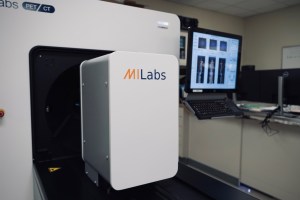
The Legacy Survey of Space and Time (LSST) Camera in Chile and NASA’s Compact Thermal Imager (CTI) represent cutting-edge advancements in astronomical and Earth science technology. The LSST Camera, soon to be operational at the Vera C. Rubin Observatory, will survey the entire southern sky every three nights for a...

NIST Scientists Modify Common Lab Refrigerator to Cool Faster with Less Energy

In a groundbreaking development, scientists at the National Institute of Standards and Technology (NIST) have engineered a significant enhancement to the efficiency of cooling materials to temperatures near absolute zero. Through modifications to a commonly used laboratory refrigerator, they have achieved remarkable reductions in both cooldown time and energy consumption....

Cryogenic CMOS Innovations Advance Quantum Computing

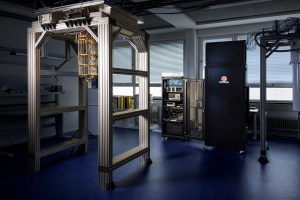
In the race to unlock the full potential of quantum computing, recent breakthroughs in cryogenic CMOS technology are paving the way for a new era of computational power. At the forefront of this frontier are pioneering efforts by Semiwise and SureCore, in collaboration with Cadence Design Systems, aimed at overcoming...

NASA Completes Flight Readiness Review for GOES-U Mission

NASA, NOAA (National Oceanic and Atmospheric Administration), SpaceX, and GOES-U (Geostationary Operational Environmental Satellite-U) mission managers met on June 20 to conduct a Flight Readiness Review at NASA’S Kennedy Space Center in Florida. During the review, teams provided an update on the mission status and certified the readiness to proceed with...

ADVERTISEMENT

Dewar

A dewar is a type of cryostat named after Sir James Dewar, the researcher who first developed the concept of a vacuum insulated container with silvered walls to reflect thermal radiation. Dewar was the first to liquefy hydrogen, and he created the device to store his discovery. The thermos bottle...

Stirling and Gifford-McMahon Cryocoolers

Stirling and Gifford-McMahon (GM) cryocoolers are two of the most commonly used cryocoolers in cryogenics. Both devices have a significant industrial base and operate at a wide range of temperatures and capacities. The thermodynamic cycles for both of these cryocoolers are quite similar. The Stirling cycle consists of a compressor,...

Liquefied Natural Gas (LNG)

A significant commercial application of cryogenics is the liquefaction, transport and storage of natural gas. Liquefied Natural Gas (LNG) is generally 95 percent methane with a few percent ethane and much lower concentrations of propane and butane. LNG liquefies at 111.6 K. Unlike many applications of cryogenics, the motivation for...

History of Cryogenics

From the Fall 1999 issue of Cold Facts magazine Millennium Breakthroughs A variety of CSA members give different perspectives on the past millennium: What were the most significant breakthroughs in cryogenics during the past millennium? Prof. R.G. Scurlock, Kryos Technology, scurlock@soton.ac.uk (“Breakthrough” = way through obstacles — Oxford English Dictionary)...

Cryobiology

Andreas Sputtek Past President Society for Cryobiology sputtek@uke.uni-hamburg.de or http://www.sputtek.de/. The word cryobiology (from the Greek words “cryo” = cold, “bios” = life, and “logos” = science) literally signifies the science of life at low temperatures. In practice, this field comprises the study of any biological material or system (e.g.,...

Cryogenic Insulation

James E. Fesmire Cryogenics Test Laboratory NASA Kennedy Space Center james.e.fesmire@nasa.gov Introduction In today’s world, the use of cryogenics and low-temperature refrigeration is taking a more and more significant role. From the food industry, transportation, energy, and medical applications to the Space Shuttle, cryogenic liquids must be stored, handled, and...

Cryogenic Treatment of Materials

F.J. Diekman Controlled Thermal Processing, Inc. info@metal-wear.com Cryogenic Processing (also called cryogenic treatment, and incorrectly “cryogenic tempering”) is a process that uses cryogenic temperatures to modify materials to enhance their performance. Cryogenic Processing involves the slow reduction in temperature of the material to at least -300°F (-185°C) and holding the...

Designing a liquid oxygen bath

I’m designing a Liquid Oxygen Bath to place composite coupons in the bath and soak 96 samples for intervals of 8 hours, 24 hours, 7 days, 21 days, 42 days, 62 days and 90 days.

Metallic Salts Normally Used to Produce Ultra-Low Temperatures?

Regarding the method known as the Adiabatic Demagnetization of Paramagnetic Salts: What metallic salts are normally used to produce the ultra-low temperatures used for near-absolute-zero cryogenic research? Which salts are the most efficient? Which make the best cooling agents? And which are used most commonly by physicists? I am looking...