ADVERTISEMENT

World’s Highest-Efficiency Hydrogen System Scales Up for Mass Production

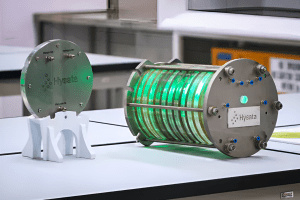
Hysata promises the world’s cheapest hydrogen, thanks to a remarkable device that splits water into H2 and O2 at 95% efficiency – some 20% higher than the best conventional electrolyzers. The company has raised US$111 million to scale up production.You have to throw some energy away to make hydrogen –...

Quantum Design Explores Quantum Frontiers with Precision Measurements

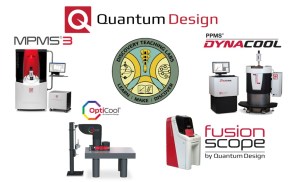
Since 1982, Quantum Design has been providing lab-ready scientific instruments to colleges, universities, government and corporate laboratories around the world. Instruments include the DynaCool® Physical Property Measurement System (PPMS), the MPMS3® SQUID Magnetometer and VersaLab® Physics Education System. The OptiCool® is a large volume, low vibration, low temperature and high...

The Next Generation in Cryogenics and Superconductivity

This feature introduces outstanding young professionals (under 40 years of age) who are doing interesting things in cryogenics and superconductivity and who show promise of making a difference in their fields. Debuted in the 2006 issue, the feature has presented many young persons whom we are proud to see have indeed lived...

Beyond Gravity Leaps Forward in Satellite Monitoring

Beyond Gravity, a leading space supplier, expands its expertise into space data services with the launch of its new Space Situational Awareness (SSA) solution. This innovative service, leveraging over six years of data collection, offers unparalleled accuracy and insights into more than 10,000 active satellites, promising to enhance faster decision-making...

CLARREO Pathfinder’s Cool Breakthrough, from Space to Quantum

For decades, Northrop Grumman has been making highly dependable cooling systems, cryocoolers, for spacecraft. In spacecraft, a cryocooler is most often essentially a specialized refrigerator deployed on satellites and space telescopes to maintain extremely low temperatures for onboard sensors. This is crucial for capturing high-resolution images of Earth or outer...

ADVERTISEMENT

Dewar

A dewar is a type of cryostat named after Sir James Dewar, the researcher who first developed the concept of a vacuum insulated container with silvered walls to reflect thermal radiation. Dewar was the first to liquefy hydrogen, and he created the device to store his discovery. The thermos bottle...

Stirling and Gifford-McMahon Cryocoolers

Stirling and Gifford-McMahon (GM) cryocoolers are two of the most commonly used cryocoolers in cryogenics. Both devices have a significant industrial base and operate at a wide range of temperatures and capacities. The thermodynamic cycles for both of these cryocoolers are quite similar. The Stirling cycle consists of a compressor,...

Liquefied Natural Gas (LNG)

A significant commercial application of cryogenics is the liquefaction, transport and storage of natural gas. Liquefied Natural Gas (LNG) is generally 95 percent methane with a few percent ethane and much lower concentrations of propane and butane. LNG liquefies at 111.6 K. Unlike many applications of cryogenics, the motivation for...

History of Cryogenics

From the Fall 1999 issue of Cold Facts magazine Millennium Breakthroughs A variety of CSA members give different perspectives on the past millennium: What were the most significant breakthroughs in cryogenics during the past millennium? Prof. R.G. Scurlock, Kryos Technology, scurlock@soton.ac.uk (“Breakthrough” = way through obstacles — Oxford English Dictionary)...

Cryobiology

Andreas Sputtek Past President Society for Cryobiology sputtek@uke.uni-hamburg.de or http://www.sputtek.de/. The word cryobiology (from the Greek words “cryo” = cold, “bios” = life, and “logos” = science) literally signifies the science of life at low temperatures. In practice, this field comprises the study of any biological material or system (e.g.,...

Cryogenic Insulation

James E. Fesmire Cryogenics Test Laboratory NASA Kennedy Space Center james.e.fesmire@nasa.gov Introduction In today’s world, the use of cryogenics and low-temperature refrigeration is taking a more and more significant role. From the food industry, transportation, energy, and medical applications to the Space Shuttle, cryogenic liquids must be stored, handled, and...

Cryogenic Treatment of Materials

F.J. Diekman Controlled Thermal Processing, Inc. info@metal-wear.com Cryogenic Processing (also called cryogenic treatment, and incorrectly “cryogenic tempering”) is a process that uses cryogenic temperatures to modify materials to enhance their performance. Cryogenic Processing involves the slow reduction in temperature of the material to at least -300°F (-185°C) and holding the...

In need of books to start a cryogenic engineering department

My company is going to create a cryogenic engineering department and we need some books in order to facilitate this project. This is the kind of information we would like to obtain from the books: 1- Calculations for determining the storage facilities, such as storage tanks, pumps, compressors, etc. 2-...