ADVERTISEMENT

New Glenn Completes Initial Cryogenic Testing at Launch Complex 36

Blue Origin continues to take big steps forward with its New Glenn orbital rocket as hardware rolls out to the launch pad, cryogenic testing begins, and the BE-4 engine gains a new test stand. The company still aims to launch New Glenn at least once in 2024.  Over the past month,...

Maybell Quantum Announces $25 Million Series A Funding Led By Cerberus

Maybell Quantum (“Maybell”), the quantum infrastructure company, has closed a $25 million funding round led by an affiliate of Cerberus Capital Management, L.P. (“Cerberus”), a global leader in alternative investing. This investment marks the start of a pivotal chapter in Maybell’s development. With Cerberus’ financial backing and operational support, Maybell...

ISRO Achieves Big Milestone For Human Mission Gaganyaan’s Cryogenic Engine

The Indian Space Research Organisation (ISRO), the space agency of the government of India responsible for the country’s space research and exploration programs, has achieved a major milestone in the human rating of its CE20 cryogenic engine, which powers the cryogenic stage of the human-rated LVM3 launch vehicle for Gaganyaan human...

Surface Superconductivity Appears in Topological Materials

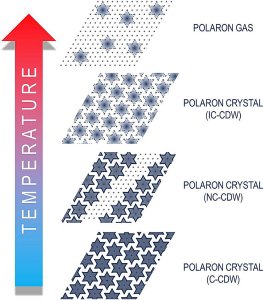
Researchers at the Leibniz Institute for Solid State and Materials Research at IFW Dresden, Germany, have found proof for surface superconductivity in a class of topological materials known as Weyl semimetals. Interestingly, the superconductivity, which comes from electrons confined in so-called Fermi arcs, is slightly different on the top and...

BV Approves Concept for a Full-Size Liquid Hydrogen Carrier

A consortium of French shipping, vessel design and energy companies have achieved approval in principle for a new membrane tank-based transport system for liquid hydrogen, including both the underlying containment technology and an initial vessel design. GTT, the longtime leader in membrane containment systems for LNG carriers, has designed a new...

Machine Learning Takes Hassle Out of Cold-Atom Experiments

Cold atoms solve many problems in quantum technology. Want a quantum computer? You can make one from an array of ultracold atoms. Need a quantum repeater for a secure communications network? Cold atoms have you covered. How about a quantum simulator for complicated condensed-matter problems? Yep, cold atoms can do that, too. The downside...

ADVERTISEMENT

Dewar

A dewar is a type of cryostat named after Sir James Dewar, the researcher who first developed the concept of a vacuum insulated container with silvered walls to reflect thermal radiation. Dewar was the first to liquefy hydrogen, and he created the device to store his discovery. The thermos bottle...

Stirling and Gifford-McMahon Cryocoolers

Stirling and Gifford-McMahon (GM) cryocoolers are two of the most commonly used cryocoolers in cryogenics. Both devices have a significant industrial base and operate at a wide range of temperatures and capacities. The thermodynamic cycles for both of these cryocoolers are quite similar. The Stirling cycle consists of a compressor,...

Liquefied Natural Gas (LNG)

A significant commercial application of cryogenics is the liquefaction, transport and storage of natural gas. Liquefied Natural Gas (LNG) is generally 95 percent methane with a few percent ethane and much lower concentrations of propane and butane. LNG liquefies at 111.6 K. Unlike many applications of cryogenics, the motivation for...

Magnetic Levitation

From http://www.superconductors.org. Magnetic-levitation is an application where superconductors perform extremely well. Transport vehicles such as trains can be made to “float” on strong superconducting magnets, virtually eliminating friction between the train and its tracks. Not only would conventional electromagnets waste much of the electrical energy as heat, they would have...

Superconductivity

From Superpower website. History of Superconductivity Superconductivity was discovered in 1911 by the Dutch physicist, Heike Kammerlingh Onnes when he was able to liquefy helium by cooling it to 4 Kelvin, or -452°F. This enabled him to cool other materials close to absolute zero and investigate their electrical properties. He...

Medical Applications of Cryogenics

Neutron Therapy Cryogenics is at the heart of nuclear accelerators. Accelerators such as Fermilab’s Tevatron make neutron therapy for cancer possible. From Fermilab Today 4/20/09: Fermilab currently offers neutron therapy. But staff at Fermilab designed and built the proton accelerator used by the nation’s first hospital-based treatment center to use...

Nuclear Physics

Al Zeller National Superconducting Cyclotron Lab (NSCL) at Michigan State University zeller@nscl.msu.edu Cryogenics has a long history in nuclear physics. The technology has its origins in the use of cold traps for maintaining a vacuum, which is required to prevent beam loss and for generating high voltages used in acceleration....

Suppliers of regenerator materials

I was looking for suppliers of regenerator materials. Can you please provide a list of vendors for: • Lead spheres • Bronze screen discs • Rare earth materials and spheres Thank you in advance for any help you can provide.

Containing ice accumulation while recovering helium

We are implementing a system to recover helium from our Janis ST-500 continuous flow LHe cryostat. The recovery system uses standard 1/4″ plastic tubing, which we connect directly to the cryostat’s exhaust port. The problem with this setup is that the gas is still quite cold as it leaves the...