ADVERTISEMENT

NASA’s Cryo Efforts Beyond the Atmosphere

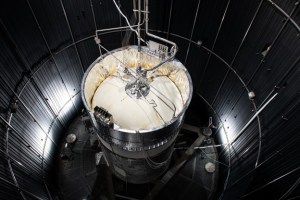
Establishing sustained operations on the moon and Mars presents a multitude of opportunities and challenges NASA has yet to encounter. Many of these activities require new technologies and processes to ensure the agency is prepared for its ambitious Artemis missions and those beyond. One of those challenges is working with cryogenic...

Indirect Cryogenic Grinding Enhances Steel Alloy Properties

The machining process covers many material removal procedures; among them, grinding is one of the most important. Improved grinding is crucial to improve the overall machining process; hence, many researches focused on enhancing the performance of grinding operations by focusing on factors like wear, chattering vibrations, grinding wheel topography, temperature,...

GenH2 Supplies Cryostat CS500 System to University

GenH2 has signed an agreement with the University of Melbourne to provide the Cryostat CS500 simulation platform for cryogenic and hydrogen R&D projects. GenH2’s Cryostat CS500 system is capable of testing a wide range of thermal insulation systems, materials, composites, or panels under both cryogenic-vacuum conditions and real-world conditions. The University...

Scaling Up Cryogenics for Quantum Computing

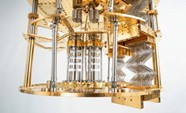
As we enter 2024, the field of quantum computing continues to develop rapidly. Accessibility to quantum processing and the scaling of systems are key factors in the growing industry. Cloud-based services offer one potential access route to quantum processing, but systems are also being deployed for customers to host on-premises....

‘First-Ever’ Cryogenic Refueling space Mission Announced

Two space infrastructure specialists, Space Machines Company and Spaceium, have joined forces to embark on what they believe to be the first-ever cryogenic refueling space mission in space in 2025. Under terms of a signed agreement, Canada’s Spaceium will integrate its cryogenic storage technology into Space Machine’s platform. Spaceium will then...

Air Products to Build Europe’s Largest Blue Hydrogen Plant

Air Products announced it will build, own and operate a state-of-the-art carbon capture and carbon dioxide (CO2) treatment facility at its existing hydrogen production plant in Rotterdam, the Netherlands. The facility is expected to be on-stream in 2026, and the resulting “blue” hydrogen product to serve ExxonMobil’s (Esso) Rotterdam refinery...

ADVERTISEMENT

Dewar

A dewar is a type of cryostat named after Sir James Dewar, the researcher who first developed the concept of a vacuum insulated container with silvered walls to reflect thermal radiation. Dewar was the first to liquefy hydrogen, and he created the device to store his discovery. The thermos bottle...

Stirling and Gifford-McMahon Cryocoolers

Stirling and Gifford-McMahon (GM) cryocoolers are two of the most commonly used cryocoolers in cryogenics. Both devices have a significant industrial base and operate at a wide range of temperatures and capacities. The thermodynamic cycles for both of these cryocoolers are quite similar. The Stirling cycle consists of a compressor,...

Liquefied Natural Gas (LNG)

A significant commercial application of cryogenics is the liquefaction, transport and storage of natural gas. Liquefied Natural Gas (LNG) is generally 95 percent methane with a few percent ethane and much lower concentrations of propane and butane. LNG liquefies at 111.6 K. Unlike many applications of cryogenics, the motivation for...

History of Cryogenics

From the Fall 1999 issue of Cold Facts magazine Millennium Breakthroughs A variety of CSA members give different perspectives on the past millennium: What were the most significant breakthroughs in cryogenics during the past millennium? Prof. R.G. Scurlock, Kryos Technology, scurlock@soton.ac.uk (“Breakthrough” = way through obstacles — Oxford English Dictionary)...

Cryobiology

Andreas Sputtek Past President Society for Cryobiology sputtek@uke.uni-hamburg.de or http://www.sputtek.de/. The word cryobiology (from the Greek words “cryo” = cold, “bios” = life, and “logos” = science) literally signifies the science of life at low temperatures. In practice, this field comprises the study of any biological material or system (e.g.,...

Cryogenic Insulation

James E. Fesmire Cryogenics Test Laboratory NASA Kennedy Space Center james.e.fesmire@nasa.gov Introduction In today’s world, the use of cryogenics and low-temperature refrigeration is taking a more and more significant role. From the food industry, transportation, energy, and medical applications to the Space Shuttle, cryogenic liquids must be stored, handled, and...

Cryogenic Treatment of Materials

F.J. Diekman Controlled Thermal Processing, Inc. info@metal-wear.com Cryogenic Processing (also called cryogenic treatment, and incorrectly “cryogenic tempering”) is a process that uses cryogenic temperatures to modify materials to enhance their performance. Cryogenic Processing involves the slow reduction in temperature of the material to at least -300°F (-185°C) and holding the...

Getter materials to absorb out gassed materials?

Here’s one for the scientists: We would like to sell vacuum insulated pipe for high temperature fluid applications. Are there any good getter materials that we can place in the vacuum space of our VJP to absorb outgassed materials at elevated temperatures?