ADVERTISEMENT

Commonwealth Fusion Cryo Team’s Just-in-Time Engineering

High temperature superconducting (HTS) tapes, which have emerged over the last decade, are enablers for new technologies. Specifically, high temperature superconducting magnets to enable commercial fusion energy are arguably the most tantalizing and potentially impactful. Fusion energy would be a long-envisioned source of firm, safe, carbon-free electricity whose successful development...

Cryo-Engineering for SRF

Fifty-Five Years of Inextricable Success-Superconducting Radio Frequency (SRF) cavities are vitally central to SRF accelerators, boasting a Q factor about 105 times higher than copper cavities and the capability to produce accelerating fields (Eacc) on an order of magnitude greater than copper in CW. In the 1960s, SRF cavities were...

H2FLY Pioneers Emissions-Free Flight with Successful Liquid-Hydrogen-Powered Aircraft

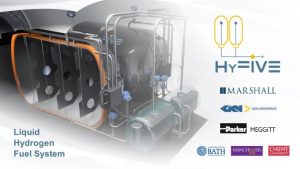
Stuttgart-based innovator H2FLY has achieved an unprecedented breakthrough in aviation history by successfully conducting the world’s first piloted flight of an electric aircraft powered by liquid hydrogen. This remarkable milestone marks a pivotal moment in the journey towards sustainable aviation, showcasing the immense potential of hydrogen-based technology in revolutionizing the...

HeLIUM Cryogenics Redefines Cryogenic Technology

In an era where technological innovation is not just an advantage but a necessity, HeLIUM Cryogenics™, stands at the vanguard, continually pushing the boundaries of whatʼs possible in cryogenic technology. Presently, a significant milestone is being marked in HeLIUMʼs journey as it unveils its latest innovation: a new line of...

LCLS-II’s ‘First Light’ Revolutionizes X-ray Science

The LCLS-XFEL at SLAC National Accelerator Lab has launched its upgraded version, LCLS-II, generating its first X-rays. This advancement is set to revolutionize research, offering unparalleled capabilities for studying quantum materials with remarkable precision. Scientists worldwide are queued up to explore various applications, from improving computing and communication technologies using...

Thermoelectric Heating Comes In From the Cold

Before architect César Martín-Gómez could send his latest thermoelectric experiment to Antarctica in 2018, he had to make sure that soldiers from the Spanish Army could get it right on the first try. In the laboratory, he could always run the experiment—a scale model of a solid-state thermoelectric heater—a second time if...

ADVERTISEMENT

Helium II

Helium II (He II) refers to the second liquid phase of the most abundant helium isotope (4He). Helium II is also referred to as superfluid helium. Helium II occurs once the temperature of the liquid helium drops below 2.17K. The phase transition between the first liquid phase of Helium (referred...

Magnetic Levitation

From http://www.superconductors.org. Magnetic-levitation is an application where superconductors perform extremely well. Transport vehicles such as trains can be made to “float” on strong superconducting magnets, virtually eliminating friction between the train and its tracks. Not only would conventional electromagnets waste much of the electrical energy as heat, they would have...

Superconductivity

From Superpower website. History of Superconductivity Superconductivity was discovered in 1911 by the Dutch physicist, Heike Kammerlingh Onnes when he was able to liquefy helium by cooling it to 4 Kelvin, or -452°F. This enabled him to cool other materials close to absolute zero and investigate their electrical properties. He...

Medical Applications of Cryogenics

Neutron Therapy Cryogenics is at the heart of nuclear accelerators. Accelerators such as Fermilab’s Tevatron make neutron therapy for cancer possible. From Fermilab Today 4/20/09: Fermilab currently offers neutron therapy. But staff at Fermilab designed and built the proton accelerator used by the nation’s first hospital-based treatment center to use...

Nuclear Physics

Al Zeller National Superconducting Cyclotron Lab (NSCL) at Michigan State University zeller@nscl.msu.edu Cryogenics has a long history in nuclear physics. The technology has its origins in the use of cold traps for maintaining a vacuum, which is required to prevent beam loss and for generating high voltages used in acceleration....

An Issue of Pressure and Flow Rate in a Supply Tank

Please help solve this problem: A supply tank requires a vaporizer to generate sufficient pressure to pump stored fluid up into a vehicle or tank. The available head is limited as the tank level falls and it is important to minimize the system pressure drop to maintain the desired flow...

Using MLI on VJ Line Joints or Cryo Storage Tanks

When installing Multi Layer Insulation (MLI) blankets on VJ line joints or cryo storage tanks should they be wrapped and tied down tight or loose? These are usually pre-cut to size. Also should they have an access hole at the point of where the molecular sieve is installed to help...