ADVERTISEMENT

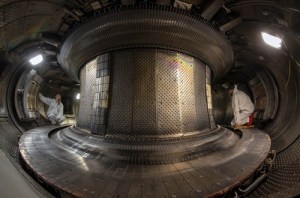
WEST TOKAMAK Inside and Out

Someone waking up inside of WEST, the French tokamak located barely one kilometer away from ITER, would think they had been transported into an alien spaceship—and more specifically, into the stranded star-faring vessel in the movie Alien (1979), with its strange ribcage-like walls and dull metal vertebrae. Last week, a...

US Wildlife Agency Explores Cryogenics as a Hedge Against Extinction

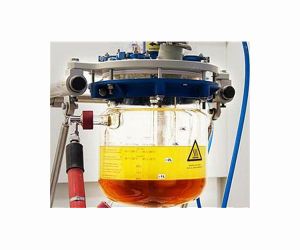
The world’s wildlife are facing a barrage of threats caused by climate change, from the loss of suitable habitat to dwindling food supplies. As a result, endangered species across the US are edging closer to extinction at alarming rates—and if they disappear, critical genetic information could vanish with them. In a new initiative announced on...

Powering the Quantum Revolution: Quantum Engines on the Horizon

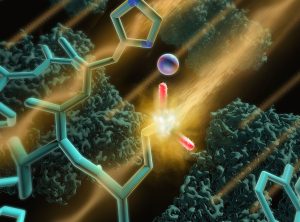
At the Okinawa Institute of Science and Technology (OIST), researchers at the Quantum Systems Unit have collaborated with scientists from the University of Kaiserslautern-Landau and the University of Stuttgart to design and build an engine that is based on the special rules that particles obey at very small scales. They...

High-Resolution Cryo-EM Starts Focusing on Accessibility

Structure-based designs are integral to advancing drug discovery, and in this regard, cryogenic electron microscopy (cryo-EM) has emerged as a pivotal tool for achieving high-resolution structures of proteins and protein complexes. Particularly noteworthy is its utility in elucidating the structures of protein classes that have historically resisted crystallization. Cryo-EM’s pivotal...

Cryogenic Etch Re-Emerges

Cryogenic etch, sometimes called cryo etch, is one of two ways to enable deep silicon or high-aspect ratio (HAR) etches in devices, where the features are long, narrow and deep. The other and most popular method is the two-step Bosch process, where you etch out a part of the structure...

ADVERTISEMENT

Mixed Refrigerant Cycles

Most cryogenic refrigeration systems, both large scale systems and cryocoolers, use helium as a working fluid. There are a number of advantages to helium, not the least of which is that helium remains a fluid down to the lowest achievable temperatures. In order to freeze helium, pressures of over 20...

Fountain Pumps and He II Phase Separators

Helium II (He II), the second liquid phase of the 4He isotope described in this column in Cold Facts Spring 2010 (http://2csa.us/he2), can be modeled as consisting of two interpenetrating fluids. One, the superfluid component, has zero viscosity and entropy and the other, the normal fluid component, has nonzero viscosity...

Turboexpanders

A vital technology in the refrigerators and liquefiers described in Cold Facts Volume 31 Number 3 is that of turboexpanders. These devices are rotating machines in which the process fluid (e.g., helium) does work against the turboexpander while moving from high pressure to a lower pressure and thus is cooled....

Magnetic Levitation

From http://www.superconductors.org. Magnetic-levitation is an application where superconductors perform extremely well. Transport vehicles such as trains can be made to “float” on strong superconducting magnets, virtually eliminating friction between the train and its tracks. Not only would conventional electromagnets waste much of the electrical energy as heat, they would have...

Superconductivity

From Superpower website. History of Superconductivity Superconductivity was discovered in 1911 by the Dutch physicist, Heike Kammerlingh Onnes when he was able to liquefy helium by cooling it to 4 Kelvin, or -452°F. This enabled him to cool other materials close to absolute zero and investigate their electrical properties. He...

Medical Applications of Cryogenics

Neutron Therapy Cryogenics is at the heart of nuclear accelerators. Accelerators such as Fermilab’s Tevatron make neutron therapy for cancer possible. From Fermilab Today 4/20/09: Fermilab currently offers neutron therapy. But staff at Fermilab designed and built the proton accelerator used by the nation’s first hospital-based treatment center to use...

Nuclear Physics

Al Zeller National Superconducting Cyclotron Lab (NSCL) at Michigan State University zeller@nscl.msu.edu Cryogenics has a long history in nuclear physics. The technology has its origins in the use of cold traps for maintaining a vacuum, which is required to prevent beam loss and for generating high voltages used in acceleration....

An Issue of Pressure and Flow Rate in a Supply Tank

Please help solve this problem: A supply tank requires a vaporizer to generate sufficient pressure to pump stored fluid up into a vehicle or tank. The available head is limited as the tank level falls and it is important to minimize the system pressure drop to maintain the desired flow...

Using MLI on VJ Line Joints or Cryo Storage Tanks

When installing Multi Layer Insulation (MLI) blankets on VJ line joints or cryo storage tanks should they be wrapped and tied down tight or loose? These are usually pre-cut to size. Also should they have an access hole at the point of where the molecular sieve is installed to help...