ADVERTISEMENT

High-Resolution Cryo-EM Starts Focusing on Accessibility

Structure-based designs are integral to advancing drug discovery, and in this regard, cryogenic electron microscopy (cryo-EM) has emerged as a pivotal tool for achieving high-resolution structures of proteins and protein complexes. Particularly noteworthy is its utility in elucidating the structures of protein classes that have historically resisted crystallization. Cryo-EM’s pivotal...

Cryogenic Etch Re-Emerges

Cryogenic etch, sometimes called cryo etch, is one of two ways to enable deep silicon or high-aspect ratio (HAR) etches in devices, where the features are long, narrow and deep. The other and most popular method is the two-step Bosch process, where you etch out a part of the structure...

Tokamak Energy’s Fusion Magnet System Passes Cryogenic Tests

UK-based Tokamak Energy’s superconducting magnet system, which is being built to replicate fusion energy power plant forces, has passed significant milestone cryogenic tests. Creating fusion energy requires strong magnetic fields to confine and control the extremely hot hydrogen fuel, which becomes a plasma several times hotter than the center of...

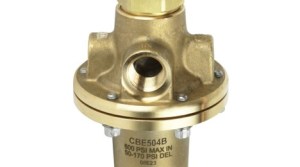
RegO Adds Pressure Regulators for Cryogenic Vessels

RegO Products has unveiled its latest breakthrough: the CBE504 Series of Half-Inch Pressure Builder-Economizer Regulators. Designed to enhance cryogenic vessel operations, these regulators prioritize pressure control and product preservation. The CBE504 Series boasts numerous improvements over the previous CB504 model, including a more compact form factor and a broader range...

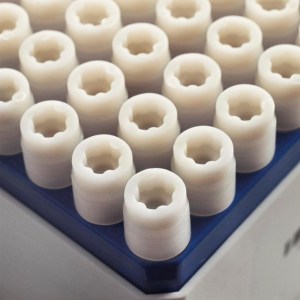
Ziath Preserves the Future, One Sample at a Time

In the realm of scientific discovery, the value of biological specimens cannot be overstated. They serve as essential windows into understanding life’s intricate mysteries. From the smallest molecules to the most complex organisms, researchers strive to unlock the secrets held within these samples. To safeguard these invaluable assets, a pioneering...

ADVERTISEMENT

Cold Compressors

A common way to provide cooling below the normal boiling point of helium (4.2K) is to reduce the pressure above the bath of liquid helium, thus also reducing the bath’s equilibrium saturation temperature. For example, to produce a 1.8K bath of liquid helium, the saturation pressure has to be reduced...

Kapitza Conductance

Kapitza conductance refers to the heat transfer between a solid surface and a fluid that covers that surface. Fundamentally, it describes the inherent difficulty in transferring energy from a solid to the fluid covering the solid surface. This phenomenon was first observed by P. L. Kapitza in 1941 while studying...

Thermosyphons

A thermosyphon (or thermosiphon) is a device that transfers heat via natural convection in a fluid. The natural convection is driven by gravity with the colder, denser fluid flowing downhill and the warmer, less dense fluid flowing back up. Thus, thermosyphons connect an object to be cooled with a reservoir...

History of Cryogenics

From the Fall 1999 issue of Cold Facts magazine Millennium Breakthroughs A variety of CSA members give different perspectives on the past millennium: What were the most significant breakthroughs in cryogenics during the past millennium? Prof. R.G. Scurlock, Kryos Technology, scurlock@soton.ac.uk (“Breakthrough” = way through obstacles — Oxford English Dictionary)...

Cryobiology

Andreas Sputtek Past President Society for Cryobiology sputtek@uke.uni-hamburg.de or http://www.sputtek.de/. The word cryobiology (from the Greek words “cryo” = cold, “bios” = life, and “logos” = science) literally signifies the science of life at low temperatures. In practice, this field comprises the study of any biological material or system (e.g.,...

Cryogenic Insulation

James E. Fesmire Cryogenics Test Laboratory NASA Kennedy Space Center james.e.fesmire@nasa.gov Introduction In today’s world, the use of cryogenics and low-temperature refrigeration is taking a more and more significant role. From the food industry, transportation, energy, and medical applications to the Space Shuttle, cryogenic liquids must be stored, handled, and...

Cryogenic Treatment of Materials

F.J. Diekman Controlled Thermal Processing, Inc. info@metal-wear.com Cryogenic Processing (also called cryogenic treatment, and incorrectly “cryogenic tempering”) is a process that uses cryogenic temperatures to modify materials to enhance their performance. Cryogenic Processing involves the slow reduction in temperature of the material to at least -300°F (-185°C) and holding the...

An Issue of Pressure and Flow Rate in a Supply Tank

Please help solve this problem: A supply tank requires a vaporizer to generate sufficient pressure to pump stored fluid up into a vehicle or tank. The available head is limited as the tank level falls and it is important to minimize the system pressure drop to maintain the desired flow...

Using MLI on VJ Line Joints or Cryo Storage Tanks

When installing Multi Layer Insulation (MLI) blankets on VJ line joints or cryo storage tanks should they be wrapped and tied down tight or loose? These are usually pre-cut to size. Also should they have an access hole at the point of where the molecular sieve is installed to help...