ADVERTISEMENT

SpaceLogistics Sells Third Mission Extension Pod

Northrop Grumman Corporation’s SpaceLogistics has sold its third Mission Extension Pod (MEP), a propulsion “jet pack” that extends the life of legacy satellites, allowing them to operate longer and more profitably. Under a purchase agreement with Intelsat, SpaceLogistics’ Mission Robotic Vehicle (MRV), a servicing spacecraft equipped with robotic arms, will install the jet...

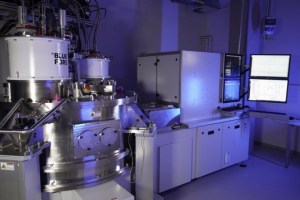
Principles of Operation for a ZPC Dilution Refrigerator

Understanding the basic principles of dilution refrigeration is essential for operating a ZPC dilution refrigerator effectively. While there are comprehensive guides available on the subject, we provide a condensed overview for quick reference. The first principle involves the cooling of helium isotopes. Helium-4 (4He), the common isotope, liquefies at 4.2 K...

Preparing for the Next Era of Neutrino Research

At CERN’s Neutrino Platform on the Laboratory’s Prévessin site in France sit two large boxes encased in a red grating. Inside these boxes are vast chambers surrounded by shiny stainless steel. The boxes are the cryostat modules of the ProtoDUNE experiment. Despite their large size, they are tiny in comparison...

Swift Aircraft Selects GKN Aerospace to Help Reach RAF’s Net-Zero Targets

Swift Aircraft, the visionary company behind the innovative British aerobatic light aircraft called the Swift, has joined forces with a team of British innovators to drive sustainable flight forward. Their collaboration is supported by the Project MONET contract, awarded by the UK Ministry of Defence (MoD), aimed at demonstrating technologies...

Aspen Aerogels Launches Advanced Thermal Barrier Center

Aspen Aerogels, a leading technology company specializing in aerogel-based sustainability and electrification solutions, has announced the grand opening of its state-of-the-art engineering and rapid prototyping facility in Marlborough, MA. This 59,000-square-foot facility, known as the Advanced Thermal Barrier Center (ATBC), will serve as the engineering hub for PyroThin cell-to-cell barriers,...

Squeezing Superconductors

Image: Experiments on a family of cuprate superconductors resolve discrepancies in previous work and elucidate why the critical temperature varies with pressure.  Credit: A. C. Mark et al. [1] Charles Day is a Senior Editor for Physics Magazine. References-  [1] A. C. Mark et al., “Structure and equation of state of Bi2Sr2Can−1CunO2n+4+

ADVERTISEMENT

Dewar

A dewar is a type of cryostat named after Sir James Dewar, the researcher who first developed the concept of a vacuum insulated container with silvered walls to reflect thermal radiation. Dewar was the first to liquefy hydrogen, and he created the device to store his discovery. The thermos bottle...

Stirling and Gifford-McMahon Cryocoolers

Stirling and Gifford-McMahon (GM) cryocoolers are two of the most commonly used cryocoolers in cryogenics. Both devices have a significant industrial base and operate at a wide range of temperatures and capacities. The thermodynamic cycles for both of these cryocoolers are quite similar. The Stirling cycle consists of a compressor,...

Liquefied Natural Gas (LNG)

A significant commercial application of cryogenics is the liquefaction, transport and storage of natural gas. Liquefied Natural Gas (LNG) is generally 95 percent methane with a few percent ethane and much lower concentrations of propane and butane. LNG liquefies at 111.6 K. Unlike many applications of cryogenics, the motivation for...

Magnetic Levitation

From http://www.superconductors.org. Magnetic-levitation is an application where superconductors perform extremely well. Transport vehicles such as trains can be made to “float” on strong superconducting magnets, virtually eliminating friction between the train and its tracks. Not only would conventional electromagnets waste much of the electrical energy as heat, they would have...

Superconductivity

From Superpower website. History of Superconductivity Superconductivity was discovered in 1911 by the Dutch physicist, Heike Kammerlingh Onnes when he was able to liquefy helium by cooling it to 4 Kelvin, or -452°F. This enabled him to cool other materials close to absolute zero and investigate their electrical properties. He...

Medical Applications of Cryogenics

Neutron Therapy Cryogenics is at the heart of nuclear accelerators. Accelerators such as Fermilab’s Tevatron make neutron therapy for cancer possible. From Fermilab Today 4/20/09: Fermilab currently offers neutron therapy. But staff at Fermilab designed and built the proton accelerator used by the nation’s first hospital-based treatment center to use...

Nuclear Physics

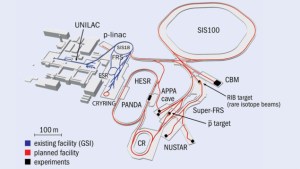
Al Zeller National Superconducting Cyclotron Lab (NSCL) at Michigan State University zeller@nscl.msu.edu Cryogenics has a long history in nuclear physics. The technology has its origins in the use of cold traps for maintaining a vacuum, which is required to prevent beam loss and for generating high voltages used in acceleration....

Getter materials to absorb out gassed materials?

Here’s one for the scientists: We would like to sell vacuum insulated pipe for high temperature fluid applications. Are there any good getter materials that we can place in the vacuum space of our VJP to absorb outgassed materials at elevated temperatures?