ADVERTISEMENT

New Superconductor Could Lead to Quantum Computing Breakthrough

Superconductivity is the property of zero electrical resistance at ultralow temperatures and was discovered in 1911 by the Dutch physicist Kamerling-Ohnes. It plays a crucial role in many industries and technologies, ranging from quantum computing to energy. “Superconductors are amazing materials which have many strange and unusual properties,” explained Joe Carroll,...

Cryogenics at FAIR: Adaptability is Key

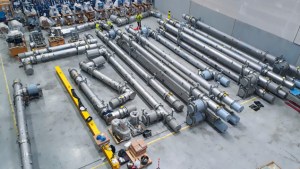
The Facility for Antiproton and Ion Research (FAIR) in Darmstadt, Germany, represents an ambitious reimagining of the GSI Helmholtz Center for Heavy Ion Research, one of Europe’s leading accelerator research laboratories. When it comes online for initial user experiments in 2027, FAIR will provide scientists from around the world with...

Cryogenic SRAM IP Demonstrator Taped Out

sureCore’s cryogenic SRAM is a building block for any digital sub-system, that is capable of operating from 77K (-196° C) down to the near absolute zero temperatures needed by Quantum Computers (QCs).  Standard cell and IO cell libraries have been re-characterized for operation at cryogenic temperatures, thereby enabling an industry...

New Bolometer Could Lead to Better Cryogenic Quantum Technologies

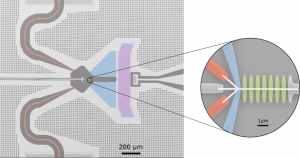
A new type of bolometer that covers a broad range of microwave frequencies has been created by researchers in Finland. The work builds on previous research by the team, and the new technique could potentially characterize background noise sources and thereby help to improve the cryogenic environments necessary for quantum...

Air Gases Can Benefit the Environment

Overview-The commercial production of oxygen and nitrogen supported the industrial revolution in the late 19th century and up to the mid-20th. Oxy-acetylene cutting and welding were important for projects like the Eiffel Tower, the Panama Canal and the Central Valley Project Corporation hydropower plants. Oxygen, nitrogen and argon refined steelmaking...

Analyzing Transcritical CO2 Compression and Pumping Pathways

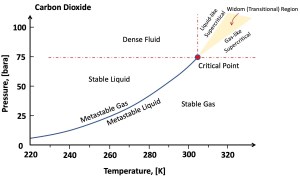
Supercritical carbon dioxide exhibits anomalous behavior in the vicinity above the critical point. The Irish physical chemist Thomas Andrews (1863) was the first who studied the supercritical behavior of carbon dioxide. He explained his observations of the fluid state above the critical point as follows: “…the surface of demarcation between the...

ADVERTISEMENT

Dewar

A dewar is a type of cryostat named after Sir James Dewar, the researcher who first developed the concept of a vacuum insulated container with silvered walls to reflect thermal radiation. Dewar was the first to liquefy hydrogen, and he created the device to store his discovery. The thermos bottle...

Stirling and Gifford-McMahon Cryocoolers

Stirling and Gifford-McMahon (GM) cryocoolers are two of the most commonly used cryocoolers in cryogenics. Both devices have a significant industrial base and operate at a wide range of temperatures and capacities. The thermodynamic cycles for both of these cryocoolers are quite similar. The Stirling cycle consists of a compressor,...

Liquefied Natural Gas (LNG)

A significant commercial application of cryogenics is the liquefaction, transport and storage of natural gas. Liquefied Natural Gas (LNG) is generally 95 percent methane with a few percent ethane and much lower concentrations of propane and butane. LNG liquefies at 111.6 K. Unlike many applications of cryogenics, the motivation for...

Wind Tunnels

Dr. Robert Kilgore The development of the cryogenic wind tunnel is one of many significant breakthroughs in both cryogenics and wind-tunnel technology made during the past millennium. Interest in the development of high-speed commercial and military aircraft resulted in a review of problems of flow simulation in transonic wind tunnels...

History of Cryogenics

From the Fall 1999 issue of Cold Facts magazine Millennium Breakthroughs A variety of CSA members give different perspectives on the past millennium: What were the most significant breakthroughs in cryogenics during the past millennium? Prof. R.G. Scurlock, Kryos Technology, scurlock@soton.ac.uk (“Breakthrough” = way through obstacles — Oxford English Dictionary)...

Cryobiology

Andreas Sputtek Past President Society for Cryobiology sputtek@uke.uni-hamburg.de or http://www.sputtek.de/. The word cryobiology (from the Greek words “cryo” = cold, “bios” = life, and “logos” = science) literally signifies the science of life at low temperatures. In practice, this field comprises the study of any biological material or system (e.g.,...

Cryogenic Insulation

James E. Fesmire Cryogenics Test Laboratory NASA Kennedy Space Center james.e.fesmire@nasa.gov Introduction In today’s world, the use of cryogenics and low-temperature refrigeration is taking a more and more significant role. From the food industry, transportation, energy, and medical applications to the Space Shuttle, cryogenic liquids must be stored, handled, and...

Assistance with resolving a sealing problem?

We are fabricating piping components for refrigeration service. These components must be leak checked at 15 bar (218 psig). We are using a gas test media that is 25% helium and experiencing difficulty on maintaining a seal on the flanged connections. Do you know anyone or any references that could...

Cryogenic data on leather and nomex

Could anyone please help me out with the following cryogenics data: Leather — mechanical properties at 77 K or lower Nomex — thermal conductivity @ 4 to 50 K I lost the data I had some time ago and although this should be easily accessible, I can’t find any reference...