ADVERTISEMENT

Goddard Goings: Insight Into Its Past, Present and Future

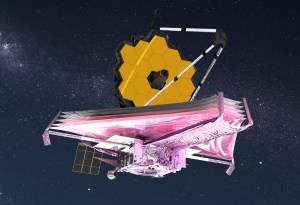
James Webb Space Telescope-“I’m Back in the Saddle Again!” – It’s likely anyone reading this article has heard about the James Webb Space Telescope (JWST). The telescope launched on December 25, 2021 (EST) with much fanfare. Over the next month, it traveled to its observation location at the L2 Lagrange...
NASA Completes Heart of Roman Space Telescope’s Primary Instrument

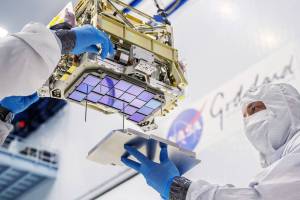
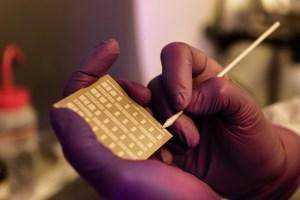
The heart of NASA’s Nancy Grace Roman Space Telescope was recently delivered to Ball Aerospace in Boulder, Colo., for integration into the Wide Field Instrument (WFI). Called the Focal Plane System (FPS), it serves as the core of Roman’s camera. When the mission launches by May 2027, astronomers will use...

Air Gases Can Benefit the Environment

Overview-The commercial production of oxygen and nitrogen supported the industrial revolution in the late 19th century and up to the mid-20th. Oxy-acetylene cutting and welding were important for projects like the Eiffel Tower, the Panama Canal and the Central Valley Project Corporation hydropower plants. Oxygen, nitrogen and argon refined steelmaking...

Analyzing Transcritical CO2 Compression and Pumping Pathways

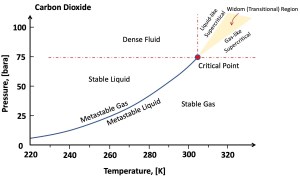
Supercritical carbon dioxide exhibits anomalous behavior in the vicinity above the critical point. The Irish physical chemist Thomas Andrews (1863) was the first who studied the supercritical behavior of carbon dioxide. He explained his observations of the fluid state above the critical point as follows: “…the surface of demarcation between the...

SpaceLogistics Sells Third Mission Extension Pod

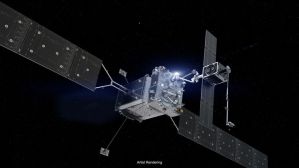
Northrop Grumman Corporation’s SpaceLogistics has sold its third Mission Extension Pod (MEP), a propulsion “jet pack” that extends the life of legacy satellites, allowing them to operate longer and more profitably. Under a purchase agreement with Intelsat, SpaceLogistics’ Mission Robotic Vehicle (MRV), a servicing spacecraft equipped with robotic arms, will install the jet...

ADVERTISEMENT

Dewar

A dewar is a type of cryostat named after Sir James Dewar, the researcher who first developed the concept of a vacuum insulated container with silvered walls to reflect thermal radiation. Dewar was the first to liquefy hydrogen, and he created the device to store his discovery. The thermos bottle...

Stirling and Gifford-McMahon Cryocoolers

Stirling and Gifford-McMahon (GM) cryocoolers are two of the most commonly used cryocoolers in cryogenics. Both devices have a significant industrial base and operate at a wide range of temperatures and capacities. The thermodynamic cycles for both of these cryocoolers are quite similar. The Stirling cycle consists of a compressor,...

Liquefied Natural Gas (LNG)

A significant commercial application of cryogenics is the liquefaction, transport and storage of natural gas. Liquefied Natural Gas (LNG) is generally 95 percent methane with a few percent ethane and much lower concentrations of propane and butane. LNG liquefies at 111.6 K. Unlike many applications of cryogenics, the motivation for...

Magnetic Levitation

From http://www.superconductors.org. Magnetic-levitation is an application where superconductors perform extremely well. Transport vehicles such as trains can be made to “float” on strong superconducting magnets, virtually eliminating friction between the train and its tracks. Not only would conventional electromagnets waste much of the electrical energy as heat, they would have...

Superconductivity

From Superpower website. History of Superconductivity Superconductivity was discovered in 1911 by the Dutch physicist, Heike Kammerlingh Onnes when he was able to liquefy helium by cooling it to 4 Kelvin, or -452°F. This enabled him to cool other materials close to absolute zero and investigate their electrical properties. He...

Medical Applications of Cryogenics

Neutron Therapy Cryogenics is at the heart of nuclear accelerators. Accelerators such as Fermilab’s Tevatron make neutron therapy for cancer possible. From Fermilab Today 4/20/09: Fermilab currently offers neutron therapy. But staff at Fermilab designed and built the proton accelerator used by the nation’s first hospital-based treatment center to use...

Nuclear Physics

Al Zeller National Superconducting Cyclotron Lab (NSCL) at Michigan State University zeller@nscl.msu.edu Cryogenics has a long history in nuclear physics. The technology has its origins in the use of cold traps for maintaining a vacuum, which is required to prevent beam loss and for generating high voltages used in acceleration....

Cryogenic thermophysical property data

I am in search of information regarding cryogenic thermophysical property data, specifically, Thermal Conductivity, Thermal Expansion, Stiffness and Modulus, in the 20K range. My list of materials include: Ti-6AL-4V (ELI), Al 6061-T651, and Invar (36%, plus any other composition which might have data available). Other materials which would be helpful...