ADVERTISEMENT

Skyroot Aerospace and Dhawan-II’s More Powerful 3D-Printed Cryogenic Engine

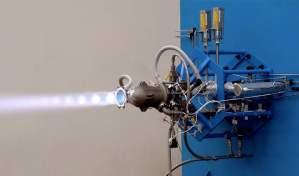
In 2020, the world was introduced to Dhawan-I, a 3D printed cryogenic engine made by Skyroot Aerospace. Three years later, the Indian company has been working on a more powerful model, unveiling to the public the new and improved Dhawan-II, which is said to have successfully completed testing. Like its predecessor,...
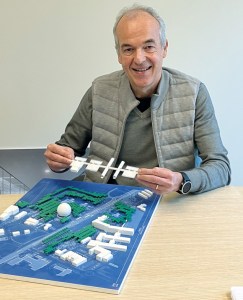

A Game Changer for CERN

CERN’s new visitor and education center, Science Gateway, due to open this autumn, will welcome up to half a million people each year. Project leader Patrick Geeraert describes how this iconic project came about, how it will operate, and what it aims to achieve. How did the idea for Science...

New SLAC-Stanford Battery Center Targets Energy Transition

The Department of Energy’s SLAC National Accelerator Laboratory and Stanford University announced the launch of a new joint battery center at SLAC. It will bring together the resources and expertise of the national lab, the university and Silicon Valley to accelerate the deployment of batteries and other energy storage solutions...

New Study Could Help Pinpoint Hidden Helium Gas Fields

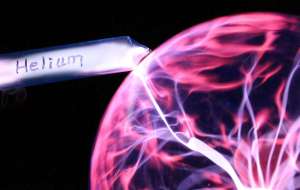
Research led by the University of Oxford could help overturn the current supply crisis of helium, a vital societal resource. The study proposes a new model to account for the existence of previously unexplained helium-rich reservoirs. The findings, published in Nature, could help locate untapped reservoirs of accessible helium. Dr. Anran...

H2FLY Announces Liquid Hydrogen Filling Success

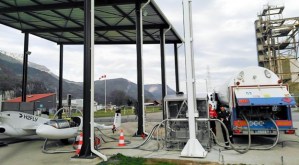
German-based H2FLY has announced success from a liquid hydrogen filling test of its HY4 hydrogen-electric aircraft. The on-ground test at Air Liquide’s Campus Technologies Grenoble in France saw liquid hydrogen fill the aircraft’s new liquid hydrogen storage system, designed and supplied by Air Liquide. Coming as a precursor to future tests in...

Delft Circuits Chosen by NASA JPL Scientist to Support BICEP Project in Antarctica

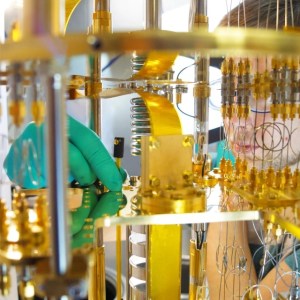
Delft Circuits announced its inclusion in the Background Imaging of Cosmic Extragalactic Polarization (BICEP) project in Antarctica, supporting NASA’s Jet Propulsion Laboratory at CalTech and other project partners. BICEP has been ongoing for several years and is now seeking solutions for a hardware upgrade to its telescope’s sensitivity as the...

ADVERTISEMENT

Dewar

A dewar is a type of cryostat named after Sir James Dewar, the researcher who first developed the concept of a vacuum insulated container with silvered walls to reflect thermal radiation. Dewar was the first to liquefy hydrogen, and he created the device to store his discovery. The thermos bottle...

Stirling and Gifford-McMahon Cryocoolers

Stirling and Gifford-McMahon (GM) cryocoolers are two of the most commonly used cryocoolers in cryogenics. Both devices have a significant industrial base and operate at a wide range of temperatures and capacities. The thermodynamic cycles for both of these cryocoolers are quite similar. The Stirling cycle consists of a compressor,...

Liquefied Natural Gas (LNG)

A significant commercial application of cryogenics is the liquefaction, transport and storage of natural gas. Liquefied Natural Gas (LNG) is generally 95 percent methane with a few percent ethane and much lower concentrations of propane and butane. LNG liquefies at 111.6 K. Unlike many applications of cryogenics, the motivation for...

Magnetic Levitation

From http://www.superconductors.org. Magnetic-levitation is an application where superconductors perform extremely well. Transport vehicles such as trains can be made to “float” on strong superconducting magnets, virtually eliminating friction between the train and its tracks. Not only would conventional electromagnets waste much of the electrical energy as heat, they would have...

Superconductivity

From Superpower website. History of Superconductivity Superconductivity was discovered in 1911 by the Dutch physicist, Heike Kammerlingh Onnes when he was able to liquefy helium by cooling it to 4 Kelvin, or -452°F. This enabled him to cool other materials close to absolute zero and investigate their electrical properties. He...

Medical Applications of Cryogenics

Neutron Therapy Cryogenics is at the heart of nuclear accelerators. Accelerators such as Fermilab’s Tevatron make neutron therapy for cancer possible. From Fermilab Today 4/20/09: Fermilab currently offers neutron therapy. But staff at Fermilab designed and built the proton accelerator used by the nation’s first hospital-based treatment center to use...

Nuclear Physics

Al Zeller National Superconducting Cyclotron Lab (NSCL) at Michigan State University zeller@nscl.msu.edu Cryogenics has a long history in nuclear physics. The technology has its origins in the use of cold traps for maintaining a vacuum, which is required to prevent beam loss and for generating high voltages used in acceleration....

An Issue of Pressure and Flow Rate in a Supply Tank

Please help solve this problem: A supply tank requires a vaporizer to generate sufficient pressure to pump stored fluid up into a vehicle or tank. The available head is limited as the tank level falls and it is important to minimize the system pressure drop to maintain the desired flow...

Using MLI on VJ Line Joints or Cryo Storage Tanks

When installing Multi Layer Insulation (MLI) blankets on VJ line joints or cryo storage tanks should they be wrapped and tied down tight or loose? These are usually pre-cut to size. Also should they have an access hole at the point of where the molecular sieve is installed to help...