ADVERTISEMENT

Next-Generation Oilless Cryogenic ORC Turbine Generator

Mitsubishi Heavy Industries, Ltd. (MHI) and Mitsubishi Heavy Industries Marine Machinery and Equipment Co., Ltd. (MHI-MME), a wholly owned operating company of MHI based in Nagasaki, have successfully conducted demonstration testing of 100 kW class cryogenic ORC (Organic Rankine Cycle) power generation using the world’s first “next-generation oilless cryogenic turbine...

Students Design Experimental Fuel System To Power Liquid-Propellant Rocket Engines

Aerospace Engineering students Alex Clay and Samir Ahmed have spent the past four years at Embry-Riddle Aeronautical University manufacturing complex liquid-propellant rocket engines. Now, as they near graduation, there is one last thing they’d like to do: Prepare for ignition. Along with fellow members of the university’s Experimental Rocket Propulsion Laboratory...

BCCK Boosts Propane Recovery with Next-Generation Technology at Cryogenic Gas Processing Facility

BCCK, a leader in engineering, procurement, fabrication and field construction services, has applied patent-pending technology, G2R-Flex®, to provide enhanced propane recovery for a premier midstream group in Ohio’s Marcellus-Utica Basin. Utilizing a skidded BCCK patent-pending design, G2R-Flex® improved current 200 MMSCFD GSP facilities’ propane recoveries to greater than 99 percent in...

GENH2 Partners with H2 Genesis to Provide Small-Scale Hydrogen Liquefaction

GenH2, an industry leader in hydrogen infrastructure solutions, announced that the company has signed a partnership agreement with H2 Genesis, a leading liquid hydrogen infrastructure and operations company, to deliver liquid hydrogen across North America. In their first collaboration, GenH2, as manufacturer, and H2 Genesis, as owner-operator, will deploy the...

First Measurements of Hydrogen-Boron Fusion in a Magnetically Confined Fusion Plasma

As fusion developers around the world race to commercialize fusion energy, TAE Technologies has pioneered the pursuit of the cleanest and most economical path to providing electricity with hydrogen-boron (also known as p-B11 or p11B), an abundant, environmentally sound fuel. Recently, the company announced, in collaboration with Japan’s National Institute...

The Next Generation in Cryogenics and Superconductivity

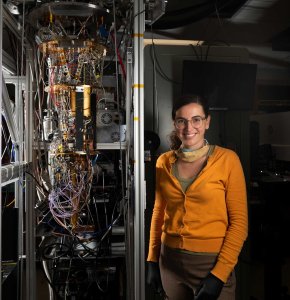
CSA’s annual Young Professionals introduces outstanding engineers, scientists, and technicians (under 40) who are making fascinating contributions to the cryogenics and superconductivity industries. Debuted in the summer of 2006, this spotlight shines on future leaders who show the promise of making a difference in their fields.  We are proud to...

ADVERTISEMENT

Dewar

A dewar is a type of cryostat named after Sir James Dewar, the researcher who first developed the concept of a vacuum insulated container with silvered walls to reflect thermal radiation. Dewar was the first to liquefy hydrogen, and he created the device to store his discovery. The thermos bottle...

Stirling and Gifford-McMahon Cryocoolers

Stirling and Gifford-McMahon (GM) cryocoolers are two of the most commonly used cryocoolers in cryogenics. Both devices have a significant industrial base and operate at a wide range of temperatures and capacities. The thermodynamic cycles for both of these cryocoolers are quite similar. The Stirling cycle consists of a compressor,...

Liquefied Natural Gas (LNG)

A significant commercial application of cryogenics is the liquefaction, transport and storage of natural gas. Liquefied Natural Gas (LNG) is generally 95 percent methane with a few percent ethane and much lower concentrations of propane and butane. LNG liquefies at 111.6 K. Unlike many applications of cryogenics, the motivation for...

Cryogenics in Space

Peter Kittel University of California-Berkeley pkittel@cal.berkeley.edu Space Cryogenics is the application of cryogenics to space missions. These applications fall into two broad areas, supporting space science missions and supporting the space transportation infrastructure. Science applications: The atmosphere is opaque to much of the electro-magnetic spectrum. In space, the absence of...

Cryosurgery

Review of Cryosurgery Boris Rubinsky, PhD Hebrew University School of Science and Engineering Research Center for Biomedical Engineering 78b Ross Building Givat Ram, Jerusalem 91904 Israel rubinsky@cs.huji.ac.il as published in Annual Review of Biomedical Engineering, August 2000, Vol. 2, pp. 157-187. Abstract: Cryosurgery is a surgical technique that employs freezing...

Liquefied Natural Gas

Liquefied Natural Gas as it relates to the Field of Cryogenics John W. Bonn VJ Systems, LLC johnbonn@vjsystems-lic.com Today the world is looking for a cleaner fuel and Liquefied Natural Gas (LNG) plays a large part in achieving this goal. LNG in a liquid form is at -162°C (-259°F) and...

Food Processing

Cryogenics and Food The industrial gas industry provides a host of products and services related to food. The various gases have useful and sometimes fascinating applications in food industry. “The food industry is not a homogenous industry. The needs of customers processing hamburger vs. poultry vs. strawberries vs. seafood, for...

Power usage: cryogenic systems vs. regular refrigerators

A recent project highlighted to me that closed cycle cryogenic cooling systems use far more electrical power to reduce temperatures by a few watts than regular refrigerators. I am sure it must be something to do with the extra difficulty of removing the heat from the liquid nitrogen or similar...

Redundancy strategies for mechanical -80C freezers

I was wondering what kind of redundancy strategies are people using for their mechanical -80C freezers? I am aware of the following. Please add if you are doing something different. 1) 1 Backup freezer for every 10 freezers – Empty and maintained at -80C at all times 2) Backup C02...

Method to move components in a cryogenic environment

Does anyone know of a method with which to reliably move components in a cryogenic environment? We are interested in moving detectors in a cryogenically cooled (2K) vacuum chamber, which is contained within a larger cryostat/isolation vacuum with thermal shields. As the desired horizontal or vertical displacement is between 10...