ADVERTISEMENT

Launching a Groundbreaking Mobile Liquid Hydrogen System

GenH2, an industry leader in hydrogen infrastructure solutions, announced the launch of its groundbreaking LS20 mobile liquid hydrogen system, an end-to-end liquefaction and storage system. The innovative, mobile liquefaction unit offers a space-optimized, fully integrated liquid hydrogen solution to be used in a range of applications from transportation to energy...

Liquid Helium Ballast Refrigeration

The Need for Vibration-Free Cryogenics The measurement of local gravitational fields requires continuous, high precision and extremely stable measurements. In 1968, the development of the superconducting gravity meter (SG)[1] vastly improved the state of the art. In contrast to mechanical quartz or metal springs, SGs use a superconducting sphere levitated in...

Qubit Measurement Systems Right Out of the Box?

Necessity of mK-Cryogenics-During the past years, advances in both lithography and millikelvin cryogenics have supported and enabled vast improvement in the sophistication of experimental research on electrical circuits that display uniquely quantum mechanical behavior. It comes as no surprise that dilution refrigerator measurement systems have moved beyond basic physics research...

The Development of an AMRR for Sub-Kelvin Cooling of Space Science Instrumentation – ICC21 Best Student Paper Award Recipient

Introduction-Cryogenic detectors have higher sensitivity and better energy resolution than alternative sensors, making them an attractive option for space exploration and essential for observing low energy photons in the near- or far-IR, X-ray and submillimeter ranges.[1] Since NASA’s first cryogenic missions in the early 1980s, increasingly complex space detectors have...

The Next Generation in Cryogenics and Superconductivity

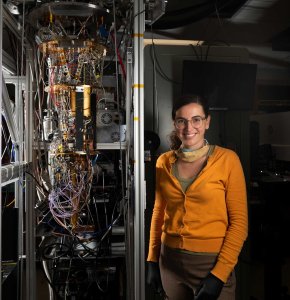
CSA’s annual Young Professionals introduces outstanding engineers, scientists, and technicians (under 40) who are making fascinating contributions to the cryogenics and superconductivity industries. Debuted in the summer of 2006, this spotlight shines on future leaders who show the promise of making a difference in their fields.  We are proud to...

ADVERTISEMENT

Dewar

A dewar is a type of cryostat named after Sir James Dewar, the researcher who first developed the concept of a vacuum insulated container with silvered walls to reflect thermal radiation. Dewar was the first to liquefy hydrogen, and he created the device to store his discovery. The thermos bottle...

Stirling and Gifford-McMahon Cryocoolers

Stirling and Gifford-McMahon (GM) cryocoolers are two of the most commonly used cryocoolers in cryogenics. Both devices have a significant industrial base and operate at a wide range of temperatures and capacities. The thermodynamic cycles for both of these cryocoolers are quite similar. The Stirling cycle consists of a compressor,...

Liquefied Natural Gas (LNG)

A significant commercial application of cryogenics is the liquefaction, transport and storage of natural gas. Liquefied Natural Gas (LNG) is generally 95 percent methane with a few percent ethane and much lower concentrations of propane and butane. LNG liquefies at 111.6 K. Unlike many applications of cryogenics, the motivation for...

History of Cryogenics

From the Fall 1999 issue of Cold Facts magazine Millennium Breakthroughs A variety of CSA members give different perspectives on the past millennium: What were the most significant breakthroughs in cryogenics during the past millennium? Prof. R.G. Scurlock, Kryos Technology, scurlock@soton.ac.uk (“Breakthrough” = way through obstacles — Oxford English Dictionary)...

Cryobiology

Andreas Sputtek Past President Society for Cryobiology sputtek@uke.uni-hamburg.de or http://www.sputtek.de/. The word cryobiology (from the Greek words “cryo” = cold, “bios” = life, and “logos” = science) literally signifies the science of life at low temperatures. In practice, this field comprises the study of any biological material or system (e.g.,...

Cryogenic Insulation

James E. Fesmire Cryogenics Test Laboratory NASA Kennedy Space Center james.e.fesmire@nasa.gov Introduction In today’s world, the use of cryogenics and low-temperature refrigeration is taking a more and more significant role. From the food industry, transportation, energy, and medical applications to the Space Shuttle, cryogenic liquids must be stored, handled, and...

Cryogenic Treatment of Materials

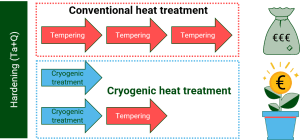
F.J. Diekman Controlled Thermal Processing, Inc. info@metal-wear.com Cryogenic Processing (also called cryogenic treatment, and incorrectly “cryogenic tempering”) is a process that uses cryogenic temperatures to modify materials to enhance their performance. Cryogenic Processing involves the slow reduction in temperature of the material to at least -300°F (-185°C) and holding the...

Metallic Salts Normally Used to Produce Ultra-Low Temperatures?

Regarding the method known as the Adiabatic Demagnetization of Paramagnetic Salts: What metallic salts are normally used to produce the ultra-low temperatures used for near-absolute-zero cryogenic research? Which salts are the most efficient? Which make the best cooling agents? And which are used most commonly by physicists? I am looking...

Specs and info on turbo expanders

I am a fourth year chemical engineering student doing a design project for the liquefaction of natural gas to DME and we are using a turbo expansion unit. I was wondering whether you would send me some specs and any additional information on turbo expanders that I could use as...