ADVERTISEMENT

How to Avoid a Tank Collapse

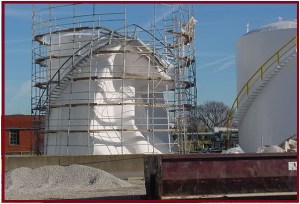
The industrial gas industry produces the elemental components of “air” (nitrogen, oxygen, and argon) that are used in other industries as part of their processes. Once separated from air, each element exists as an extremely cold cryogenic temperature liquid. Typical liquid temperatures are −185° C. Large, field-erected tanks are used...
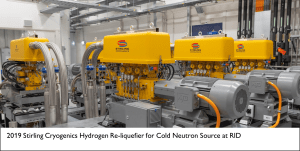
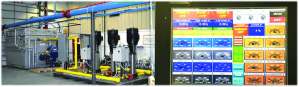
Hydrogen Liquefaction System Developed from Stirling Cryogenerators

Stirling cryogenerators have been widely used since the 1960s and 1970s for the production of LH2 at various institutes and research laboratories all over the world. In materials sciences, small-scale production was used to study the properties and behavior of LH2 and its effect on materials. In scientific devices, Stirling...

Off-Grid Hydrogen Energy Maximizes Power of Steam

Dylan CHP LLC has researched, developed, and patented advanced steam generation technology, utilizing hydrogen to generate clean energy electricity. The Dylan System is based on extreme heat preservation (EHP), the heart of the Dylan patent that allows the Dylan Energy-Efficient System to achieve nameplate steam output while consuming only a...

Pancreatic Islet Cryopreservation Marks Breakthrough for Diabetes Cure

Engineering and medical researchers at the University of Minnesota Twin Cities and Mayo Clinic have developed a new process for successfully storing specialized pancreatic islet cells at very low temperatures and rewarming them with a laser and gold nanoparticles, enabling the potential for on-demand islet transplantation. The breakthrough discovery in...

Paragraf is Changing the Game with Cryogenic Hall Sensors

Due to limitations in size and power dissipation, many prevalent measurement methods are incompatible with low temperature applications. Hall effect sensors have emerged as the superior option because of their compact size and low-power requirement. Until now, conventional Hall sensors have themselves been limited by material capabilities and the quantum...

Liftoff! NASA’s Artemis I Mega Rocket Launches Orion to Moon

Following a successful launch of NASA’s Space Launch System (SLS), the most powerful rocket in the world, the agency’s Orion spacecraft is on its way to the Moon as part of the Artemis program. Carrying an uncrewed Orion, SLS lifted off for its flight test debut at 1:47 a.m. EST...

ADVERTISEMENT

Dewar

A dewar is a type of cryostat named after Sir James Dewar, the researcher who first developed the concept of a vacuum insulated container with silvered walls to reflect thermal radiation. Dewar was the first to liquefy hydrogen, and he created the device to store his discovery. The thermos bottle...

Stirling and Gifford-McMahon Cryocoolers

Stirling and Gifford-McMahon (GM) cryocoolers are two of the most commonly used cryocoolers in cryogenics. Both devices have a significant industrial base and operate at a wide range of temperatures and capacities. The thermodynamic cycles for both of these cryocoolers are quite similar. The Stirling cycle consists of a compressor,...

Liquefied Natural Gas (LNG)

A significant commercial application of cryogenics is the liquefaction, transport and storage of natural gas. Liquefied Natural Gas (LNG) is generally 95 percent methane with a few percent ethane and much lower concentrations of propane and butane. LNG liquefies at 111.6 K. Unlike many applications of cryogenics, the motivation for...

Cryogenic Treatment of Materials

F.J. Diekman Controlled Thermal Processing, Inc. info@metal-wear.com Cryogenic Processing (also called cryogenic treatment, and incorrectly “cryogenic tempering”) is a process that uses cryogenic temperatures to modify materials to enhance their performance. Cryogenic Processing involves the slow reduction in temperature of the material to at least -300°F (-185°C) and holding the...

Cryogenics in Space

Peter Kittel University of California-Berkeley pkittel@cal.berkeley.edu Space Cryogenics is the application of cryogenics to space missions. These applications fall into two broad areas, supporting space science missions and supporting the space transportation infrastructure. Science applications: The atmosphere is opaque to much of the electro-magnetic spectrum. In space, the absence of...

Cryosurgery

Review of Cryosurgery Boris Rubinsky, PhD Hebrew University School of Science and Engineering Research Center for Biomedical Engineering 78b Ross Building Givat Ram, Jerusalem 91904 Israel rubinsky@cs.huji.ac.il as published in Annual Review of Biomedical Engineering, August 2000, Vol. 2, pp. 157-187. Abstract: Cryosurgery is a surgical technique that employs freezing...

Liquefied Natural Gas

Liquefied Natural Gas as it relates to the Field of Cryogenics John W. Bonn VJ Systems, LLC johnbonn@vjsystems-lic.com Today the world is looking for a cleaner fuel and Liquefied Natural Gas (LNG) plays a large part in achieving this goal. LNG in a liquid form is at -162°C (-259°F) and...

Power usage: cryogenic systems vs. regular refrigerators

A recent project highlighted to me that closed cycle cryogenic cooling systems use far more electrical power to reduce temperatures by a few watts than regular refrigerators. I am sure it must be something to do with the extra difficulty of removing the heat from the liquid nitrogen or similar...

Redundancy strategies for mechanical -80C freezers

I was wondering what kind of redundancy strategies are people using for their mechanical -80C freezers? I am aware of the following. Please add if you are doing something different. 1) 1 Backup freezer for every 10 freezers – Empty and maintained at -80C at all times 2) Backup C02...

Method to move components in a cryogenic environment

Does anyone know of a method with which to reliably move components in a cryogenic environment? We are interested in moving detectors in a cryogenically cooled (2K) vacuum chamber, which is contained within a larger cryostat/isolation vacuum with thermal shields. As the desired horizontal or vertical displacement is between 10...