ADVERTISEMENT

Cryogenic Blast Freezing in Minutes Increases Throughput

The biotech and biopharma industries utilize freezers to rapidly freeze and store thermally sensitive products such as vaccines and biopharmaceuticals as well as biological materials such as blood plasma. However, conventional compressor-based systems can take hours to reach an ultra-low target temperature, which slows production throughput.  For these industries, the...

Element Strengthens Cryogenic and Hydrogen Testing Capacity

UK-based testing, inspection and certification services provider the Element Materials Technology Group (Element) has announced that it will expand its cryogenic testing capacities at its Milan laboratory. By investing in new fatigue testing frames, Element will strengthen its position in both aerospace and the energy sector by offering testing for hydrogen...

The Magneto-Optic Modulator

Many state-of-the-art technologies work at incredibly low temperatures. Superconducting microprocessors and quantum computers promise to revolutionize computation, but scientists need to keep them just above absolute zero (-459.67° Fahrenheit) to protect their delicate states. Still, ultra-cold components have to interface with room temperature systems, providing both a challenge and an...

Allen Dufort: Coding a cutting-edge space telescope

In July, as the world marveled at the first images of the Cosmic Cliffs and previously invisible areas of star birth revealed by the James Webb Space Telescope, Allen Dufort felt excited that he’d soon make his own contributions to space exploration. As a software engineer intern, Dufort is supporting Brown...

ADVERTISEMENT

Dewar

A dewar is a type of cryostat named after Sir James Dewar, the researcher who first developed the concept of a vacuum insulated container with silvered walls to reflect thermal radiation. Dewar was the first to liquefy hydrogen, and he created the device to store his discovery. The thermos bottle...

Stirling and Gifford-McMahon Cryocoolers

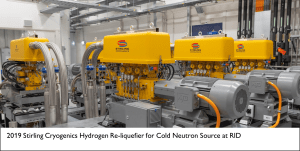
Stirling and Gifford-McMahon (GM) cryocoolers are two of the most commonly used cryocoolers in cryogenics. Both devices have a significant industrial base and operate at a wide range of temperatures and capacities. The thermodynamic cycles for both of these cryocoolers are quite similar. The Stirling cycle consists of a compressor,...

Liquefied Natural Gas (LNG)

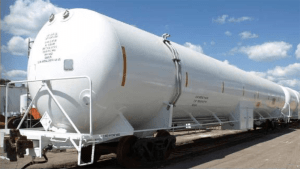
A significant commercial application of cryogenics is the liquefaction, transport and storage of natural gas. Liquefied Natural Gas (LNG) is generally 95 percent methane with a few percent ethane and much lower concentrations of propane and butane. LNG liquefies at 111.6 K. Unlike many applications of cryogenics, the motivation for...

Cryogenics in Space

Peter Kittel University of California-Berkeley pkittel@cal.berkeley.edu Space Cryogenics is the application of cryogenics to space missions. These applications fall into two broad areas, supporting space science missions and supporting the space transportation infrastructure. Science applications: The atmosphere is opaque to much of the electro-magnetic spectrum. In space, the absence of...

Cryosurgery

Review of Cryosurgery Boris Rubinsky, PhD Hebrew University School of Science and Engineering Research Center for Biomedical Engineering 78b Ross Building Givat Ram, Jerusalem 91904 Israel rubinsky@cs.huji.ac.il as published in Annual Review of Biomedical Engineering, August 2000, Vol. 2, pp. 157-187. Abstract: Cryosurgery is a surgical technique that employs freezing...

Liquefied Natural Gas

Liquefied Natural Gas as it relates to the Field of Cryogenics John W. Bonn VJ Systems, LLC johnbonn@vjsystems-lic.com Today the world is looking for a cleaner fuel and Liquefied Natural Gas (LNG) plays a large part in achieving this goal. LNG in a liquid form is at -162°C (-259°F) and...

Food Processing

Cryogenics and Food The industrial gas industry provides a host of products and services related to food. The various gases have useful and sometimes fascinating applications in food industry. “The food industry is not a homogenous industry. The needs of customers processing hamburger vs. poultry vs. strawberries vs. seafood, for...

Data on thermal expansion down to 40K

For our cold mechanics, we use ball bearings from ADR from stainless steel which is AISI 440C, DIN X105CrMo17, W.Nr. 1.4125. Does anyone know the data of thermal expansion of this material down to 40 K?

Materials for "cryogenics in spacetech"?

I had to take a seminar in a national competition that is to be held in our country on the topic “cryogenics in spacetech.” For this, I need some materials related to it, and I thought to approach you for help. Can you suggest some relevant materials?