ADVERTISEMENT

3D Systems Announces Copper-nickel Alloy for PBF-LB

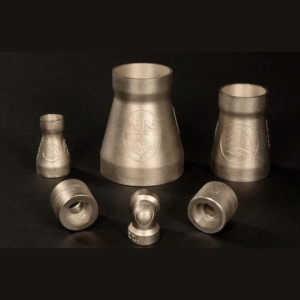
3D Systems has announced CuNi30 – a corrosion-resistant, copper-nickel alloy for use with its DMP Flex 350, metal additive manufacturing machine. The material is a result from the company’s collaboration with HII’s Newport News Shipbuilding division to develop materials and process parameters for the Laser Beam Powder Bed Fusion (PBF-LB) process. “We’re...


Nikkiso to Bring Hydrogen Fueling Stations to California, South Korea, and Germany

Nikkiso Clean Energy & Industrial Gases Group was awarded multiple contracts for over a dozen locations. Nikkiso Clean Energy & Industrial Gases Group (CE&IG), a part of the Japanese company Nikkiso Co., Ltd group of companies, has announced that it was awarded several contracts for providing over a dozen hydrogen fueling...

NASA’s Cold Atom Lab Experiments with Exotic State of Matter

Since the days of NASA’s Apollo program, astronauts have documented (and contended with) how liquids like water behave differently in microgravity than they do on Earth – coalescing into floating spheres instead of bottom-heavy droplets. Now, researchers have demonstrated this effect with a much more exotic material: gas cooled to...

Temperatures Colder Than Space, Achieved on Earth Through X-ray Laser

A half-mile-long tunnel under Menlo Park, Calif., has become colder than most of the universe because of a particle accelerator that slams electrons together here on Earth. Using the X-ray free-electron laser at the Department of Energy’s SLAC National Accelerator Laboratory – part of an upgrade project to the Linac Coherent...

Extreme Cool – Making Liquid Nitrogen in a Deep Underground Clean Lab

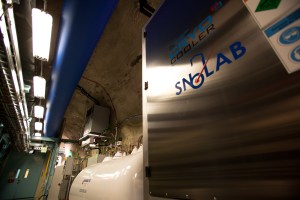
SNOLAB is Canada’s deep underground research laboratory, located two kilometers underground in Vale’s Creighton mine near Sudbury, Ontario, Canada. SNOLAB is a unique facility, providing a low background environment designed for scientific research and operates a 5,000m2 underground campus as a class-2000 clean lab. While the science program is focused...

ADVERTISEMENT

Space Cryogenics

Space cryogenics is, somewhat obviously, the application of cryogenics to space exploration and science. The use of cryogenics in space optimizes the launching of vehicles, provides power and life support to spacecraft and is critical for many scientific observations.Space cryogenics has a number of challenges and has driven both pure...

Exergy

The science of thermodynamics plays a major role in cryogenics. It underlies the various refrigeration cycles, from Carnot to Brayton (Cold Facts Vol. 32 No. 2) and Joule-Thomson, is a fundamental part of the definition of terms such as coefficient of performance (Cold Facts Vol. 31 No. 1) and even...

Cryogenic Treatment

Cryogenic treatment is the process of cooling materials to cryogenic temperatures temporarily to improve their material properties at room temperature. This is distinct from cooling materials down to cryogenic temperatures to take advantage of phenomena such as superconductivity that only occur at cryogenic temperatures. Cryogenic treatment, sometimes also referred to...

Magnetic Levitation

From http://www.superconductors.org. Magnetic-levitation is an application where superconductors perform extremely well. Transport vehicles such as trains can be made to “float” on strong superconducting magnets, virtually eliminating friction between the train and its tracks. Not only would conventional electromagnets waste much of the electrical energy as heat, they would have...

Superconductivity

From Superpower website. History of Superconductivity Superconductivity was discovered in 1911 by the Dutch physicist, Heike Kammerlingh Onnes when he was able to liquefy helium by cooling it to 4 Kelvin, or -452°F. This enabled him to cool other materials close to absolute zero and investigate their electrical properties. He...

Medical Applications of Cryogenics

Neutron Therapy Cryogenics is at the heart of nuclear accelerators. Accelerators such as Fermilab’s Tevatron make neutron therapy for cancer possible. From Fermilab Today 4/20/09: Fermilab currently offers neutron therapy. But staff at Fermilab designed and built the proton accelerator used by the nation’s first hospital-based treatment center to use...

Nuclear Physics

Al Zeller National Superconducting Cyclotron Lab (NSCL) at Michigan State University zeller@nscl.msu.edu Cryogenics has a long history in nuclear physics. The technology has its origins in the use of cold traps for maintaining a vacuum, which is required to prevent beam loss and for generating high voltages used in acceleration....

An Issue of Pressure and Flow Rate in a Supply Tank

Please help solve this problem: A supply tank requires a vaporizer to generate sufficient pressure to pump stored fluid up into a vehicle or tank. The available head is limited as the tank level falls and it is important to minimize the system pressure drop to maintain the desired flow...

Using MLI on VJ Line Joints or Cryo Storage Tanks

When installing Multi Layer Insulation (MLI) blankets on VJ line joints or cryo storage tanks should they be wrapped and tied down tight or loose? These are usually pre-cut to size. Also should they have an access hole at the point of where the molecular sieve is installed to help...