ADVERTISEMENT

Thermal Control Designs Keep Astronauts Cool on Space Station

For astronauts, staying cool and comfortable on China’s Tiangong space station is no problem. The station orbits Earth in about 90 minutes at an altitude of 400 km. It experiences large fluctuations in temperature, ranging from 150 degrees Celsius when the station is exposed to the sun to minus 100...

First Radio-Astronomy Cryogenic Receivers with All-Metal 3D-Printed RF Components

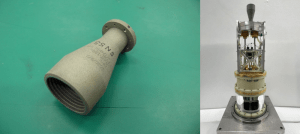
The NAOJ ALMA Project and Advanced Technology Center have successfully fabricated corrugated all-metal 3D-printed horns for the ALMA Band 1 receivers (Radio Frequency: 35-50 GHz). Since around 2015, the NAOJ ALMA Project and the Advanced Technology Center have been studying the applications of additive manufacturing (AM), which produces three-dimensional objects by...

Azenta Hosts First Cryogenic Considerations for Cell & Gene Therapy Symposium

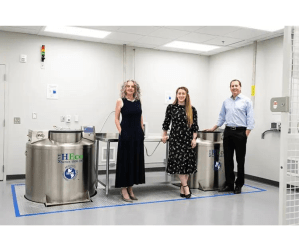
Azenta Life Sciences, a leading provider of life sciences solutions worldwide, hosted the Cryogenic Considerations for Cell and Gene Therapy Symposium in Boston, MA October 17-19th. The symposium brought together over 100 participants across over 60 organizations including top cryobiology experts to discuss the nuances of cryogenic supply chain, transient warming, and...

Almac Unveils New Cryogenic Service Solution for Advanced Therapy Trials

Almac Clinical Services, a member of The Almac Group, announced a new state-of-the-art cryogenic service solution within its Durham, N. C. campus to support cell and gene therapies. This latest investment from Almac adds to the company’s overall $4 million investment to date in innovative cold chain technology in North...

ADVERTISEMENT

Mixed Refrigerant Cycles

Most cryogenic refrigeration systems, both large scale systems and cryocoolers, use helium as a working fluid. There are a number of advantages to helium, not the least of which is that helium remains a fluid down to the lowest achievable temperatures. In order to freeze helium, pressures of over 20...

Fountain Pumps and He II Phase Separators

Helium II (He II), the second liquid phase of the 4He isotope described in this column in Cold Facts Spring 2010 (http://2csa.us/he2), can be modeled as consisting of two interpenetrating fluids. One, the superfluid component, has zero viscosity and entropy and the other, the normal fluid component, has nonzero viscosity...

Turboexpanders

A vital technology in the refrigerators and liquefiers described in Cold Facts Volume 31 Number 3 is that of turboexpanders. These devices are rotating machines in which the process fluid (e.g., helium) does work against the turboexpander while moving from high pressure to a lower pressure and thus is cooled....

History of Cryogenics

From the Fall 1999 issue of Cold Facts magazine Millennium Breakthroughs A variety of CSA members give different perspectives on the past millennium: What were the most significant breakthroughs in cryogenics during the past millennium? Prof. R.G. Scurlock, Kryos Technology, scurlock@soton.ac.uk (“Breakthrough” = way through obstacles — Oxford English Dictionary)...

Cryobiology

Andreas Sputtek Past President Society for Cryobiology sputtek@uke.uni-hamburg.de or http://www.sputtek.de/. The word cryobiology (from the Greek words “cryo” = cold, “bios” = life, and “logos” = science) literally signifies the science of life at low temperatures. In practice, this field comprises the study of any biological material or system (e.g.,...

Cryogenic Insulation

James E. Fesmire Cryogenics Test Laboratory NASA Kennedy Space Center james.e.fesmire@nasa.gov Introduction In today’s world, the use of cryogenics and low-temperature refrigeration is taking a more and more significant role. From the food industry, transportation, energy, and medical applications to the Space Shuttle, cryogenic liquids must be stored, handled, and...

Cryogenic Treatment of Materials

F.J. Diekman Controlled Thermal Processing, Inc. info@metal-wear.com Cryogenic Processing (also called cryogenic treatment, and incorrectly “cryogenic tempering”) is a process that uses cryogenic temperatures to modify materials to enhance their performance. Cryogenic Processing involves the slow reduction in temperature of the material to at least -300°F (-185°C) and holding the...

An Issue of Pressure and Flow Rate in a Supply Tank

Please help solve this problem: A supply tank requires a vaporizer to generate sufficient pressure to pump stored fluid up into a vehicle or tank. The available head is limited as the tank level falls and it is important to minimize the system pressure drop to maintain the desired flow...

Using MLI on VJ Line Joints or Cryo Storage Tanks

When installing Multi Layer Insulation (MLI) blankets on VJ line joints or cryo storage tanks should they be wrapped and tied down tight or loose? These are usually pre-cut to size. Also should they have an access hole at the point of where the molecular sieve is installed to help...