ADVERTISEMENT

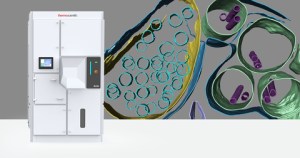
New Microscope Advances Cryo-ET Research

Thermo Fisher Scientific Inc. unveiled the Thermo Scientific Arctis Cryo-Plasma Focused Ion Beam (Cryo-PFIB), a new connected and automated microscope designed to advance the pace of cryo-electron tomography (cryo-ET) research. Cryo-ET makes it possible to study how proteins and other molecules operate together in a cellular context, at resolutions unsurpassed by...


Excavation of Huge Caverns for DUNE Particle Detector Underway

Around a mile below the surface in South Dakota, construction crews are hard at work excavating around 1,000 tons of rock per day. Their goal is to make room for a large underground facility that will house an international effort aimed at studying neutrinos—highly elusive subatomic particles that may hold...

In DNA–Scientists find solution to building superconductor that could transform technology

Scientists at the University of Virginia School of Medicine and their collaborators have used DNA to overcome a nearly insurmountable obstacle to engineer materials that would revolutionize electronics.  One possible outcome of such engineered materials could be superconductors, which have zero electrical resistance, allowing electrons to flow unimpeded. That means...

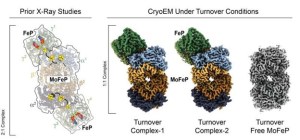
Researchers Take First-Ever Cryo-EM Images of Nitrogenase in Action

Previously, it has been impossible to capture the high-resolution images of nitrogenase, the only enzyme capable of reducing nitrogen into ammonia, during catalytic action. Now, for the first time, researchers at the University of California San Diego report near-atomic-resolution snapshots of nitrogenase during catalysis using cryogenic electron microscopy (cryoEM). The...

ADVERTISEMENT

Refrigerators and Liquefiers

Two of the most common terms used in cryogenics are “refrigerator” and “liquefier.” These terms describe similar and, as will be seen, in some cases identical components. A refrigerator provides cooling (that is, absorbs heat) at cryogenic temperatures. Refrigerators typically put a working fluid (such as helium) through one of...

Air Separation

Air separation is one of the largest, as well as earliest, industrial applications of cryogenics. In this process, cryogenic temperatures are used to separate air into its constituent gases: nitrogen (78.08%), oxygen (20.95%), argon (0.93%) and carbon dioxide (0.3%). Trace gases such as krypton, neon, xenon and helium total far...

Coefficient of Performance and Figure of Merit

The coefficient of performance (COP) is used to describe the effectiveness of refrigerators, including those operating at cryogenic temperatures. The COP is defined as the amount of heat removed at the cryogenic operating temperature of the refrigerator divided by the amount of work that must be applied to remove the...

Magnetic Levitation

From http://www.superconductors.org. Magnetic-levitation is an application where superconductors perform extremely well. Transport vehicles such as trains can be made to “float” on strong superconducting magnets, virtually eliminating friction between the train and its tracks. Not only would conventional electromagnets waste much of the electrical energy as heat, they would have...

Superconductivity

From Superpower website. History of Superconductivity Superconductivity was discovered in 1911 by the Dutch physicist, Heike Kammerlingh Onnes when he was able to liquefy helium by cooling it to 4 Kelvin, or -452°F. This enabled him to cool other materials close to absolute zero and investigate their electrical properties. He...

Medical Applications of Cryogenics

Neutron Therapy Cryogenics is at the heart of nuclear accelerators. Accelerators such as Fermilab’s Tevatron make neutron therapy for cancer possible. From Fermilab Today 4/20/09: Fermilab currently offers neutron therapy. But staff at Fermilab designed and built the proton accelerator used by the nation’s first hospital-based treatment center to use...

Nuclear Physics

Al Zeller National Superconducting Cyclotron Lab (NSCL) at Michigan State University zeller@nscl.msu.edu Cryogenics has a long history in nuclear physics. The technology has its origins in the use of cold traps for maintaining a vacuum, which is required to prevent beam loss and for generating high voltages used in acceleration....

An Issue of Pressure and Flow Rate in a Supply Tank

Please help solve this problem: A supply tank requires a vaporizer to generate sufficient pressure to pump stored fluid up into a vehicle or tank. The available head is limited as the tank level falls and it is important to minimize the system pressure drop to maintain the desired flow...

Using MLI on VJ Line Joints or Cryo Storage Tanks

When installing Multi Layer Insulation (MLI) blankets on VJ line joints or cryo storage tanks should they be wrapped and tied down tight or loose? These are usually pre-cut to size. Also should they have an access hole at the point of where the molecular sieve is installed to help...