ADVERTISEMENT

“Gas stations” in Zero Gravity

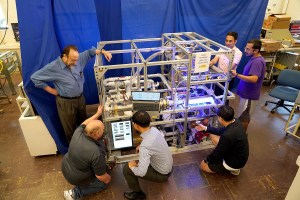
To journey and return from other planets, future spacecraft may have to do something they’ve never done before: refuel in space. Thanks to a Purdue University experiment, scientists are now beginning to understand how cryogenic liquids behave in zero-gravity, and how this affects the future operation of propellant depots in...

Journey of the Maglev

In early January 2022, a prototype mag- lev train was rolled out in southwest China’s city of Chengdu, one of the latest developments in magnetic levitation trains. The domestically developed locomotive uses high temperature superconducting and will travel with a designed speed of 620 km/h, according to Southwest Jiaotong University,...

The GigaSphere: Game Changer for Next Generation of Clean Energy

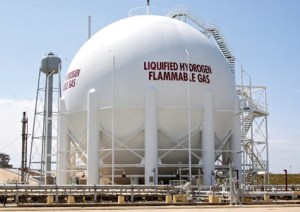
Large spheres have been used to store liquid hydrogen for decades. In fact, two 3,218 cubic meter (850,000 gallon) liquid hydrogen storage spheres have supported space flight pro- grams at the Kennedy Space Center since the mid-1960s. Currently, NASA plans to use the latest and largest liquid hydro- gen tank ever...

Eta Space Develops Cryogenic Propellant Depots for Earth and Space

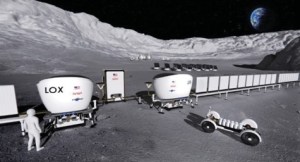
Eta Space, a new space company dedicated to developing advanced cryogenic systems for the modern space and energy age, is celebrating its three-year anniversary in June with milestones scheduled for several key projects. Eta Space is developing LOXSAT, a 135 kg demonstration satellite designed to test critical cryogenic fluid management (CFM) technologies...

Penflex Controls Pressure at the Intersection of Vacuum and Cryogenic Sciences

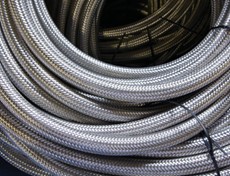
Vacuum technologies have advanced the field of cryogenics, allowing researchers to push the frontiers of what we know and businesses to apply that knowledge and drive innovation across a wide range of industries. The intersection of vacuum and cryogenic sciences is a demanding one. Pressure and temperature requirements create a...

Space Cryogenics: The ECOSTRESS Instrument After Four Years in Space

The instrument is approaching four years of operation in space, with its over- all thermal performance as predicted and no changes to cryocooler performance. To date, all three cryocoolers have accumulated over 32,000 operating hours. On the 210th day after the initial power-on, a fault condition was detected, and the...

ADVERTISEMENT

Dewar

A dewar is a type of cryostat named after Sir James Dewar, the researcher who first developed the concept of a vacuum insulated container with silvered walls to reflect thermal radiation. Dewar was the first to liquefy hydrogen, and he created the device to store his discovery. The thermos bottle...

Stirling and Gifford-McMahon Cryocoolers

Stirling and Gifford-McMahon (GM) cryocoolers are two of the most commonly used cryocoolers in cryogenics. Both devices have a significant industrial base and operate at a wide range of temperatures and capacities. The thermodynamic cycles for both of these cryocoolers are quite similar. The Stirling cycle consists of a compressor,...

Liquefied Natural Gas (LNG)

A significant commercial application of cryogenics is the liquefaction, transport and storage of natural gas. Liquefied Natural Gas (LNG) is generally 95 percent methane with a few percent ethane and much lower concentrations of propane and butane. LNG liquefies at 111.6 K. Unlike many applications of cryogenics, the motivation for...

Magnetic Levitation

From http://www.superconductors.org. Magnetic-levitation is an application where superconductors perform extremely well. Transport vehicles such as trains can be made to “float” on strong superconducting magnets, virtually eliminating friction between the train and its tracks. Not only would conventional electromagnets waste much of the electrical energy as heat, they would have...

Superconductivity

From Superpower website. History of Superconductivity Superconductivity was discovered in 1911 by the Dutch physicist, Heike Kammerlingh Onnes when he was able to liquefy helium by cooling it to 4 Kelvin, or -452°F. This enabled him to cool other materials close to absolute zero and investigate their electrical properties. He...

Medical Applications of Cryogenics

Neutron Therapy Cryogenics is at the heart of nuclear accelerators. Accelerators such as Fermilab’s Tevatron make neutron therapy for cancer possible. From Fermilab Today 4/20/09: Fermilab currently offers neutron therapy. But staff at Fermilab designed and built the proton accelerator used by the nation’s first hospital-based treatment center to use...

Nuclear Physics

Al Zeller National Superconducting Cyclotron Lab (NSCL) at Michigan State University zeller@nscl.msu.edu Cryogenics has a long history in nuclear physics. The technology has its origins in the use of cold traps for maintaining a vacuum, which is required to prevent beam loss and for generating high voltages used in acceleration....