ADVERTISEMENT

Researchers Investigate Intricacies in Superconductors with Hopes to Support Quantum Computer Development

Ryan Day studies superconductors. Materials that conduct electricity perfectly, losing no energy to heat and resistance. Specifically, the University of California, Berkeley scientist studies how superconductors can coexist with their opposites; insulating materials that stop the flow of electrons. The materials that combine these two opposed states, called topological superconductors, are understandably weird, hard...

NASA Mars Orbiter Releasing One of Its Last Rainbow-Colored Maps

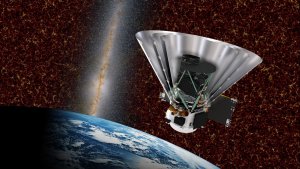
Scientists are about to get a new look at Mars, thanks to a multicolored 5.6-gigapixel map. Covering 86% of the Red Planet’s surface, the map reveals the distribution of dozens of key minerals. By looking at mineral distribution, scientists can better understand Mars’ watery past and can prioritize which regions...

Daimler Truck Testing Fuel-cell Truck with Liquid Hydrogen; sLH2 Refueling

Since last year, a Mercedes-Benz GenH2 Truck fuel-cell prototype has been undergoing intensive testing both on the in-house test track and on public roads. Daimler Truck is now putting another prototype into operation to test the use of liquid hydrogen. Political support for the development program comes from Daniela Schmitt, Minister of Economic...

FormFactor Launches Cryogenic Test Service to Dramatically Reduce the Time and Cost for Superconducting Qubit Characterization

FormFactor, Inc., a leading semiconductor test and measurement supplier, today announced an innovative and new cryogenic test service business model designed to accelerate quantum computing IC development and characterization. Quantum developers can now leverage FormFactor’s state-of-the-art Advanced Cryogenic Lab located at Boulder, Colorado, to characterize qubits and resonators using cryostats...

Launch Vehicle Propelled by Innovative Heat Exchanger

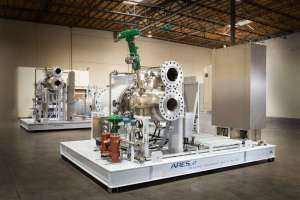
Writing in the journal Cryogenics, a team of scientists from the Korea Aerospace Research Institute has evaluated the performance of a helium heat exchanger for launch vehicles. Performance was evaluated under real engine operating conditions.  Launch Vehicles Efficient launch vehicle design is vital for the spacetech industry. Technology has advanced since the...

ADVERTISEMENT

Dewar

A dewar is a type of cryostat named after Sir James Dewar, the researcher who first developed the concept of a vacuum insulated container with silvered walls to reflect thermal radiation. Dewar was the first to liquefy hydrogen, and he created the device to store his discovery. The thermos bottle...

Stirling and Gifford-McMahon Cryocoolers

Stirling and Gifford-McMahon (GM) cryocoolers are two of the most commonly used cryocoolers in cryogenics. Both devices have a significant industrial base and operate at a wide range of temperatures and capacities. The thermodynamic cycles for both of these cryocoolers are quite similar. The Stirling cycle consists of a compressor,...

Liquefied Natural Gas (LNG)

A significant commercial application of cryogenics is the liquefaction, transport and storage of natural gas. Liquefied Natural Gas (LNG) is generally 95 percent methane with a few percent ethane and much lower concentrations of propane and butane. LNG liquefies at 111.6 K. Unlike many applications of cryogenics, the motivation for...

Magnetic Levitation

From http://www.superconductors.org. Magnetic-levitation is an application where superconductors perform extremely well. Transport vehicles such as trains can be made to “float” on strong superconducting magnets, virtually eliminating friction between the train and its tracks. Not only would conventional electromagnets waste much of the electrical energy as heat, they would have...

Superconductivity

From Superpower website. History of Superconductivity Superconductivity was discovered in 1911 by the Dutch physicist, Heike Kammerlingh Onnes when he was able to liquefy helium by cooling it to 4 Kelvin, or -452°F. This enabled him to cool other materials close to absolute zero and investigate their electrical properties. He...

Medical Applications of Cryogenics

Neutron Therapy Cryogenics is at the heart of nuclear accelerators. Accelerators such as Fermilab’s Tevatron make neutron therapy for cancer possible. From Fermilab Today 4/20/09: Fermilab currently offers neutron therapy. But staff at Fermilab designed and built the proton accelerator used by the nation’s first hospital-based treatment center to use...

Nuclear Physics

Al Zeller National Superconducting Cyclotron Lab (NSCL) at Michigan State University zeller@nscl.msu.edu Cryogenics has a long history in nuclear physics. The technology has its origins in the use of cold traps for maintaining a vacuum, which is required to prevent beam loss and for generating high voltages used in acceleration....

Specs and info on turbo expanders

I am a fourth year chemical engineering student doing a design project for the liquefaction of natural gas to DME and we are using a turbo expansion unit. I was wondering whether you would send me some specs and any additional information on turbo expanders that I could use as...

Colleges that offer cryogenic studies

Would you happen to know of any colleges in the US that offer cryogenics as a major? If not, should I major in something like biology or physics before, then branch off to the field of cryogenics? Any information that you could give me would be greatly appreciated, considering this...

Data on hardness of Indium?

Where can I find experimental data on the hardness of Indium, as a function of temperature, as well as any existing data on the thermal contact conductance of junctions containing Indium foil, also as a function of temperature?