ADVERTISEMENT

Young Professionals 2022

The Next Generation in Cryogenics and Superconductivity. This feature introduces outstanding young professionals (under 40 years of age) who are doing interesting things in cryogenics and superconductivity and who show promise of making a difference in their fields. Debuted in the Summer 2006 issue, the feature has presented many young persons...
DOE Establishes New Office of Clean Energy Demonstrations

CSA April Newsletter SponsorHigh-performance, highly reliable, long-lasting storage tanks for transporting hydrogen & helium molecules around the globe.​https://www.gardnercryo.com [Contact Jamie Luedtke for Newsletter Sponsorship] Home About Membership Login Calendar Cold Facts Buyer’s Guide News Publications Cryo Careers Resources Donate Join now Log in Cryogenic Society of America, Inc. Twitter Facebook...

Scientists Produce First In-Vitro Lion Embryos

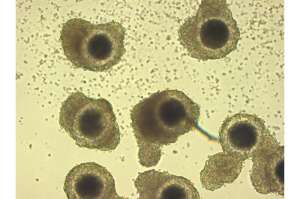
A team of scientists have succeeded in producing the very first African lion in-vitro embryos after the vitrification of immature oocytes. For this specific method of cryopreservation, the scientists, who hail from the Leibniz Institute for Zoo and Wildlife Research (Leibniz-IZW) in Germany, Givskud Zoo–Zootopia in Denmark, and the University of Milan,...

Cryoport and Cell Matters Enter Into Strategic Partnership

Cell Matters, a Belgian based company, enhances cell therapy productivity by turning cryopreservation into a competitive advantage, offering an integrated set of GMP services, in line with regulatory, quality, and GMP requirements of the cell therapy industry. Cryoport combines expertise in cryobiology, cell therapy production, and bio-logistics. Further, Cell Matters...

Demaco Releases New Range of Cryogenic Valves

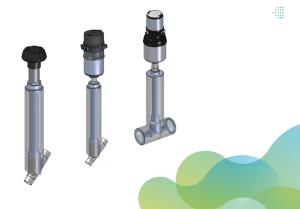
Valve manufacturer Demaco Netherlands BV (Demaco) has announced the release of its new range of Demaco Cryogenic Valves. Having redesigned and improved its current valve range, which includes manual on/off, pneumatic on/off, and control valves, the company has overhauled its technology to help increase the area of usage.  The new valves...

ADVERTISEMENT

Dewar

A dewar is a type of cryostat named after Sir James Dewar, the researcher who first developed the concept of a vacuum insulated container with silvered walls to reflect thermal radiation. Dewar was the first to liquefy hydrogen, and he created the device to store his discovery. The thermos bottle...

Stirling and Gifford-McMahon Cryocoolers

Stirling and Gifford-McMahon (GM) cryocoolers are two of the most commonly used cryocoolers in cryogenics. Both devices have a significant industrial base and operate at a wide range of temperatures and capacities. The thermodynamic cycles for both of these cryocoolers are quite similar. The Stirling cycle consists of a compressor,...

Liquefied Natural Gas (LNG)

A significant commercial application of cryogenics is the liquefaction, transport and storage of natural gas. Liquefied Natural Gas (LNG) is generally 95 percent methane with a few percent ethane and much lower concentrations of propane and butane. LNG liquefies at 111.6 K. Unlike many applications of cryogenics, the motivation for...

Wind Tunnels

Dr. Robert Kilgore The development of the cryogenic wind tunnel is one of many significant breakthroughs in both cryogenics and wind-tunnel technology made during the past millennium. Interest in the development of high-speed commercial and military aircraft resulted in a review of problems of flow simulation in transonic wind tunnels...

History of Cryogenics

From the Fall 1999 issue of Cold Facts magazine Millennium Breakthroughs A variety of CSA members give different perspectives on the past millennium: What were the most significant breakthroughs in cryogenics during the past millennium? Prof. R.G. Scurlock, Kryos Technology, scurlock@soton.ac.uk (“Breakthrough” = way through obstacles — Oxford English Dictionary)...

Cryobiology

Andreas Sputtek Past President Society for Cryobiology sputtek@uke.uni-hamburg.de or http://www.sputtek.de/. The word cryobiology (from the Greek words “cryo” = cold, “bios” = life, and “logos” = science) literally signifies the science of life at low temperatures. In practice, this field comprises the study of any biological material or system (e.g.,...

Cryogenic Insulation

James E. Fesmire Cryogenics Test Laboratory NASA Kennedy Space Center james.e.fesmire@nasa.gov Introduction In today’s world, the use of cryogenics and low-temperature refrigeration is taking a more and more significant role. From the food industry, transportation, energy, and medical applications to the Space Shuttle, cryogenic liquids must be stored, handled, and...

Power usage: cryogenic systems vs. regular refrigerators

A recent project highlighted to me that closed cycle cryogenic cooling systems use far more electrical power to reduce temperatures by a few watts than regular refrigerators. I am sure it must be something to do with the extra difficulty of removing the heat from the liquid nitrogen or similar...

Redundancy strategies for mechanical -80C freezers

I was wondering what kind of redundancy strategies are people using for their mechanical -80C freezers? I am aware of the following. Please add if you are doing something different. 1) 1 Backup freezer for every 10 freezers – Empty and maintained at -80C at all times 2) Backup C02...

Method to move components in a cryogenic environment

Does anyone know of a method with which to reliably move components in a cryogenic environment? We are interested in moving detectors in a cryogenically cooled (2K) vacuum chamber, which is contained within a larger cryostat/isolation vacuum with thermal shields. As the desired horizontal or vertical displacement is between 10...