ADVERTISEMENT

CryoHiVac Investigates Cryogenic Market, Affordability from Earth to Space

Today’s time-sensitive market needs revolutionization of traditional costly technologies. The cryogenic and electronic market development and utilization started from 1970 for commercial applications, and both are fast-growing technologies. There has been significant advancement of electronic products. Nowadays, a small smartphone has much more data storage and processing power capability than...

Valcor Releases New White Paper on Cryogenic Launch Vehicle Valves

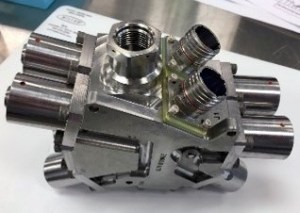
Launch vehicles, particularly the upper stages, often use cryogenic rocket propellants such as liquid oxygen, liquid hydrogen and liquid methane because of their high specific impulse and high storage density. The pressurization, control and distribution of these propellants requires sophisticated valving that can operate and seal at these extreme temperatures....

Particle Accelerator Magnet Sets Record Using High Temperature Superconductor

Cost- and energy-efficient rapid cycling magnets for particle accelerators are critical for particle physics research. Their performance determines how frequently a circular particle accelerator can receive a bunch of particles, propel them to higher energy, send them to an experiment or target station, and then repeat all over again. A...

The Second Quantum Revolution

For physicists trying to harness the power of electricity, no tool was more important than the vacuum tube. This lightbulb-like device controlled the flow of electricity and could amplify signals. In the early 20th century, vacuum tubes were used in radios, televisions and long-distance telephone networks. But vacuum tubes had...

ADVERTISEMENT

Dewar

A dewar is a type of cryostat named after Sir James Dewar, the researcher who first developed the concept of a vacuum insulated container with silvered walls to reflect thermal radiation. Dewar was the first to liquefy hydrogen, and he created the device to store his discovery. The thermos bottle...

Stirling and Gifford-McMahon Cryocoolers

Stirling and Gifford-McMahon (GM) cryocoolers are two of the most commonly used cryocoolers in cryogenics. Both devices have a significant industrial base and operate at a wide range of temperatures and capacities. The thermodynamic cycles for both of these cryocoolers are quite similar. The Stirling cycle consists of a compressor,...

Liquefied Natural Gas (LNG)

A significant commercial application of cryogenics is the liquefaction, transport and storage of natural gas. Liquefied Natural Gas (LNG) is generally 95 percent methane with a few percent ethane and much lower concentrations of propane and butane. LNG liquefies at 111.6 K. Unlike many applications of cryogenics, the motivation for...

History of Cryogenics

From the Fall 1999 issue of Cold Facts magazine Millennium Breakthroughs A variety of CSA members give different perspectives on the past millennium: What were the most significant breakthroughs in cryogenics during the past millennium? Prof. R.G. Scurlock, Kryos Technology, scurlock@soton.ac.uk (“Breakthrough” = way through obstacles — Oxford English Dictionary)...

Cryobiology

Andreas Sputtek Past President Society for Cryobiology sputtek@uke.uni-hamburg.de or http://www.sputtek.de/. The word cryobiology (from the Greek words “cryo” = cold, “bios” = life, and “logos” = science) literally signifies the science of life at low temperatures. In practice, this field comprises the study of any biological material or system (e.g.,...

Cryogenic Insulation

James E. Fesmire Cryogenics Test Laboratory NASA Kennedy Space Center james.e.fesmire@nasa.gov Introduction In today’s world, the use of cryogenics and low-temperature refrigeration is taking a more and more significant role. From the food industry, transportation, energy, and medical applications to the Space Shuttle, cryogenic liquids must be stored, handled, and...

Cryogenic Treatment of Materials

F.J. Diekman Controlled Thermal Processing, Inc. info@metal-wear.com Cryogenic Processing (also called cryogenic treatment, and incorrectly “cryogenic tempering”) is a process that uses cryogenic temperatures to modify materials to enhance their performance. Cryogenic Processing involves the slow reduction in temperature of the material to at least -300°F (-185°C) and holding the...

Are there lists of existing biorepositories?

We are a relatively new Biorepository that was developed as part of a large breast cancer epidemiology study, and thus far we have accumulated DNA on over 8000 women along with extensive questionnaire, mammography, and case status data. I was wondering, are there lists of existing Biorepositories with their contents?...

Trying to design a system to store ammonia at -33°C

I am working on a project where we are trying to design a system to store ammonia at -33°C. In order to size the compressors to maintain the ammonia in the liquid state, I need to estimate the heat gained from the environment including the radiation from the sun and...