ADVERTISEMENT

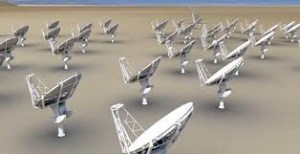
The National Radio Astronomy Observatory (NRAO) and Associated Universities, Inc. (AUI) are launching a two-year initiative to design a next-generation radio telescope with capabilities far beyond existing observatories. Building on the success of the NSF’s Karl G. Jansky Very Large Array (VLA), the proposed array—called the next-generation Very Large Array (ngVLA)—will feature over 200 antennas spanning the US desert southwest and northern Mexico. This facility aims to advance our understanding of planets, galaxies, black holes, and fundamental physics. Credit: Bill Saxton, NRAO/AUI/NSF

NSF National Radio Astronomy Observatory and RIX Industries Join Forces to Revolutionize Cryogenic Cooling for the ngVLA Project

by RIX Industries Communications Team In a groundbreaking collaboration that could change the landscape of both scientific discovery and cryogenic technology, the U.S. National Science Foundation’s National Radio Astronomy Observatory (NSF NRAO) has teamed up with RIX Industries to develop cutting-edge cryogenic cooling solutions for the Next Generation Very Large...
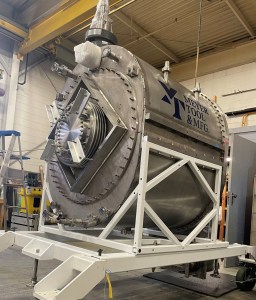
A high precision accelerator cryomodule produced by Meyer Tool for use in a particle accelerator at Brookhaven National Lab. MTM’s fabrication expertise is trusted by national labs and quantum technology firms worldwide. Credit: Meyer Tool & Manufacturing, Inc.

Meyer Tool Builds the Impossible, Empowering Illinois Manufacturing

by Christian Cunningham, Meyer Tool & Manufacturing Inc. Meyer Tool & Manufacturing, Inc., a long-standing leader in cryogenic, pressure and vacuum technologies, has reached a major milestone in its growth journey. The Illinois Department of Commerce and Economic Opportunity (DCEO) recently approved the company for participation in the Manufacturing Illinois...
Figure 1: An artist's rendering of the COSI satellite. Credit: Northrop Grumman Systems Corporation

Goddard Goings

An insight into past, present and future cryogenic missions where the Cryogenics and Fluids Branch at NASA Goddard Space Flight Center had or has a significant role. by Mark Kimball, Ph.D., Cryogenics and Fluids Branch, NASA Goddard Space Flight Center Readers of this column may recall last year’s recounting of...
A line-up of product family members, showing the different chassis sizes, as well as illustrating the modular integration of multiple cooling stages for ultralow temperature applications. Credit: Danaher Cryogenics

Danaher’s Acquisition of ADR Cryostat Line Pioneers the Future of Cryogenic Technology

by Charlie Danaher, Danaher Cryogenics, President In December, Danaher Cryogenics marked a significant milestone by completing the acquisition of the adiabatic demagnetization refrigerator (ADR) Cryostat product line from FormFactor. Originally developed by FormFactor’s subsidiary, High Precision Devices (HPD), the ADR product line has garnered a strong reputation among researchers and...
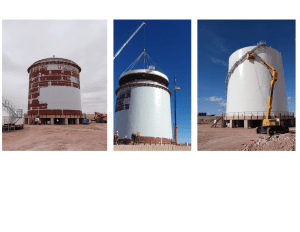
These images show the various stages of the assembly of the flat bottom tank LNG. Credit: Cryospain

Cryospain’s Flat-Bottom Tank Project in Morocco is a Step Forward for LNG

by Cryospain Communications Team As the global energy sector shifts toward more sustainable sources, liquefied natural gas (LNG) has emerged as a key transitional fuel. Its cleaner-burning profile, abundant supply and versatility position it as a bridge between fossil fuels and renewables. In this evolving landscape, Cryospain, a leader in...

ADVERTISEMENT

Mixed Refrigerant Cycles

Most cryogenic refrigeration systems, both large scale systems and cryocoolers, use helium as a working fluid. There are a number of advantages to helium, not the least of which is that helium remains a fluid down to the lowest achievable temperatures. In order to freeze helium, pressures of over 20...

Fountain Pumps and He II Phase Separators

Helium II (He II), the second liquid phase of the 4He isotope described in this column in Cold Facts Spring 2010 (http://2csa.us/he2), can be modeled as consisting of two interpenetrating fluids. One, the superfluid component, has zero viscosity and entropy and the other, the normal fluid component, has nonzero viscosity...

Turboexpanders

A vital technology in the refrigerators and liquefiers described in Cold Facts Volume 31 Number 3 is that of turboexpanders. These devices are rotating machines in which the process fluid (e.g., helium) does work against the turboexpander while moving from high pressure to a lower pressure and thus is cooled....

Cryogenics in Space

Peter Kittel University of California-Berkeley pkittel@cal.berkeley.edu Space Cryogenics is the application of cryogenics to space missions. These applications fall into two broad areas, supporting space science missions and supporting the space transportation infrastructure. Science applications: The atmosphere is opaque to much of the electro-magnetic spectrum. In space, the absence of...

Cryosurgery

Review of Cryosurgery Boris Rubinsky, PhD Hebrew University School of Science and Engineering Research Center for Biomedical Engineering 78b Ross Building Givat Ram, Jerusalem 91904 Israel rubinsky@cs.huji.ac.il as published in Annual Review of Biomedical Engineering, August 2000, Vol. 2, pp. 157-187. Abstract: Cryosurgery is a surgical technique that employs freezing...

Liquefied Natural Gas

Liquefied Natural Gas as it relates to the Field of Cryogenics John W. Bonn VJ Systems, LLC johnbonn@vjsystems-lic.com Today the world is looking for a cleaner fuel and Liquefied Natural Gas (LNG) plays a large part in achieving this goal. LNG in a liquid form is at -162°C (-259°F) and...

Food Processing

Cryogenics and Food The industrial gas industry provides a host of products and services related to food. The various gases have useful and sometimes fascinating applications in food industry. “The food industry is not a homogenous industry. The needs of customers processing hamburger vs. poultry vs. strawberries vs. seafood, for...

An Issue of Pressure and Flow Rate in a Supply Tank

Please help solve this problem: A supply tank requires a vaporizer to generate sufficient pressure to pump stored fluid up into a vehicle or tank. The available head is limited as the tank level falls and it is important to minimize the system pressure drop to maintain the desired flow...

Using MLI on VJ Line Joints or Cryo Storage Tanks

When installing Multi Layer Insulation (MLI) blankets on VJ line joints or cryo storage tanks should they be wrapped and tied down tight or loose? These are usually pre-cut to size. Also should they have an access hole at the point of where the molecular sieve is installed to help...