ADVERTISEMENT

Indirect Cryogenic Grinding Enhances Steel Alloy Properties

The machining process covers many material removal procedures; among them, grinding is one of the most important. Improved grinding is crucial to improve the overall machining process; hence, many researches focused on enhancing the performance of grinding operations by focusing on factors like wear, chattering vibrations, grinding wheel topography, temperature,...


GenH2 Supplies Cryostat CS500 System to University

GenH2 has signed an agreement with the University of Melbourne to provide the Cryostat CS500 simulation platform for cryogenic and hydrogen R&D projects. GenH2’s Cryostat CS500 system is capable of testing a wide range of thermal insulation systems, materials, composites, or panels under both cryogenic-vacuum conditions and real-world conditions. The University...

Air Products to Build Europe’s Largest Blue Hydrogen Plant

Air Products announced it will build, own and operate a state-of-the-art carbon capture and carbon dioxide (CO2) treatment facility at its existing hydrogen production plant in Rotterdam, the Netherlands. The facility is expected to be on-stream in 2026, and the resulting “blue” hydrogen product to serve ExxonMobil’s (Esso) Rotterdam refinery...

Maddox Industrial Group Announces Expansion to Gulf Coast

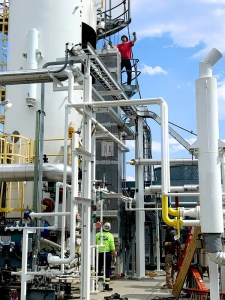
Maddox Industrial Group (MIG), a leader in delivering specialized industrial solutions to the air separation, energy, refining, petrochemical, wastewater, and other industries, has announced its strategic expansion into the Gulf Coast region. This growth is in collaboration with partner, Metalforms LLC (Metalforms), an industrial fabrication, services, and heat transfer solutions...

Cryo-Engineering for SRF

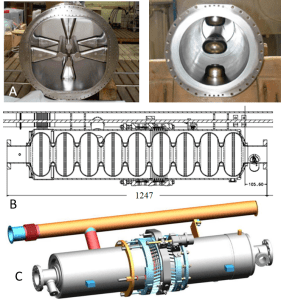
Fifty-Five Years of Inextricable Success-Superconducting Radio Frequency (SRF) cavities are vitally central to SRF accelerators, boasting a Q factor about 105 times higher than copper cavities and the capability to produce accelerating fields (Eacc) on an order of magnitude greater than copper in CW. In the 1960s, SRF cavities were...

H2FLY Pioneers Emissions-Free Flight with Successful Liquid-Hydrogen-Powered Aircraft

Stuttgart-based innovator H2FLY has achieved an unprecedented breakthrough in aviation history by successfully conducting the world’s first piloted flight of an electric aircraft powered by liquid hydrogen. This remarkable milestone marks a pivotal moment in the journey towards sustainable aviation, showcasing the immense potential of hydrogen-based technology in revolutionizing the...

ADVERTISEMENT

Mixed Refrigerant Cycles

Most cryogenic refrigeration systems, both large scale systems and cryocoolers, use helium as a working fluid. There are a number of advantages to helium, not the least of which is that helium remains a fluid down to the lowest achievable temperatures. In order to freeze helium, pressures of over 20...

Fountain Pumps and He II Phase Separators

Helium II (He II), the second liquid phase of the 4He isotope described in this column in Cold Facts Spring 2010 (http://2csa.us/he2), can be modeled as consisting of two interpenetrating fluids. One, the superfluid component, has zero viscosity and entropy and the other, the normal fluid component, has nonzero viscosity...

Turboexpanders

A vital technology in the refrigerators and liquefiers described in Cold Facts Volume 31 Number 3 is that of turboexpanders. These devices are rotating machines in which the process fluid (e.g., helium) does work against the turboexpander while moving from high pressure to a lower pressure and thus is cooled....

History of Cryogenics

From the Fall 1999 issue of Cold Facts magazine Millennium Breakthroughs A variety of CSA members give different perspectives on the past millennium: What were the most significant breakthroughs in cryogenics during the past millennium? Prof. R.G. Scurlock, Kryos Technology, scurlock@soton.ac.uk (“Breakthrough” = way through obstacles — Oxford English Dictionary)...

Cryobiology

Andreas Sputtek Past President Society for Cryobiology sputtek@uke.uni-hamburg.de or http://www.sputtek.de/. The word cryobiology (from the Greek words “cryo” = cold, “bios” = life, and “logos” = science) literally signifies the science of life at low temperatures. In practice, this field comprises the study of any biological material or system (e.g.,...

Cryogenic Insulation

James E. Fesmire Cryogenics Test Laboratory NASA Kennedy Space Center james.e.fesmire@nasa.gov Introduction In today’s world, the use of cryogenics and low-temperature refrigeration is taking a more and more significant role. From the food industry, transportation, energy, and medical applications to the Space Shuttle, cryogenic liquids must be stored, handled, and...

Cryogenic Treatment of Materials

F.J. Diekman Controlled Thermal Processing, Inc. info@metal-wear.com Cryogenic Processing (also called cryogenic treatment, and incorrectly “cryogenic tempering”) is a process that uses cryogenic temperatures to modify materials to enhance their performance. Cryogenic Processing involves the slow reduction in temperature of the material to at least -300°F (-185°C) and holding the...

An Issue of Pressure and Flow Rate in a Supply Tank

Please help solve this problem: A supply tank requires a vaporizer to generate sufficient pressure to pump stored fluid up into a vehicle or tank. The available head is limited as the tank level falls and it is important to minimize the system pressure drop to maintain the desired flow...

Using MLI on VJ Line Joints or Cryo Storage Tanks

When installing Multi Layer Insulation (MLI) blankets on VJ line joints or cryo storage tanks should they be wrapped and tied down tight or loose? These are usually pre-cut to size. Also should they have an access hole at the point of where the molecular sieve is installed to help...