ADVERTISEMENT

How to Avoid a Tank Collapse

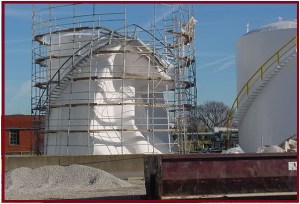
The industrial gas industry produces the elemental components of “air” (nitrogen, oxygen, and argon) that are used in other industries as part of their processes. Once separated from air, each element exists as an extremely cold cryogenic temperature liquid. Typical liquid temperatures are −185° C. Large, field-erected tanks are used...
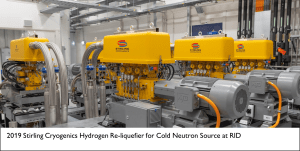

Hydrogen Liquefaction System Developed from Stirling Cryogenerators

Stirling cryogenerators have been widely used since the 1960s and 1970s for the production of LH2 at various institutes and research laboratories all over the world. In materials sciences, small-scale production was used to study the properties and behavior of LH2 and its effect on materials. In scientific devices, Stirling...

Liftoff! NASA’s Artemis I Mega Rocket Launches Orion to Moon

Following a successful launch of NASA’s Space Launch System (SLS), the most powerful rocket in the world, the agency’s Orion spacecraft is on its way to the Moon as part of the Artemis program. Carrying an uncrewed Orion, SLS lifted off for its flight test debut at 1:47 a.m. EST...

FRIB Experiment Pushes Elements to the Limit

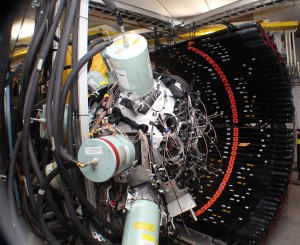
A new study led by the Department of Energy’s Lawrence Berkeley National Laboratory (Berkeley Lab) has measured how long it takes for several kinds of exotic nuclei to decay. The paper, published today in Physical Review Letters, marks the first experimental result from the Facility for Rare Isotope Beams (FRIB), a...

NASA Inflatable Heat Shield Finds Strength in Flexibility

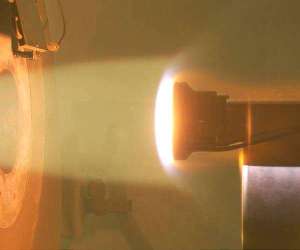
How does something that looks like a stack of orange inner tubes covered in a black tarp survive temperatures reaching 3,000 degrees Fahrenheit as it plunges through the atmosphere? An upcoming technology demonstration uses advanced materials to make a heat shield that’s tougher than it looks. Hypersonic Inflatable Aerodynamic Decelerator...

Pilot Project Tests New High-Capacity Transmission Lines

VEIR, an early-stage technology company based in Woburn, Mass., is pioneering the first application of superconducting transmission over long distances, a key component to deliver renewable sources of energy safely and reliably from where it is generated to where it is needed, often cross-country. VEIR is teaming up with National...

ADVERTISEMENT

Joule-Thomson Effect

The Joule-Thomson (JT) effect is a thermodynamic process that occurs when a fluid expands from high pressure to low pressure at constant enthalpy (an isenthalpic process). Such a process can be approximated in the real world by expanding a fluid from high pressure to low pressure across a valve. Under...

Current Leads

One of the challenges of using superconducting magnets is the connection of the magnet to a room temperature power supply. This is accomplished via current leads. The trick is that current leads should ideally have a low heat leak, since they connect room temperature to cryogenic temperature, while at the...

Multilayer Insulation

Multilayer insulation (also referred to as superinsulation) is a key component in the reduction of heat leak to cryogenic systems due to thermal radiation. MLI consists of a series of uncooled reflective surfaces placed in the vacuum space between two surfaces, one warmer than the other. Generally speaking, for ideal...

Magnetic Levitation

From http://www.superconductors.org. Magnetic-levitation is an application where superconductors perform extremely well. Transport vehicles such as trains can be made to “float” on strong superconducting magnets, virtually eliminating friction between the train and its tracks. Not only would conventional electromagnets waste much of the electrical energy as heat, they would have...

Superconductivity

From Superpower website. History of Superconductivity Superconductivity was discovered in 1911 by the Dutch physicist, Heike Kammerlingh Onnes when he was able to liquefy helium by cooling it to 4 Kelvin, or -452°F. This enabled him to cool other materials close to absolute zero and investigate their electrical properties. He...

Medical Applications of Cryogenics

Neutron Therapy Cryogenics is at the heart of nuclear accelerators. Accelerators such as Fermilab’s Tevatron make neutron therapy for cancer possible. From Fermilab Today 4/20/09: Fermilab currently offers neutron therapy. But staff at Fermilab designed and built the proton accelerator used by the nation’s first hospital-based treatment center to use...

Nuclear Physics

Al Zeller National Superconducting Cyclotron Lab (NSCL) at Michigan State University zeller@nscl.msu.edu Cryogenics has a long history in nuclear physics. The technology has its origins in the use of cold traps for maintaining a vacuum, which is required to prevent beam loss and for generating high voltages used in acceleration....

An Issue of Pressure and Flow Rate in a Supply Tank

Please help solve this problem: A supply tank requires a vaporizer to generate sufficient pressure to pump stored fluid up into a vehicle or tank. The available head is limited as the tank level falls and it is important to minimize the system pressure drop to maintain the desired flow...

Using MLI on VJ Line Joints or Cryo Storage Tanks

When installing Multi Layer Insulation (MLI) blankets on VJ line joints or cryo storage tanks should they be wrapped and tied down tight or loose? These are usually pre-cut to size. Also should they have an access hole at the point of where the molecular sieve is installed to help...