ADVERTISEMENT

New Partnership with Druck set for Major Breakthrough in Hydrogen-Powered Aircraft

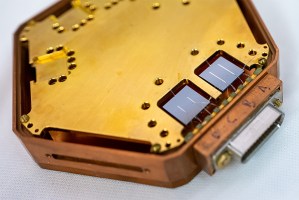
The University of Bath has entered a Knowledge Transfer Partnership (KTP) with Druck, a Crane Company business, to develop the world’s first flight-certified cryogenic hydrogen pressure sensor, helping pave the way for net-zero aviation. Hydrogen is one of the most promising solutions to decarbonising air travel, with aviation currently accounting...

In Memoriam: Dr. Ray Radebaugh

It is with deep sadness that we share the passing of Ray Radebaugh. Ray was a pioneer, mentor, and friend whose influence on cryogenics spanned more than five decades and touched nearly every corner of our field. Ray’s passion for engineering began early. Growing up in Mishawaka, Indiana, he learned...

New Cryogenic Vacuum Chamber Cuts Noise for Quantum Ion Trapping

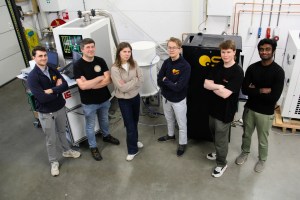
by John Toon, Georgia Institute of Technology Even very slight environmental noise, such as microscopic vibrations or magnetic field fluctuations a hundred times smaller than Earth’s magnetic field, can be catastrophic for quantum computing experiments with trapped ions. To address that challenge, researchers at the Georgia Tech Research Institute (GTRI)...

Remembering Bruce P. Strauss, a Steward of the Superconductivity Community

The superconductivity community has lost one of its most devoted stewards with the passing of Bruce P. Strauss, whose career spanned more than five decades and whose influence reached far beyond his own technical work. Bruce was not only a contributor to applied superconductivity; he was a builder of the...
Ratermann

Ratermann and Chart Expand Distributor Access Through Exclusive North American Agreement

Ratermann Manufacturing, Inc. and Chart Industries, Inc. have entered into a long-term strategic distribution partnership that changes how industrial micro-bulk and portable liquid cylinder tanks are supplied across North America. Under the agreement, Ratermann Manufacturing will serve as the exclusive North American distributor for Chart’s industrial micro-bulk and portable liquid...
IWC-HTS 2026: Cooling Systems for High-Temperature Superconducting Applications

IWC-HTS 2026 Brings the Cryogenics Community to the University of Twente

26–29 October 2026 | University of Twente, Enschede, The Netherlands The 5th International Workshop on Cooling Systems for High-Temperature Superconducting Applications (IWC-HTS 2026) will take place from 26 to 29 October 2026 at the Waaier Building, University of Twente, bringing together experts from academia, research institutions, and industry to discuss...

ADVERTISEMENT

Stability

Stability refers to the ability of a device employing superconductors to remain in its superconducting state after part of the superconductor transitions back to its normal conducting state due to a disturbance. While the concept can apply to many superconducting devices—transmission lines, generators, motors, etc.—it is most commonly considered in...

Cable-in-Conduit Conductors

Cable-in-Conduit Conductors (CICC) are a common form of superconducting cable used in large-scale applications. There are several varieties of CICCs, but they all consist of many small, stabilized superconducting wires contained within a conduit through which a coolant (typically supercritical He II) flows. Figure 1 shows the cross section of...

Bayonet Coupling

A bayonet coupling is a demountable joint that allows for quick and easy connection and disconnection of cryogenic components, including transfer lines, cryostats, liquefiers and refrigerators. Bayonets provide a number of advantages, chief among them the ability to connect and disconnect the bayonets while components they connect are still at...

Magnetic Levitation

From http://www.superconductors.org. Magnetic-levitation is an application where superconductors perform extremely well. Transport vehicles such as trains can be made to “float” on strong superconducting magnets, virtually eliminating friction between the train and its tracks. Not only would conventional electromagnets waste much of the electrical energy as heat, they would have...

Superconductivity

From Superpower website. History of Superconductivity Superconductivity was discovered in 1911 by the Dutch physicist, Heike Kammerlingh Onnes when he was able to liquefy helium by cooling it to 4 Kelvin, or -452°F. This enabled him to cool other materials close to absolute zero and investigate their electrical properties. He...

Medical Applications of Cryogenics

Neutron Therapy Cryogenics is at the heart of nuclear accelerators. Accelerators such as Fermilab’s Tevatron make neutron therapy for cancer possible. From Fermilab Today 4/20/09: Fermilab currently offers neutron therapy. But staff at Fermilab designed and built the proton accelerator used by the nation’s first hospital-based treatment center to use...

Nuclear Physics

Al Zeller National Superconducting Cyclotron Lab (NSCL) at Michigan State University zeller@nscl.msu.edu Cryogenics has a long history in nuclear physics. The technology has its origins in the use of cold traps for maintaining a vacuum, which is required to prevent beam loss and for generating high voltages used in acceleration....

An Issue of Pressure and Flow Rate in a Supply Tank

Please help solve this problem: A supply tank requires a vaporizer to generate sufficient pressure to pump stored fluid up into a vehicle or tank. The available head is limited as the tank level falls and it is important to minimize the system pressure drop to maintain the desired flow...

Using MLI on VJ Line Joints or Cryo Storage Tanks

When installing Multi Layer Insulation (MLI) blankets on VJ line joints or cryo storage tanks should they be wrapped and tied down tight or loose? These are usually pre-cut to size. Also should they have an access hole at the point of where the molecular sieve is installed to help...