ADVERTISEMENT

Got Propane?

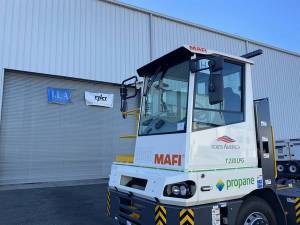
As the maritime industry mulls the ‘fuel of the future,’ a strong and growing case can be made for propane based on availability, cost and ease of use compared to competitive fuels. Darren Monzingo, president of FARO Industrial and VP of Engineering for GEM Marine, is a marine engineer and naval...
Trenta’s Final Fusion Test Campaign

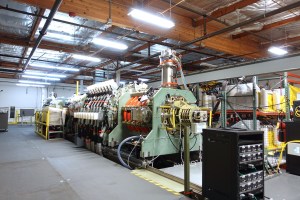
In 2023, Helion Energy, Inc., an American fusion research company, will end operations on Trenta, its 6th fusion prototype. The team is now undergoing Trenta’s last-ever fusion test campaign. For two years, its scientists and engineers have carried out rigorous research to test the capabilities of this fusion machine. The Helion...

Eta Space Commissions Liquid Hydrogen Test Facility

Eta Space is excited to announce the commissioning of a Liquid Hydrogen (LH2) Test Facility (LHTF) now available at their location in Rockledge, Florida. Customers can test their hardware and materials using LH2 with the benefit of small batch production. Previously only available in large quantities at high costs, Eta...

Special Permit Sought for Cryogenic Ethane Transport Via Rail

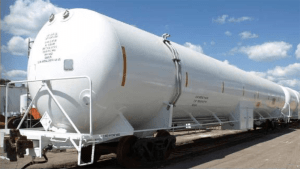
Gas Innovations LNG Refrigerants Inc. is seeking authorization to transport cryogenic ethane via rail in DOT-113C120W9 and DOT-113C120W tank cars, according to the Pipeline and Hazardous Materials Safety Administration (PHMSA). PHMSA, in consultation with the Federal Railroad Administration (FRA), is handling review of the special permit application and requesting comments...

Cryogenic CMOS Design for Quantum Chips on 22FDX

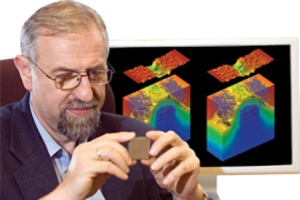
Semiwise in Glasgow has developed transistor SPICE models for cryogenic CMOS chip design and verification using the GlobalFoundries (GF) 22FDX  22nm fully depleted silicon-on-insulator (FD-SOI) process technology. The technology can be used for chips for quantum computers and also for data center processors with liquid nitrogen cooling. Semiwise used its patented...

ADVERTISEMENT

Dewar

A dewar is a type of cryostat named after Sir James Dewar, the researcher who first developed the concept of a vacuum insulated container with silvered walls to reflect thermal radiation. Dewar was the first to liquefy hydrogen, and he created the device to store his discovery. The thermos bottle...

Stirling and Gifford-McMahon Cryocoolers

Stirling and Gifford-McMahon (GM) cryocoolers are two of the most commonly used cryocoolers in cryogenics. Both devices have a significant industrial base and operate at a wide range of temperatures and capacities. The thermodynamic cycles for both of these cryocoolers are quite similar. The Stirling cycle consists of a compressor,...

Liquefied Natural Gas (LNG)

A significant commercial application of cryogenics is the liquefaction, transport and storage of natural gas. Liquefied Natural Gas (LNG) is generally 95 percent methane with a few percent ethane and much lower concentrations of propane and butane. LNG liquefies at 111.6 K. Unlike many applications of cryogenics, the motivation for...

Magnetic Levitation

From http://www.superconductors.org. Magnetic-levitation is an application where superconductors perform extremely well. Transport vehicles such as trains can be made to “float” on strong superconducting magnets, virtually eliminating friction between the train and its tracks. Not only would conventional electromagnets waste much of the electrical energy as heat, they would have...

Superconductivity

From Superpower website. History of Superconductivity Superconductivity was discovered in 1911 by the Dutch physicist, Heike Kammerlingh Onnes when he was able to liquefy helium by cooling it to 4 Kelvin, or -452°F. This enabled him to cool other materials close to absolute zero and investigate their electrical properties. He...

Medical Applications of Cryogenics

Neutron Therapy Cryogenics is at the heart of nuclear accelerators. Accelerators such as Fermilab’s Tevatron make neutron therapy for cancer possible. From Fermilab Today 4/20/09: Fermilab currently offers neutron therapy. But staff at Fermilab designed and built the proton accelerator used by the nation’s first hospital-based treatment center to use...

Nuclear Physics

Al Zeller National Superconducting Cyclotron Lab (NSCL) at Michigan State University zeller@nscl.msu.edu Cryogenics has a long history in nuclear physics. The technology has its origins in the use of cold traps for maintaining a vacuum, which is required to prevent beam loss and for generating high voltages used in acceleration....