ADVERTISEMENT

The Magneto-Optic Modulator

Many state-of-the-art technologies work at incredibly low temperatures. Superconducting microprocessors and quantum computers promise to revolutionize computation, but scientists need to keep them just above absolute zero (-459.67° Fahrenheit) to protect their delicate states. Still, ultra-cold components have to interface with room temperature systems, providing both a challenge and an...

Allen Dufort: Coding a cutting-edge space telescope

In July, as the world marveled at the first images of the Cosmic Cliffs and previously invisible areas of star birth revealed by the James Webb Space Telescope, Allen Dufort felt excited that he’d soon make his own contributions to space exploration. As a software engineer intern, Dufort is supporting Brown...

Cryogenic Operation of LEDs Results in Improved Quantum Efficiency

Terrestrial gravitational wave detectors have been used to identify various gravitational wave sources. For example, researchers have detected potential black hole neutron star mergers, binary neutron star inspirals, and binary black hole mergers via the advanced Laser Interferometer Gravitational-wave Observatory (LIGO). The aLIGO detectors’ most sensitive band is limited by thermal...

3D Systems Announces Copper-nickel Alloy for PBF-LB

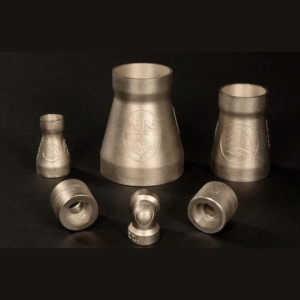
3D Systems has announced CuNi30 – a corrosion-resistant, copper-nickel alloy for use with its DMP Flex 350, metal additive manufacturing machine. The material is a result from the company’s collaboration with HII’s Newport News Shipbuilding division to develop materials and process parameters for the Laser Beam Powder Bed Fusion (PBF-LB) process. “We’re...

Nikkiso to Bring Hydrogen Fueling Stations to California, South Korea, and Germany

Nikkiso Clean Energy & Industrial Gases Group was awarded multiple contracts for over a dozen locations. Nikkiso Clean Energy & Industrial Gases Group (CE&IG), a part of the Japanese company Nikkiso Co., Ltd group of companies, has announced that it was awarded several contracts for providing over a dozen hydrogen fueling...

ADVERTISEMENT

Dewar

A dewar is a type of cryostat named after Sir James Dewar, the researcher who first developed the concept of a vacuum insulated container with silvered walls to reflect thermal radiation. Dewar was the first to liquefy hydrogen, and he created the device to store his discovery. The thermos bottle...

Stirling and Gifford-McMahon Cryocoolers

Stirling and Gifford-McMahon (GM) cryocoolers are two of the most commonly used cryocoolers in cryogenics. Both devices have a significant industrial base and operate at a wide range of temperatures and capacities. The thermodynamic cycles for both of these cryocoolers are quite similar. The Stirling cycle consists of a compressor,...

Liquefied Natural Gas (LNG)

A significant commercial application of cryogenics is the liquefaction, transport and storage of natural gas. Liquefied Natural Gas (LNG) is generally 95 percent methane with a few percent ethane and much lower concentrations of propane and butane. LNG liquefies at 111.6 K. Unlike many applications of cryogenics, the motivation for...

History of Cryogenics

From the Fall 1999 issue of Cold Facts magazine Millennium Breakthroughs A variety of CSA members give different perspectives on the past millennium: What were the most significant breakthroughs in cryogenics during the past millennium? Prof. R.G. Scurlock, Kryos Technology, scurlock@soton.ac.uk (“Breakthrough” = way through obstacles — Oxford English Dictionary)...

Cryobiology

Andreas Sputtek Past President Society for Cryobiology sputtek@uke.uni-hamburg.de or http://www.sputtek.de/. The word cryobiology (from the Greek words “cryo” = cold, “bios” = life, and “logos” = science) literally signifies the science of life at low temperatures. In practice, this field comprises the study of any biological material or system (e.g.,...

Cryogenic Insulation

James E. Fesmire Cryogenics Test Laboratory NASA Kennedy Space Center james.e.fesmire@nasa.gov Introduction In today’s world, the use of cryogenics and low-temperature refrigeration is taking a more and more significant role. From the food industry, transportation, energy, and medical applications to the Space Shuttle, cryogenic liquids must be stored, handled, and...

Cryogenic Treatment of Materials

F.J. Diekman Controlled Thermal Processing, Inc. info@metal-wear.com Cryogenic Processing (also called cryogenic treatment, and incorrectly “cryogenic tempering”) is a process that uses cryogenic temperatures to modify materials to enhance their performance. Cryogenic Processing involves the slow reduction in temperature of the material to at least -300°F (-185°C) and holding the...

Getter materials to absorb out gassed materials?

Here’s one for the scientists: We would like to sell vacuum insulated pipe for high temperature fluid applications. Are there any good getter materials that we can place in the vacuum space of our VJP to absorb outgassed materials at elevated temperatures?