 Cold Facts recently interviewed Richard Hitt, President and CEO, and Dr. Elie Track, Senior Partner, to learn about new progress in the use of Superconducting Radio Frequency (SC RF) techniques in telecommunications.
Hypres is a leading developer of digital SC technology for RF at the chip level. Hypres’ niobium-based integrated circuits become stable superconductors when cooled to 4.5K, packaged on a cryocooler. Hypres’ chips operate at clock frequency speeds approaching 40 GHz in the field, and beyond 100 GHz in the lab. This outstanding speed leads to significant performance improvements for a variety of applications such as wireless communications, instrumentation and advanced computing.
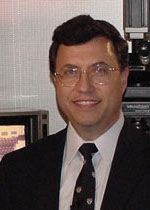
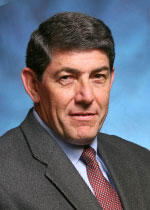
Hypres builds prototype receivers for military satellite communications and is developing the technology for the commercial wireless sector. They are developing receivers and transmitters optimized for 4G mobile broadband that will result in an all-digital cellular base station in the near future. This would reduce the number of cell towers, base stations and the RF equipment on the towers and in the base stations.
The company’s analog-to-digital converters (ADCs) are the world’s fastest and can directly digitize RF right off the antenna. This paves the way for development of all-digital receivers, transmitters and transceivers.
Both government and commercial sectors need to increase performance to meet the demands of multi-band, multi-channel, wide bandwidth operation, while reducing the overall size of the radio system. Both Hitt and Track emphasized that emerging platforms are more demanding on the packaging and call for new cryocooler approaches to meet those challenges. They emphasized the need for progress in development of cryocooler components, specifically the need to reduce the size, weight, power usage and cost. Whatever the application, the entire RF subsystem needs to fit into a “black box” that is rugged and compact, maintenance-free, easy to use, and features industry standard interfaces with the rest of the system.
In October 2008 Hypres demonstrated the operation of its high performance SC circuits in a modified Lockheed Martin compact four-stage pulse tube cryocooler operating at 4K. The lab prototype 4K cryocooler was developed from a proven Lockheed Martin 6K pulse tube design originally developed for space applications, underscoring the feasibility of pulse tube technology for use with high speed digital SC circuitry. The project was sponsored by the US Army Communications-Electronics Research, Development and Engineering Center, with consultation from a government advisory panel of experts in SC and cryocoolers.
Besides Lockheed, other major cryocooler manufacturers include Raytheon, Northrup Grumman and Ball Aerospace, but Hitt noted that very few have actually built compact cryocoolers with proven operation at 4K. In 2009 Hypres released a new Request for Information to industry and is currently engaging in discussions with a number of companies including Creare and CSA Corporate Sustaining Member Qdrive. Hitt reported that there are a lot of new developments, including new compressor technologies that promise to double the efficiency of these compact low temperature cryocoolers, which is “exciting and very promising.”
Track explained that many applications require these compact designs and the most common involve LTS circuits around 4K and at least one intermediate temperature stage (in the 60-80K range) for thermally anchoring leads and cooling semiconductor amplifiers or other semiconductor interface circuits (for example optical-to-electrical transducers).
These 2-stage systems must produce about 5 watts of cooling at the first stage and 100 mW at the second. However, since most of the heat load is from the leads and interconnects, greater efficiency is possible with additional cryocooler stages in some applications.
Hypres has developed a figure of merit (FoM) that allows them to compare cryocoolers with different stages for their applications. They presented this approach at the 2009 CEC-ICMC Conference whose proceedings will appear in Volume 55 of “Advances in Cryogenic Engineering.” Preprints can be obtained by contacting Jean Delmas,
delmas@hypres.org.
As their cryopackaging techniques evolve, for example by using HTS connections between first and second stages and/or by serializing the data links to reduce the number of leads, Hypres continues to reduce heat lift requirements and pack more complexity in these compact designs. Track said the majority of their systems, however, will be within factors of 2 of the 5W at 77K and 100 mW at 4K range, depending on the deployment platforms.
Airborne, vehicular, shipboard and fixed (cellular base stations and satellite terminals) systems all feature unique requirements for sensitivity to orientation, ruggedness and compactness. These requirements also directly impact the size, weight, power and lifetime attributes needed for the cryocooler.
For many rack-mounted and shipboard communications systems, the size, weight and power of existing cryocoolers are a good fit provided they are maintenance-free and meet lifetime requirements of 5-10 years and can tolerate orientation changes. In vehicular and of course airborne applications, robustness becomes a key factor, as does compactness of the whole system. But vehicular and airborne differ in the level of ruggedness and compactness needed.
All these different requirements plus conformity to military specifications put more demand on the engineering and suggest that a range of cryocooler options will be needed from multiple vendors.
Finally, another small corollary application relevant to certain systems involves a miniature single-stage cryocooler with about 100 to 200 mW of heat lift at 70K. These cryocoolers are for cooling individual low noise amplifiers (LNAs) made with conventional semiconductor technology.
It is likely that the same coolers used for infrared sensors can be applied here, as long as, again, the robustness and orientation-independence requirements are satisfied, Track said, noting that Hypres will present an update on the “Figure-of-Merit” at the upcoming ICC16 conference in May in Atlanta.
Several demonstrations for the military have proven the Hypres technology. In 2006 Hypres and CSA Corporate Sustaining Member L-3 Communications, working with the US Army Communications-Electronics Research, Development and Engineering Center, demonstrated direct RF digitization in the X-band frequency range using the Hypres processing chip cooled at 4K.
Rick Dunnegan, the project’s lead technical integrator, commented on this breakthrough, which potentially can lead to a reduction of satellite power consumption, saving money: “In the past 30-year history of satellite communications, this…effort is the most significant change to satellite communications worldwide.”
In 2009 Hypres and ViaSat, with support from Space and Naval Warfare Systems Center Pacific (The Space and Naval Warfare Systems Center, San Diego), demonstrated the industry’s first all-digital Link-16 multi-net receiver prototype. It was the culmination of a multi-year development sponsored by the Office of Naval Research (ONR), Washington DC, and Space and Naval Warfare Systems Command, PMW-150. The demonstration was presented at the newly established Center of Excellence for Cryogenic Exploitation of RF.
The receiver simultaneously digitized signals from two Link-16 radios operating on two independent Link-16 networks. Link-16 is a high-speed, airborne tactical link used by US and coalition forces for situational awareness and information exchange. It is designed to be resistant to electronic countermeasures.
Previously Link-16 receivers required multiple analog synthesizers to handle the high-speed hopping of the Link-16 signal, making performance improvements difficult and systems extremely large and expensive. These limitations allowed only one or two of the 127 nets to operate at any one time in a theater of operation.
Hypres’ Digital-RF™ technology makes simultaneous, multi-net Link-16 reception in a single terminal feasible with a new technique called “digital de-hopping,” which eliminates the frequency hopping analog synthesizer in the receiver, a breakthrough in secure communications of all types. Hitt said this project demonstrated their all-digital advantage for meeting “one of the most difficult RF challenges in military datalinks.”
He further added that this breakthrough paves the way for even more demanding requirements, such as secure mode, wideband EHF. The company has a prototype receiver for this application which has passed a first round of testing and demonstration. The goal is to improve reception from the latest AEHF military satellites.
Hypres is continuing its work for the cellular infrastructure industry. The goal is to build a very reliable and cost-effective package that is compatible with all cellular base stations serving the very high speed data demands of 4G. Hitt noted that “it is becoming more and more clear that the really high data rates that cellular providers are quoting, with mobile data to smart phones and laptops using wireless broadband, cannot be handled by an infrastructure equipped with only conventional RF technology. There just isn’t room on the towers to put all the receivers, transmitters, antennas and power amplifiers to provide sufficient 4G bandwidth.”
Hypres is working with a major base station supplier to develop an all-digital base station, with a prototype expected to be ready by mid-2010.
Hypres is also beginning work on a digital SQUID device, which is a better device than analog SQUIDs in RF reception and can multiplex and read out data directly from the receiver. The goal is to develop a small compact MRI system that eliminates the need for big SC magnets and very, very strong magnetic fields by using these digital SQUIDs in the RF chain.
Hitt explained that Hypres is now completing a $2 million upgrade on their foundry, adding a state-of-the-art lithography system that can produce chips at resolutions that rival what can be done at Jet Propulsion Laboratory, Lincoln Lab or even IBM. This will enable them to double or triple the speeds of the chips, get to smaller feature sizes and improve yield.
Hitt said, “I think we’re much closer to practical digital superconductor systems in the marketplace than we have ever been and the rate at which we’re getting there is accelerating all the time.” Hypres has booked over $12 million in new business in 2009 and entered 2010 with a record backlog.
“We’ve proved digital superconductors work in real applications. These prototype systems have been out at the customers’ facilities and hooked up to real systems. When you look at the remarkable performance this technology provides, and the potential to impact military, commercial, medical products, it’s amazing. That’s what makes Hypres so exciting,” he concluded.