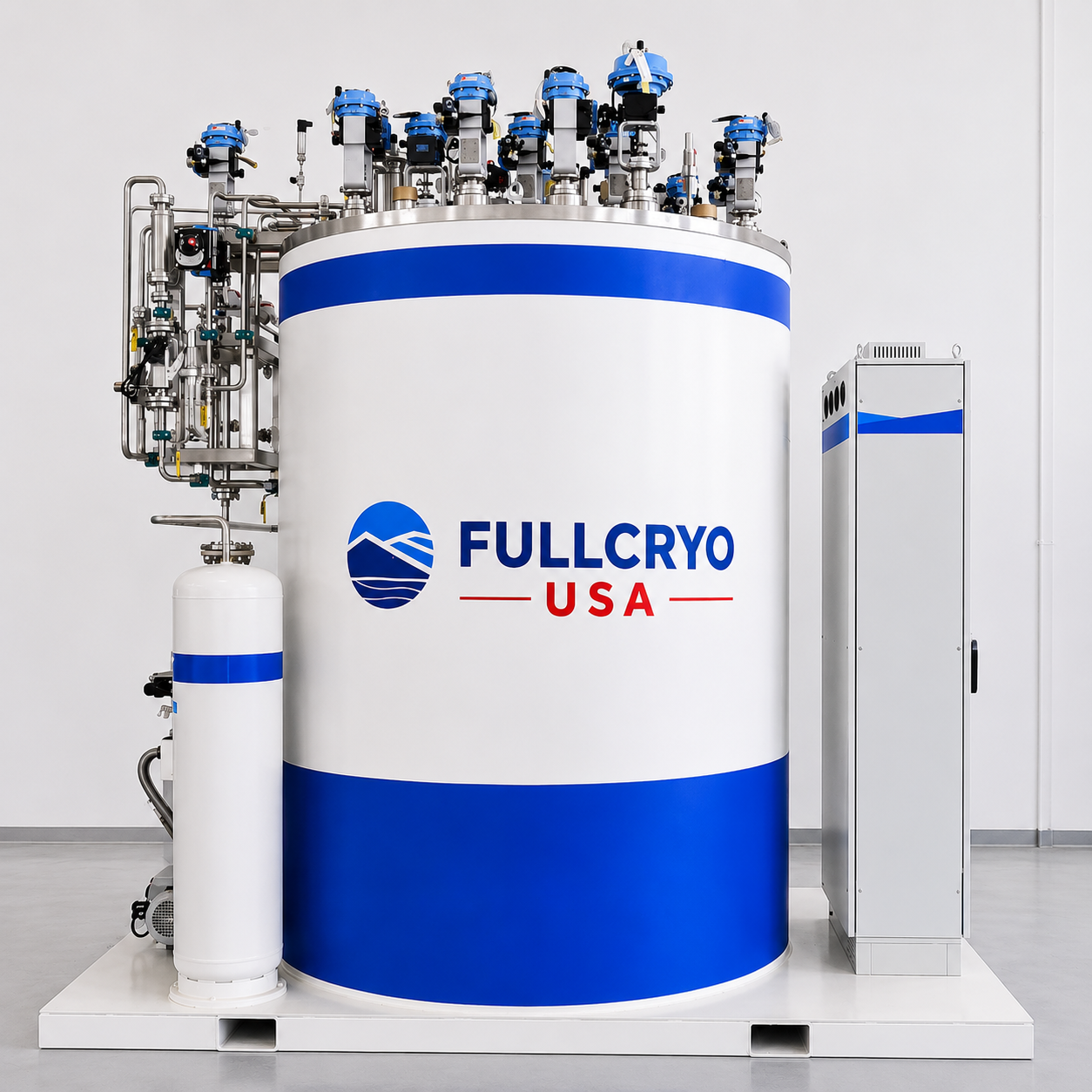
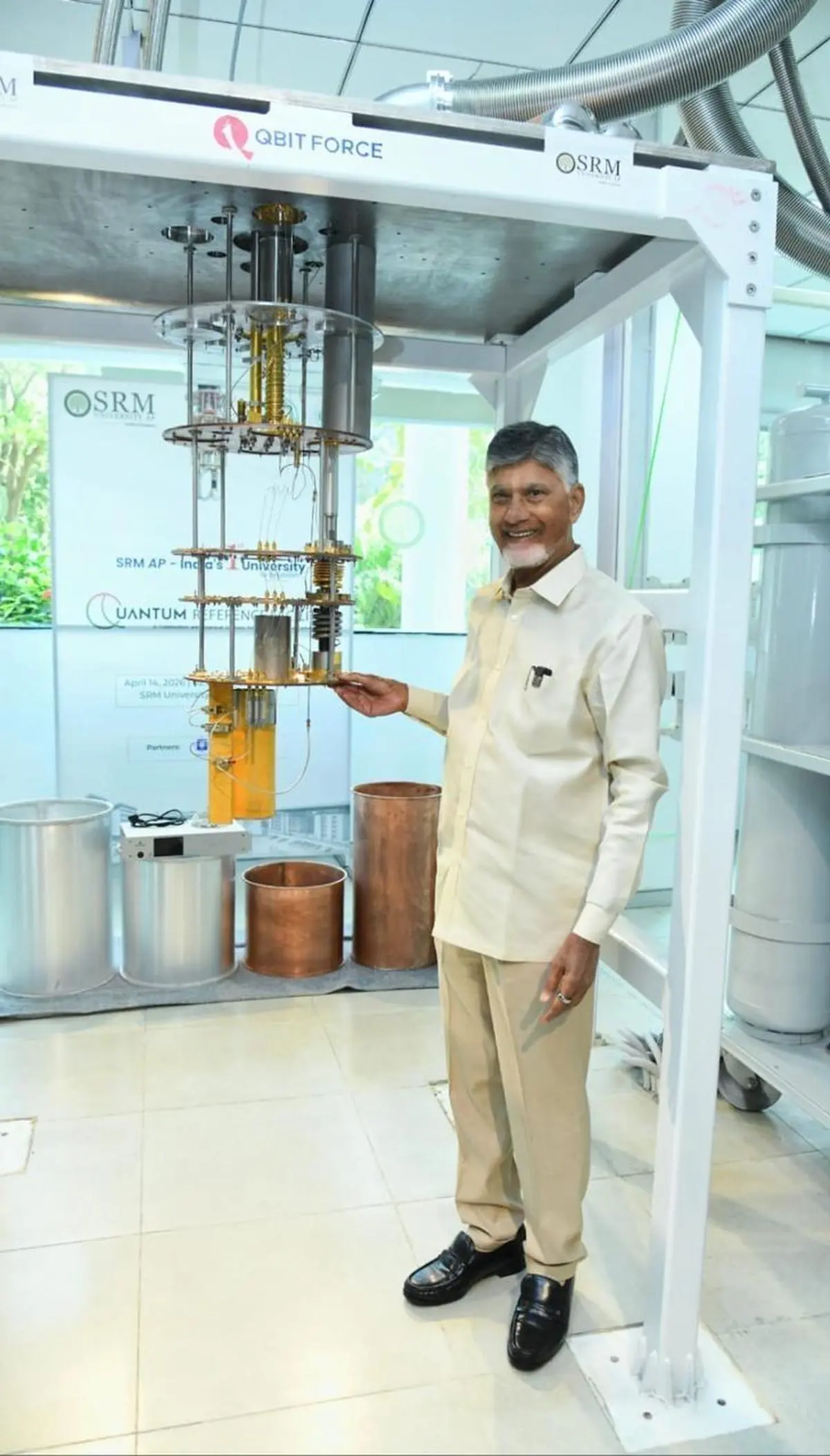
What is a Cryocooler?
A mechanism that can extract heat from an object (cooler) and by doing so draw its temperature down below approximately 150 Kelvin (cryo). — (Courtesy Dr. Willy Gully)
What is the difference between a Cryocooler and a Cryostat?
A cryostat is any device designed to maintain things (including fluids) at cryogenic temperatures. In general usage, cryostats tend to be passive devices rather than providing active cooling. In this usage cryostats keep things cold by thermally isolating them from room temperature. This generally accomplished by a combination of vacuum insulation, thermal radiation shields and superinsulation to reduce radiation heat transfer, and low thermal conductivity connections between room temperature and cryogenic temperatures.
In order to get the items in the cryostat cold in the first place you have to use cryogenic fluids, such as liquid nitrogen or liquid helium or very cold nitrogen and helium gas or a cryocooler or cryogenic refrigerator (see below).
With this definition, pretty much anything you wish to keep cold will be placed inside a cryostat – the superconducting magnets in LHC or ITER are built into cryostats, the cold boxes of large helium refrigerators are cryostats, As you point out cryocoolers (at least the cold parts of them) are contained in cryostats.
The thermos bottle that you have at home is a rudimentary form of a cryostat – is has a insulating vacuum and silvered walls to reduce heat transfer between room temperature and whatever you put into it. It thus keeps cold things cold and hot things hot. The thermos bottle was invented by James Dewar to store cryogenic liquids during his efforts to liquefy hydrogen. A synonym for cryostat is dewar. Many people, myself included, tend to use dewar when referring to cryostats designed solely to store cryogenic liquids. But this is not universally true and one occasionally hears people referring to test dewars that contain experimental equipment.
Okay, so now what’s a cryocooler? Cryocooler comes from the phrase cryogenic cooler and is a device for providing active cooling of something down to cryogenic temperatures. There is a wide range of these devices (pulse tube, Stirling, GM, Joule Thompson) that use different thermodynamic cycles and techniques to generate the cooling. There is a distinction in usage between cryocooler and cryogenic refrigerator.
Generally, the term cryocooler is used to describe smaller devices ( with a capacity of say 100 W or less) while cryogenic refrigerator (or cryoplant) is used to describe much larger systems like the CERN Helium refrigerators or even refrigerators with say 500 W capacity. There are exceptions to this usage, for example device that provide cooling using adiabatic demagnetization are almost always called Adiabatic Demagnetization Refrigerators (ADRs) rather than cryocoolers though they are generally quite small. While there are many types of cryocoolers; large cryogenic refrigerators all tend to use the same method to produce cooling (generally a version of the Claude cycle) as it is the best technical solution at these temperatures and scales. (–Courtesy Dr. John Weisend II, SLAC, NSF)
Cryocooler Applications
A survey of CSA members and other experts with several different perspectives.
From the Winter 2000 issue of Cold Facts magazine

The following chart of applications for cryocoolers was provided by Dr. Ray Radebaugh, Cryogenic Technologies Group, NIST Boulder (radebaugh@boulder.nist.gov):
- Military
- Infrared sensors for missile guidance and tactical applications; Infrared sensors for surveillance (satellite based)
- Police and Security
- Infrared sensors for night vision and rescue
- Environmental
- Infrared sensors for atmospheric studies of ozone hole and greenhouse effects; Infrared sensors for pollution monitoring
- Commercial
- Cryopumps for semiconductor fabrication; High temperature superconductors for cellular-phone base stations; Superconductors for voltage standards; Semiconductors for high speed computers; Infrared sensors for NDE and process monitoring
- Medical
- Cooling SC magnets for MRI systems; SQUID magnetometers for heart and brain studies; Liquefaction of oxygen for storage at hospitals and home use; Cryogenic catheters and cryosurgery
- Transportation
- LNG for fleet vehicles; SC magnets in maglev trains
- Energy
- LNG for peak shaving; Infrared sensors for thermal loss measurements; SC magnetic energy storage for peak shaving and power conditioning; SC power applications (motors, transformers, etc.)
- Agriculture and Biology
- Storage of biological cells and specimens
Radebaugh noted that “the two largest areas for applications are the cryopump and the cooling of infrared sensors for the military tactical applications. MRI is also of rather significant commercial importance. Cooling of HTS filters for cellular phone base stations has a lot of potential and is of considerable interest. The cryosurgical applications also have a lot of interest and could become a rather large applications area. The use of IR sensors for process monitoring is growing rapidly.”
Dr. Randall Barron, of Louisiana Tech University, (rbarron@bayou.com) offers the following bibliography on cryocoolers:
- Some of the recent applications for Gifford-McMahon (GM) cryocoolers include:
- Cooling for MRI systems
- Direct cooling of superconducting magnets
- Sample cooling in cryostats
- Cooling of High-Critical-Temperature (HTC) superconducting systems
- Cooling of low-temperature sensors
- [A. Lang, H-U. Hafner, and C. Heiden (1998). “Systematic Investigation of Regenerators For 4.2K Refrigerators”, in Advances in Cryogenic Engineering, vol. 43, Plenum Press, Inc., New York, pp. 1573-1580]
- One of the recent developments in cryocoolers is the design of combination systems, such as:
- GM/JT combination
[C. Winter, L. Cormie, D. Girard, and S. Wolfe (1998), “Closed-Cycle Cooling System for a Superconducting Magnet and 2K to 400K Variable Temperature Insert”, in Advances in Cryogenic Engineering, vol.43, Plenum Press, Inc., New York, pp. 1709-1714] - GM/Magnetic combination
[G.F. Nessis and J.L. Smith (1998), “An Experimental GM/Magnetic Refrigerator”, in Advances in Cryogenic Engineering, vol. 43, Plenum Press, Inc., New York, pp. 1767-1774] - Stirling/Pulse-Tube combination.
[L.B. Penswick, D.C. Lewis, and R.W. Olan (1998), “Development of a Linear Drive Cryocooler System Incorporating Both Stirling and Orifice Pulse Tube Refrigeration Cycles”, in Advances in Cryogenic Engineering, vol. 43, Plenum Press, Inc., New York, pp. 1879-1886]
- GM/JT combination
- Another development in cryocooler design is the use of rare-earth materials as regenerator matrix materials. These materials exhibit large peaks in specific heat in the 4K to 20K range and result in good regenerator performance at these temperatures.
[A. Lang et al.] - One of the major developments in Joule-Thomson (JT) cryocoolers is the use of mixtures as the refrigerant gas. This allows better cooldown response for the cryocooler, and results in good thermodynamic efficiency.
[A. Alexeev, Ch. Haberstroh, and H. Quack (1998), “Further Development of a Mixed Gas Joule Thomson Refrigerator”, in Advances in Cryogenic Engineering, vol. 43, Plenum Press, Inc., New York, pp. 1667-1674]
[J. Bruning and T. Pilson (1998), “Phillips Laboratory Space Cryocooler Development and Test Program”, in Advances in Cryogenic Engineering, vol. 43, Plenum Press, Inc., New York, pp. 1651-1660] - There is an excellent database (on CD) on cryocoolers, available from Nichols Research, Albuquerque NM, (contact Roberta Torrison, 505-843-7364). [Update 1/13/2009: We regret this database is no longer available]
- Also, there is an excellent study on the performance of cryocoolers for aerospace applications: D.S. Glaister, M. Donabedian, D.G.T. Curran, and T. Davis (1998), “An Overview of the Performance and Maturity of Long Life Cryocoolers for Space Applications”, AEROSPACE REPORT No. TOR-98(1057)-3, The Aerospace Corp., El Segundo CA; Prepared for A.F. Research Lab/VSSS, 3550 Aberdeen SE, Kirtland AFB NM 87117-5776.
Commercial Applications
The following discussion is courtesy of Dr. Jerry L. Martin, Mesoscopic Devices, LLC, (jmartin@mesoscopic.com).
“The largest commercial application of cryocoolers is as cryopumps, high speed oil-less vacuum pumps for high vacuum systems. Cryopumps work by freezing out vapors from the vacuum chamber onto an extended surface connected to the cryocooler cold head. The cold head is periodically isolated from the chamber and warmed up to desorb the vapors. Cryopumps typically utilize two-stage Gifford-McMahon cryocoolers to reach temperatures below 20K, allowing them to pump hydrogen. The market is dominated by CTI Cryogenics, Leybold, and IGC-APD Cryogenics. (Webmaster’s Note: Austin Scientific-Oxford Instruments is also a top supplier of cryopumps, making up more than IGC-APD and Leybold combined.) A sub-category of cryopumps is those systems designed to operate in the 150K range for high-speed pumping of water vapor. In the US, IGC-Polycold systems is the largest provider of such devices. These systems typically utilize mixed-gas Joule-Thomson cryocoolers.
“An emerging commercial use of cryocoolers is in cooling high temperature superconducting filters for cellular telephone base stations. Four companies in the US offer such systems (Superconducting Technologies Inc., Conductus, Illinois Superconductor, and Spectral Solutions, Inc). These superconducting receivers use thin-film or thick-film HTS filters to provide very narrow band-reject filters or bandpass filters with very steep skirts. Combined with cryogenically cooled low-noise amplifiers, these receivers allow a base station to either handle more calls, hear a handset further away, improve call quality, or a combination of these.
None of the four companies in this market has shown a profit, but stock prices of the three public companies have risen 100 to 400% in the last quarter, partly riding the coattails of Qualcomm, and partially due to perception that the technology will be more useful to third generation cellular telephone systems. These receivers use either G-M or Stirling cycle cryocoolers, and typically operate in the temperature range from 65 to 90K.
“Cooling of infrared and visible cameras continues to provide a market for small cryocoolers. While the recent years have seen a shift from cooled to un-cooled IR cameras, a market remains for high-performance infrared imagers cooled by small Stirling cycle cryocoolers. These systems typically use ‘tactical’ Stirling cryocoolers to provide cooling in the 70-120K range. A related area involves the cooling of CCD cameras operating in the visible range to reduce the dark current. These CCD cameras are used with very long exposure times to detect faint light sources. At least one manufacturer is using a mixed-gas J-T cooler to cool such cameras as an alternative to open-cycle LN2 cooling.
“Cooling of radiation detectors is another niche market for cryocoolers. Certain X-ray and gamma ray detectors show higher sensitivity and lower noise when cooled to cryogenic temperatures. Recent years have seen some manufacturers switch from open-cycle liquid cooling to closed-cycle mechanical cryocoolers for cooling detectors used in materials research applications such as activation analysis, surface analysis in scanning electron microscopes, and nuclear research.
“Semiconductors for high-speed computers. While there has been a lot of discussion, I know of no company actually shipping a cryocooled computer. Kryotech is shipping computers with cold (-40°C), but not cryogenic, processors.
Medical
“Liquefaction of oxygen for breathing purposes. After being talked about for more than two decades, it appears that the year 2000 will see the commercial introduction of cryocoolers for producing liquid oxygen. 1999 saw a flurry of patent activity, with US and international patents for in-home liquefaction of oxygen being awarded. In-X Corporation of Colorado showed a prototype of an oxygen separator feeding oxygen to a liquefier at a medical show in 1999. Their system uses a small Stirling cycle cryocooler. Other companies have expressed interest in this market, and both mixed-gas J-T and pulse tube cryocoolers have been discussed as oxygen liquefiers. The potential market for an in-home system that could liquefy oxygen for use in a portable oxygen dewar is quite large. Estimates of the market size range from 3,000 to nearly 50,000 units a year in the US alone.”
Cryocoolers for MRI Systems
Dr. Robert A. Ackermann, Staff Mechanical Engineer, GE Corporate R&D, (rackermann@crd.ge.com) in 1992 discussed “Closed Cycle Refrigeration for SC Applications,” in a course for GE’s Advanced Projects Laboratory. “An integral part of any SC application is the cryogenic support hardware required to cool the device. This hardware will vary in size and complexity depending on the operating temperature and capacity required, and, as too often happens, its performance will determine the successful implementation of the SC device. Therefore, the selection, sizing and integration of the cryogenic support systems with the SC device should occur early and should be an integral part of the design. [This] is even more important today as more emphasis is placed on commercializing SC devices and the need for closed-cycle cryogenic refrigerators to provide cooling.”
The paper gives a historical review of cryorefrigerator developments and use in SC devices. He concludes that “the minimum temperature for commercial success of cryocoolers has been 8K. The common factors in successful systems are:
- The cryogenics does not present logistic or maintenance concerns for the user;
- Manufacturers have established trained service personnel and provide world-wide service; and
- The selection and integration of the cryocooler was an integral part of the design effort and not an add-on.”
In another paper, presented at the Cryocoolers 10 conference in 1999, Ackermann, Kenneth Herd and William Chen covered “Advanced Cryocooler Cooling for MRI Systems.”
Among their findings: “Advances in cryocooler technology during the past several years have enabled the design of new cooling methods for MRI systems. The development of Gifford-McMahon cycle cryocoolers capable of cooling below liquid helium temperature, or providing larger cooling capacities between 4.2 and 10K, has removed design barriers and provided greater overall system design flexibility.
“The paper describes the impact that new GM cryocooler developments, based on rare earth intermetallic compounds in the second-stage regenerator, have had on MRI designs. By extending the cooling capacity of these units to below 4.2K with rare earth materials, new MRI products have been developed that operate as closed cycle systems without the need for replenishing liquid helium to maintain the magnet at temperature for long periods of time.
“The paper chronicles the evolution of MRI systems at GE from open cycle systems to two new developments using conduction cooling and helium recondensing to eliminate the need for refilling with helium. The paper reviews the design of a conductively cooled system developed for an open MRI magnet used for interventional therapy and a helium recondensing system that was incorporated into GE’s product line. Also covered is the operational reliability of cryo-cooled systems.”
Progress in MRI Magnets
In a paper presented at a recent SC Conference in Florida, Garry Morrow, Marketing Manager, Intermagnetics General Corporation (gmorrow@igc.com), takes on this topic.
“Since its appearance in the early 1980s, Magnetic Resonance Imaging (MRI) has taken its place as a major player in the non-invasive diagnosis of disease. It is the imaging modality of choice for detecting abnormalities of the brain, spine and musculo-skeletal systems. It is on the verge of widespread application in diagnosis of cardiovascular disease and in image guided surgery. While permanent and resistive magnets are used for low field applications (‘open’ MRI) most systems use high field superconducting magnets making MRI the largest commercial application of superconductivity.”
Morrow says the industry is currently producing more than 2000 units per year and has been growing at a double digit pace for the last four years. The worldwide installed base is estimated to be ~12,000 systems, ~5,000 in the US.
“The MRI magnet is the largest and most expensive component in the MRI system. Magnet configuration is the determining factor in MRI system architecture and directly connected to issues such as patient comfort, ease of siting, life cycle cost and functionality. All of these factors drive magnet requirements.
“Thus, MRI magnet requirements are determined by a combination of MRI system needs, technical requirements and market forces, plus the need for continuous reduction of both magnet-acquisition cost and total cost of ownership. Cost of ownership, in turn, includes siting, installation, operation and service.
Cryocooler Cryostat
“The adaptation of two stage Gifford McMahon refrigerators to cryostat thermal shield cooling has eliminated the need for an expensive and bulky LN2 tank within the cryostat. This was indeed fortunate because the space outside the main magnet winding was desperately needed to site the electromagnetic shielding coils in a region where the designer could simultaneously meet several competing requirements. These included field uniformity, stray field containment and peak field on winding at acceptable conductor cost and cryostat overall diameter.
By very careful integration of the cryocooler/cryostat designs it became possible to reduce helium boiloff, eliminate the cost of LN2 thermal shielding and provide a space for shield windings that kept conductor costs under control. The added benefit was that the larger space available for shield windings was also available for liquid helium thus making possible cryogen refill interval greater than one year.
The Future
“While some neurological imaging procedures, notably functional MRI, may benefit from field strength higher than 1.5 tesla, this appears to be a ‘research’ market in the near term.
“It is expected that emerging diagnostic procedures in cardiovascular imaging along with therapeutic procedures involving image-guided surgery will produce a concurrent demand for higher fields than are currently available in ‘open’ slot magnets and greater access to the patient than is currently available in ‘short bore’ magnets. These goals are not consistent with the perceived need for continuing magnet price reduction.
“Because of the need to restrain forces of electromagnetic origin, the most efficient way to produce a uniform high field in a large volume is with an array of circular superconducting windings on a single coil form. To achieve the higher fields needed in the ‘open’ configurations, superconducting windings operating on separate coil forms, with little or no help from iron, will be needed. These will be more expensive than present compact magnet coil assemblies and field strengths higher than 1.0 tesla may not be feasible.
The alternative is even shorter solenoidal magnets. If the bore size is maintained near one meter to preserve ‘open-ness’ these will also grow more expensive as the magnet designer struggles to maintain a large zone of uniformity as well as a small stray field footprint in ever shorter magnets. It is clear that the industry will pursue both alternatives with vigor.
“Work will continue on 4K cryocoolers and pulse tube refrigerators may offer low vibration operation with very long maintenance intervals resulting from the fact that there are no moving parts on the cold end. One of the initial motivations to consider HTS conductors was avoidance of cryogenics costs by cooling windings without liquid reservoirs and using more efficient refrigerators resulting from operation at higher temperatures. Continued progress in cryogenic refrigeration will result in a moving cost target for HTS conductors and it is doubtful that they will ever be applied in air core MRI magnet windings where significant amounts of conductor are required because they cost so much more than LTS conductors.
“It will be especially interesting to see if there is sufficient economic motivation for the emerging procedures to justify a departure from the trend of ever lower magnet prices that will result from the new configurations demanded. It is remarkable to note the high pace of magnet technology evolution in a market that is entering its 20th year.”
Morrow concludes that:
- “Superconducting MRI magnets have evolved to their present compact configuration in response to market demands for more patient comfort and lower total cost of ownership in the practice of radiology.
- “Active magnetic shielding of both the magnet and gradient windings has made an important contribution to siting cost reduction and functionality.
- “Advances in cryogenic technology have reduced operating and service costs of superconducting magnets to the point where they are practically invisible to the end user.
- “Demands for more physical access to patients as the MRI industry addresses new applications will challenge magnet designers to produce affordable new configurations at field strengths beyond the practical capability of permanent and resistive magnets.
“It appears that the pulse tube will be ‘it,'” he concluded, “most importantly because it does away with vibration.”
Thermoacoustic Liquefaction
Cryenco (now called Chart Denver) in collaboration with Los Alamos National Laboratory (LANL) is developing a natural-gas-powered cryogenic refrigeration technology having no moving parts and requiring no electrical power. It will be efficient, remarkably reliable and low cost. It is based on new and revolutionary Thermoacoustic Stirling Hybrid Heat Engine and Refrigeration (TASHER) technologies, which are descendants of thermoacoustic drivers first developed at LANL and pulse-tube refrigerators first developed at the National Institute of Standards and Technology (NIST) in Boulder CO.
A Thermoacoustic Stirling Heat Engine (TASHE) converts thermal energy directly to acoustic energy in the form of a high amplitude sound wave. Another new and related technology, Acoustic Stirling Hybrid Refrigeration (ASHR) is an advanced form of pulse tube refrigeration that produces refrigeration at cryogenic temperatures without cold, mechanical parts. Combining these two technologies produces a Thermoacoustic Stirling Heat Engine and Refrigerator. Such combinations of thermoacoustic engines and pulse tube refrigerators comprise the only cryogenic refrigeration technology which requires no moving parts.
A TASHER is “simply” a collection of at least six heat exchangers arranged within a network of piping filled with pressurized helium gas. In the engine, one heat exchanger is heated to roughly 1000K (1300°F), a second heat exchanger is held at ambient temperature, and a third, between the other two, is passive and thermally floating. The input heat causes these three heat exchangers to produce acoustic power in the helium gas, driving the pulse tube refrigerator and producing refrigeration power at roughly 100K (- 280°F). The only thing moving in the system is the oscillating helium gas. The heat can be supplied by virtually any source. This simplicity will result in low manufacturing cost and high reliability.
Although the basic hardware configuration of TASHER is simple, the underlying physics is very complex, and there are challenging engineering issues that must be solved to reduce the concept to practice. This technology is so new that only one laboratory model TASHE (1kW acoustic power) and one small laboratory model ASHR (0.03kW of cooling power) have been built and tested, by LANL. Cryenco, assisted by LANL, is currently designing and building the world’s first TASHER. Its TASHE will produce 35kW of acoustic power, and its ASHR will produce 7kW of refrigeration power at 125K (-230°F).
The TASHER technology is a very recent outgrowth of a more basic thermoacoustic engine and refrigeration technology called Thermoacoustically Driven Orifice Pulse Tube Refrigeration (TADOPTR). [See Cold Facts, Fall 1996 and Winter 1997.] Compared to the TADOPTR, the TASHER holds the promise of significantly higher efficiencies, which will be very important in many commercial applications. This small-scale laboratory model produced only 5W of refrigeration at 120K, but it successfully proved the fundamental concept. This first TADOPTR was a collaboration between Dr. Greg Swift (LANL) and Dr. Ray Radebaugh (NIST) who patented the concept and received an R&D100 Award for this outstanding achievement in 1990. In 1999 Swift and his LANL co-workers received another R&D100 Award for development of the Thermoacoustic Stirling Heat Engine.
In 1994 Cryenco licensed the TADOPTR technology from LANL, formed Cooperative Research and Development Agreements (CRADA) with LANL and NIST-Boulder and began development on thermoacoustic engines and pulse-tube refrigerators with the specific objective of commercialization. In 1997 Cryenco built and successfully operated the first natural gas fired TADOPTR. It produced 2kW of refrigeration power at 125K and achieved record efficiencies for both the TAD and the OPTR. The refrigeration power was a factor of 400 increase compared to the COOLAHOOP.
When commercialized, the TASHER will be a totally new type of heat-driven cryogenic refrigerator, with unprecedented low manufacturing cost, high reliability, long life, and low maintenance. A TASHER will be able to liquefy a broad range of gases, one of the most important being natural gas. Applications range from large-scale liquefaction at on-shore and offshore gas wellheads to distributed liquefaction of pipeline gas as fuel for heavy-duty fleet vehicles and long-haul operations. Future applications are expected in such diverse areas as refrigeration, air-conditioning, water heating, sonar, and electric-power generation. Much farther in the future, the TASHER could become an important element in developing and supporting the “hydrogen economy”. For details contact John Wollan, Program Director, Chart Denver, 303/373-3247.
Cryocoolers for SC Magnets
The following is from Dr. Toru Kuriyama, senior specialist, Applied SC and Quantum Technology Group, Toshiba Corporation.
Regenerative cycle cryocoolers, such as the Stirling cryocooler and the Gifford-McMahon (GM) cryocooler, are commonly applied in many cryogenic systems. Especially, a two-stage GM cryocooler is mostly used in industrial applications, such as cryopumps and thermal shield coolers for Magnetic Resonance Imaging (MRI) or other superconducting magnets. For superconducting magnet applications, two types of GM cryocooler are used. One is a conventional GM cryocooler; the other is a 4K-GM cryocooler.
Pb is the preferred second regenerator material for conventional GM cryocoolers because of its high heat capacity below about 80K. The specific heat for Pb, however, decreases rapidly with decreasing temperature and the heat capacity for the second regenerator material is no longer much larger than that for helium below 10K. Thus, the lowest temperature achieved by a conventional two-stage GM cryocooler is almost limited to around 8K.
A 4K-GM cryocooler was developed by Japanese research groups in the late 1980s. A 4K-GM cryocooler uses a magnetic specific heat of rare earth compounds which is much larger than that for Pb below 10 K. Figure 1 shows specific heat of some typical magnetic regenerator materials and Pb. Er3Ni is the most well-known material used in 4K-GM cryocoolers. Almost all magnetic regenerator materials can be made in a spherical shape and spherical magnetic regenerator materials are available.
Figure 3 shows schematic diagrams of a cryostat for a superconducting magnet (SCM) cooled by a GM cryocooler. A conventional two-stage GM cryocooler is used as a thermal shield cooler for a SCM (Fig. 3 (a). A superconducting coil is immersed in liquid helium. A liquid helium vessel is surrounded by two thermal shields which are cooled by each cooling stages of a two-stage GM cryocooler. The liquid helium evaporation ratio is extremely reduced by using a GM cryocooler instead of a liquid nitrogen thermal shield. Almost all SCMs for industrial applications, such as MRI or magnets for a semiconductor applications, adopt this configuration.
Figure 3 (b) shows a SCM cooled by a 4K-GM cryocooler. A superconducting coil is also immersed in liquid helium. But the second cooling stage which has a cooling capacity at 4K level recondenses evaporated helium in a helium vessel. Thus, a SCM without any refill of liquid helium is realized. This configuration is applied to MRI magnet.
Figure 3 (c) shows a conductive cooled SCM which does not use any cryogen such as liquid helium or liquid nitrogen. A superconducting coil is directly cooled by the second stage of a 4K-GM cryocooler at 4 K level via a good thermal conductive pass. The coil is surrounded by one thermal shield which is cooled by the first cooling stage at around 50K. An HTS current lead is used between a thermal shield and a superconducting coil. Heat leakage from a superconducting current lead is less than one-tenth of that for a conventional copper current lead. Heat leakage to 4K level is dramatically reduced and the total thermal load at 4K level becomes low enough for a 4K-GM cryocooler.
Conductive cooled SCMs feature simple operation, small size, easy access to a magnetic field etc. Several companies have commercialized conductive cooled SCMs. They are now applied not only for research use but also for industrial use, such as MRI, silicon crystal growth and magnetic separation.
A GM/JT cryocooler, which is another 4K cryocooler, is also used for SCM applications. Though a GM/JT cryocooler is more complicated and more expensive than a 4K-GM cryocooler, it is more efficient and has higher cooling capacity. GM/JT cryocoolers are used for relatively larger SCMs, such as micro-SMES and magnetic levitated trains (maglev). For GM/JT cryocoolers in maglev applications, magnetic regenerator material is used to improve cooling capacity at 15K level. An eight watt cooling capacity at 4.5K with less than 8 kW input power has been achieved. Superconducting coils for maglev are cooled by liquid helium and evaporated helium is re-condensed by a highly efficient GM/JT cryocooler.
Magnetic regenerator materials are also applied to a GM-type 4K-pulse tube cryocooler. This cryocooler has been commercialized and a conductive cooled SCM cooled by a 4K-pulse tube cryocooler has been reported. A GM-type pulse tube cryocooler for thermal shield cooling has also been developed. In future, both a conventional GM and a 4K-GM cryocoolers for SCM cooling may be replaced by a GM-type pulse tube cryocooler.
Cryocoolers for SC Electronics
One application for relatively compact cryocoolers that are able to reach 4.2K with a heat lift between 0.1W and 1W relates to integrating such cryocoolers with superconducting electronics A family of instrumentation products comprises the initial set, followed by possible military communications and electronic hardware, and finally commercial communications hardware.
Instrumentation
The first instrument for which all technologies are available is a cryocooled primary voltage standard system, used at national metrology laboratories and at calibration laboratories of major industries, including, e.g., some airlines and defense companies. Hypres, Inc., Elmsford, NY, after collaboration with NIST, has commercialized a liquid-helium version of such an instrument, and has been seeking for many years an appropriate cryocooler to introduce a closed cycle version of such instrument.
According to Dr. Elie K. Track (elie@hypres.com), President and CEO, Hypres has now successfully completed such integration, utilizing Leybold’s 4.2LAB cryocooler which is specified to provide 0.25 W heat lift at 4.2K. This is now a commercial product for which at least one sale has been completed and for which Hypres accepts new orders. The total market for this product is limited, however, due to the specialized nature of the instrument.
Graduating from such metrology instruments, a family of instruments based on a superconducting analog-to-digital converter are envisaged, including transient digitizers (oscilloscopes), spectrum analyzers, logic analyzers, bit-error rate testers, and random signal generators. These instruments are in the early development stage and initially can be configured using the existing Leybold 4.2LAB cryo-cooler. Any further refinement in cryocoolers, however, such as improved efficiency, reduced cost, lower power, can only have a positive impact on increasing the market size and customer acceptance of such instruments. The target market for this class of products is estimated to be well over $2B annually, with a goal of attaining 10% market penetration over a 5 year period from the time of introduction.
The same technology that can be used to digitize fast signals accurately, based on the quantum RSFQ logic family implemented using niobium integrated circuits, can be used to produce digitizing and processing modules applicable to radar and electronic warfare systems. The key advantages here are quantum accuracy and wide bandwidth. Reliable cryocoolers are the enabling technology, and size will vary with the deployment platform, from very compact in the case of airborne systems to acceptably large (1 or 2 Watts at 4.2K) for ground-based installations. The technology is currently under development, funded by the various services of the Department of Defense.
By far the largest market is in wireless communications. The holy grail of fully compatible wireless systems worldwide can be achieved by the incorporation of superconducting technology to digitize the signals at high bandwidth. Cryocoolers of very long lifetime (maintenance-free is highly desired) are indispensable in this case and are the main gating factor for the explosion of such a market
For vendors of cryocoolers see the our list of cryocooler suppliers from the CSA Buyer’s Guide.