An efficient, robust, and compact wind power plant with a 10 MW superconducting generator is being developed by partners from industry and science within the recently established EU project SUPRAPOWER (SUPerconducting, Reliable, lightweight, And more POWERful offshore wind turbine).
Superconductivity enables considerable savings of energy and raw materials. Within SUPRAPOWER, researchers at Karlsruhe Institute of Technologhy (KITO)’s Institute for Technical Physics (ITEP) are set to develop a rotating cryostat cooling the superconducting coils down to minus 253°C, a temperature crucial for electric current flow without resistance.
Wind power will make a major contribution to the energy turnaround. Efficient power generation by means of offshore power plants requires powerful, reliable generators that do not cause disproportionately high logistic efforts and do not require complex foundations. Using generators with superconductors, performance can be increased to 10 MW while at the same time reducing the units’ weights and sizes. Additionally, superconducting generators can be built with less than one hundredth of the quantity of rare earths required for manufacturing the currently most frequently used permanent magnet generator. Superconductivity thus allows setting up of efficient, robust and compact wind power plants at reduced building, operating and maintenance costs.
It is the objective of the EU-supported SUPRAPOWER to use the high potential of superconductivity for expansion of wind power. In the four-year project begun now, nine partners from industry and science are cooperating under the coordination of Fundación Tecnalia Research & Innovation, Spain. Together, the partners plan to develop a wind power plant with a direct-drive superconducting generator. The innovative direct drive, in addition, will reduce transport and maintenance costs and extend the service life of the turbine.
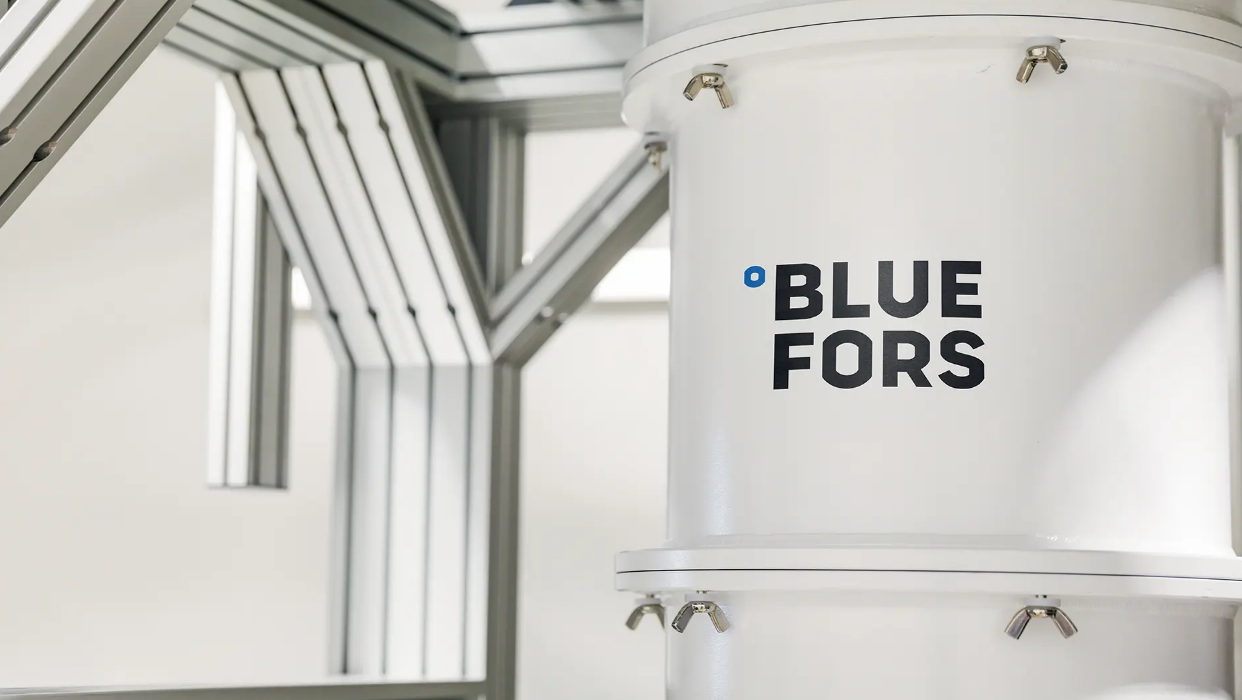
The Cryogenic Engineering Division at KIT’s ITEP will contribute the cooling system. Below a certain temperature, superconductors have no electrical resistance and conduct electricity without loss. To ensure proper operation of the superconducting generator, the coils must be cooled below this so-called transition temperature. The researchers at ITEP are developing a rotating low-loss cryostat that cools down the superconducting coils to 20 Kelvin (minus 253.15°C) through pure heat conduction by means of small Gifford-McMahon coolers provided by the project partner Oerlikon Leybold Vacuum.
“Since the cooling performance of such coolers is limited, we must ensure that heat between them and the superconducting coils is conducted well. We must also consider the influence of rotation on the heat pipes we may use. On the other hand, the cryostat needs a highly effective thermal insulation,” explains Head of the Cryogenic Engineering Division Dr. Holger Neumann. Work on the cooling system translates the findings from fundamental research to practice and, hence, is most attractive to young scientists.
KIT, a CSA Corporate Sustaining Member, is a public corporation established by legislation of the state of Baden-Württemberg. It fulfills the mission of a university and the mission of a national research center of the Helmholtz Association. KIT focuses on a knowledge triangle that links the tasks of research, teaching and innovation.
For more information visit www.kit.edu.