by Nikolai N. Korpan, MD, PhD, FACS International Institute for Cryosurgery, institut@cryosurgery.at
For the first time recently, a number of theoretical, experimental and clinical studies have been performed, both in vitro and in vivo, with the aim of explaining the effect of low temperatures on healthy and malignant tumor tissue.
The effect of extremely low temperatures on living matter has been deciphered in cryoscience and cryomedicine. The scientific implication of longstanding research was to identify that the early and late cryosurgical vascular changes and circulatory stagnation, along with the following cryoapononecrosis, cryoapoptosis and anti-angiogenesis, are the primary mechanisms responsible for living tissue damage as a result of the freezing-thawing process. Modern cryosurgery is now recognized worldwide as a novel surgical technique employing the anti-angiogenesis mechanism, i.e., blocking the tumor vascularization by instantaneously stopping the oxygen supply to the tumor cells. This initiates a process of irreversible damage to tumor tissue and finally leads to the complete destruction of the tumor mass, especially in the treatment of malignant diseases.
For the first time ever, the data of long-term follow-up clinical experience with modern cryosurgery and novel cryotechnology has suggested that this approach is clearly more effective—in all fields of medicine in which it is applied—than conventional surgery. Enormous efficiency, surgically uncomplicated results and a high rate of treatment success, as well as enhanced quality of life of patients, will without a doubt contribute to an upsurge in the use of this approach, both today and in the near future.
In the past, minimal interventional cryodiagnostics in oncology were expanded with the addition of current and future strategies. In the course of our work over the last quarter century, we have collected and analyzed clinical data with innovative cryogenic diagnostics, specifically cryobiopsy in patients with different kinds of malignancies. At the same time, the use of interventional conventional biopsy persists as one of the standards under the pre- and intraoperative diagnostic methods for malignant disease.

The clinical series carried out was aimed at identifying the role of pre- and intraoperative minimal interventional cryogenic diagnostics (MICD)—specifically, cryobiopsy in oncology with subsequent conventional histology connected to the prevention of local recurrence and distant metastases. Non-traumatic and minimal interventional cryodiagnostics (MICD) will be standardized in the form of endoscopic, laparoscopic and percutaneous policy in future medicine and science and will contribute to an upsurge in the use of this approach now and in the near future.
The clinical implementation for the innovative cryosurgical approach was defined as follows:
• benign and malignant skin tumors
• malignant melanoma: primary, local recurrence and metastatic
• primary and secondary
liver malignancies
• pancreas head adenocarcinoma
• breast cancer: primary, local recurrence
and metastatic
• stomach adenocarcinoma
• colon carcinoma
• tissue malignancies
• prostate carcinoma
• kidney tumor
• pulmonological and endobronchial
cryosurgery
• brain cryosurgery
• thyroid benign tumor
• lymph node metastases
The following advantages were indicated for modern cryosurgery: intraoperative prevention of local malignancy recurrence; intraoperative prevention of tumor cells spreading and prevention of distant metastases; minimal invasive surgical options; reduced duration of hospital stays by more than half compared with conventional surgery; enormously reduced health care costs; excellent cosmetic results (no scar formation); and cryosurgical palliative aspects—pain reduction (painless or pain reduction).
Further, the cryosurgical response of parenchymal organic tissue (liver, pancreas) has given rise to a new concept concerning the technical requirements for innovative cryosurgical equipment required to perform modern cryosurgical operations, especially in oncology.
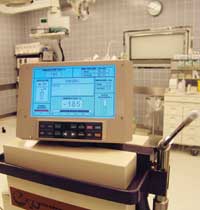
Development of a prototype of a globally unique cryodevice will open modern cryosurgery to the entire field of application of conventional cryosurgery in the short-term future. Forming the basis of this breakthrough are vacuum-isolated cryo-instruments—cryoprobes, cryo-scalpels and cryolamps. These instruments are cooled to the -180° C to -196° C range by the evaporation of liquid nitrogen and have the unsurpassed feature of exact determination of temperature and time interval.
Recently, new branches in the field of nanoscience have been developed. Nano-cryoscience, nano-cryosurgery and nano-cryotechnology have been defined as a new disciplines of science, accumulating and incorporating theoretical, experimental and clinical knowledge in the field of low (cryogenic) temperatures and combining with nanotechnology to apply to human health, especially in oncology.
Nano-cryosurgery is a one-time permanent process using low temperatures based on the nanomaterials and nano-meter-sized structure aimed at removing or destroying part of the suspicious area in the prevention, diagnosis and treatment of human disease, especially malignancies.
Research in nano-cryoscience using nano-cryotechnology and nano-cryoparticles may make it possible to leap over many of the hurdles of substances delivery for treatment of malignancies that will confound conventional medicaments. Thus, new pathogenetic mechanisms may open a new level of access to the multi-local and multi-systemic treatment of malignant diseases. The basic concept of nano-cryosurgery and nano-cryotechnology is currently being developed.
Finally, in the near future we have to open a new era in malignancy prevention, diagnosis and treatment as a whole, brought about by new disciplines: not only nano-cryoscience, nano-cryoequipment and nano-cryosurgery, but also cryo tumor immobilization aimed at the well-preserved morphological and functional matrix of normal cells, tissue and organs in which the complete maintenance of organ function, for example, thyroid, etc., will be scored. Definite cryoablation will be limited only to an affected malignant area and the residual corpus preserved with full function. In this context, the first clinical experience has already been collected at present: for example, percutaneous cryosurgery for breast and renal tumors. The temperature factor of deep range is also of utmost importance.
Lastly, two new future directions will be allo- and hetero-cryovaccines as well as preventive cryomedicine, especially in people with high risk malignancies. These will both be developed and translated into practice.