In our last issue, we debuted our third installment of Young Faces, featuring young professionals who are doing interesting things in cryogenics and superconductivity and who show promise of making a difference in their fields. Below is Part II of that story, with responses listed in order of receipt.
Dr. Xiaobin Zhang, 38
 Educational background: Bachelor in engineering thermodynamics, Harbin Institute of Technology, China, 1995-1999. Masters in engineering thermophysics, Harbin Institute of Technology, China, 1999-2001. PhD in cryogenic engineering, Institute of Cryogenics and Superconductivity Technology, Harbin Institute of Technology, China, 2001-2005. Visiting scholar, mechanical engineering and applied mechanics, University of Pennsylvania, US.
Present company/position: Associate professor at the Institute of Refrigeration and Cryogenics, Zhejiang University
Awards and honors: Second prize, higher school science and technology invention award of the Ministry of Education, China, 2013; second prize, Zhejiang province Science and Technology Award, China, 2012.
My contributions to the cryogenic field:
- Proposed a new cavitation model for cryogenic cavitating flow and obtained a theoretical solution for the bubble developing process comprising the inert controlled stage, the heat transfer controlled stage and the transitional stage in between
- Derived a theoretical model for the critical relative velocity of the interfacial instability of cryogenic flooding flow
- Tested water uptake of insulation foam at cryogenic temperature
- Theoretically analyzed the effects of the reservoir volume on the thermodynamic performance of various components in a simple orifice and a double-inlet pulse tube cooler by combining a linearized model with a thermodynamic analysis
- Proposed a three-dimensional computational fluid dynamics model to simulate the two-phase flow and developed a hybrid model to investigate the distillation process in the structured packing column in cryogenic air separation
What I believe the most important development in cryogenics is: The applications of superconductors are expanding, including military applications, such as the equipment on satellites, tanks, aircrafts and submarines, as well as civil applications, such as the superconducting maglev train, Magnetic Resonance Imaging, superconducting wind power generation, superconducting magnets for high energy physics, etc.
Therefore, I believe that the cooling of superconductors to cryogenic temperature, either using a cryocooler or using liquid helium and liquid nitrogen, will be a most important development in cryogenics.
What I hope to see in the future: I hope to see the efficiency of the thermoacoustic engine and the pulse tube cooler greatly improved so that the waste heat, such as that from the exhausted gas from the combustor with a temperature of 100°C, can be utilized to drive a connected pulse tube cooler. The whole system has no moving parts both in room and cryogenic temperature.
I also hope that the quench temperature of superconducting material will have a profound breach, even higher than room temperature, which would mean that cryogenics would not be necessary in this field. I hope that day comes soon.
How I got into cryogenics When I graduated as a masters student majoring in engineering thermophysics in 2001, the Chinese Institute of High Energy Physics decided to upgrade the electron-positron collider in Beijing (named BEPCII), replacing four non-superconducting magnets with superconducting ones, which are cooled using liquid helium. Professor Jia Linxiang, who at that time was a cryogenic engineer at Brookhaven National Laboratory in Upton NY, became a visiting professor at the Harbin Institute of Technology and was entrusted to design and fabricate the cryogenic system for BEPCII. I was interested in cryogenics and became his first PhD student. Until I graduated in April 2005, I was always engaged in the design of the cryogenic system for BEPCII, including the design of current leads for the four superconducting magnets, which later became the contents of my PhD thesis.
My mentor and my experience with him/her From September 2001 to April 2005, Professor Jia Linxiang was my mentor for my PhD degree. Professor Jia led me into the mysterious cryogenic world and I learned so much from him about the cooling technology of large superconducting magnets with liquid helium. He taught a class called cryogenic engineering, and he directed me to calculate and design the cryogenic system for BEPCII. We often discussed the project until late at night, and together we resolved cryogenic problems. I had very happy times with him then, which still benefit me now.
Wesley Johnson, 30
 Educational background: BAE, Auburn University, 2007. MSAE, University of Central Florida, 2010.
Present company/position: NASA/Glenn Research Center, cryogenic research engineer.
Awards and honors: I have been on multiple teams that won NASA Group Achievement Awards, including several during the Space Shuttle “Return to Flight” after the Columbia accident. I was the Kennedy Space Center Engineering Directorate Employee of the Month in November 2010.
My contributions to the cryogenic field: Most of my work has been testing many different types of thermal insulation systems. Hopefully the data and analysis techniques I’ve developed will enable a better approach to the design and performance prediction of thermal insulation systems. I co-chaired the Space Cryogenics Workshop in 2011.
What I believe the most important development in cryogenics is: There are lots of really exciting cryogenic developments going on in superconductivity, liquid natural gas and the health care industry right now. However, probably the most important development in cryogenics is the expansion of using cryogenics in the day-to-day life of average people. If the general public education can be accomplished to allow this to happen, then cryogenics as a specialty will boom.
What I hope to see in the future: As a true space nerd, I hope to one day see people traveling to other planets and throughout the solar system and beyond. Preferably, of course, they will be using a cryogenic fuel to get there.
How I got into cryogenics I got into cryogenics when I was selected as a co-op to work in the Cryogenics Test Laboratory at Kennedy Space Center in 2004. At the time, I was taking thermodynamics at Auburn and not really enjoying the class, so I actually thought about turning the offer down. However, I was advised that once I got into NASA moving to different groups wouldn’t be a problem. So I figured I’d go down there and if I didn’t like it, I could go to a different group. I ended up liking it enough to stay in the field.
My mentor and my experience with him/her I have been fortunate to have several mentors within NASA. James Fesmire was my official mentor when I started at NASA, and as the lead of the Cryogenics Test Laboratory at KSC, he was very influential in introducing me to thermal and insulation testing. Additionally, I’ve had the opportunity to work closely with Bill Notardonato on multiple projects, and both he and James have stretched me intellectually and forced me to widen my horizons. While we rarely start out agreeing on anything, there is an enormous amount of respect between us that allows us to discuss the topic and come to at least an acknowledgement of the legitimacy of the opposing viewpoints. James introduced me to CSA and has encouraged my participation in both CSA and the Cryogenic Engineering Conferences, both of which have opened several doors (such as teaching a cryogenic safety course) that I would not otherwise have been able to do.
Mike Meyer at Glenn Research Center has allowed me the opportunity to participate in several larger test programs and included me as a cyogenic propellant storage and transfer co-investigator while showing me what it takes to lead a large group of researchers in a politically charged environment.
NASA has many talented engineers who have always been willing to share their knowledge and experience, and I strive to continue that legacy. There are also several engineers in CSA, such as Glen McIntosh and Jonathan Demko, that have been just as open and supportive.
Dr. John G. Baust, 40
 Educational background: I earned my BS in entomology from Cornell University and my PhD in biological sciences, cell and molecular biology concentration, from Binghamton University. I completed my post-doctoral training at the Center for Engineering in Medicine at Harvard Medical School, Shriners Hospital for Children and Massachusetts General Hospital.
Present company/position: President, CEO and lead scientist of CPSI Biotech, Inc.
Awards and honors: Peter J. Steponkus Crystal Award—Society for Cryobiology, 1999; Tibbett’s Award for Innovation and Outstanding Research—Small Business Administration, 2006 and 2013; America’s Registry of Outstanding Professionals, 2004 and 2014; and International Foundation for Ethical Research Graduate Research Scholarship, 1999-2001.
My contributions to the cryogenic field: My research activities have covered several domains of cryogenics ranging from the study of the molecular mechanisms of cell death as they relate to low temperature stress to the development of new cryoablative medical devices for the treatment of various disease states, including cancer and cardiac arrhythmias.
While having a broad breadth of research interests, probably my contribution with the greatest impact on the field has been my research on molecular-based cell death in cryopreservation and cryoablation. These efforts have been instrumental in the advancement of the field of cryobiology into the molecular biological era focusing in the areas of signal transduction and apoptosis. On the engineering front, we have recently developed a new cryoablation device and adjunctive therapeutic strategies that are providing new directions for enhanced treatment of various cancers.
During my career, I have published (authored or co-authored) over 50 peer-reviewed articles and 10 book chapters, given more than 100 presentations at international conferences and am a named inventor on over 30 patent applications. In addition to research and business activities, I have served on several advisory boards of biotech corporations and journals, including the editorial board for Biopreservation and Biobanking (2008-present), co-editor of Advances in Biopreservation, past board member for the International Society for Cryobiology (2003-2011) and a current board member and treasurer for the American College of Cryosurgery.
What I believe the most important development in cryogenics is: It is difficult to narrow down the list of important developments in the field of cryogenics to just one. Reaching way back, one could choose the ability to liquefy cryogens or the development of the vacuum insulated dewar. In the area of cryobiology, it could be the discovery of the cryoprotective effects of agents such as glycerol or dimethyl sulfoxide or the importance of controlled rate cooling and the two-factor hypothesis. Over the past two decades in the area of low temperature medicine, I think one of the most important developments has been the discovery of the ability to modulate the molecular response of a cell or tissue to the freezing process to obtain a desired outcome such as improved survival (cryopreservation) or increased death (cryoablation). Studies focusing on manipulating the activation and progression of apoptotic cell death as well as other molecular-based responses associated with the freezing process within various cellular systems are providing a path forward to help revolutionize medicine.
What I hope to see in the future: Generally speaking, I would like to see a concerted effort to employ our combined cryogenic knowledge across the continuum of application areas ranging from engineering to life science. In the area of low temperature medicine, I hope to see an expansion of the integration of cell and molecular biology principals to further our understanding of how to increase cell destruction in cancer therapy as well as how to improve cell preservation in areas such as organ transplantation, trauma medicine and stem cell cryopreservation. Such efforts could have a tremendous impact on the disciplines of cell therapy, drug discovery, diagnostics and tissue engineering as well as biobanking and biorepositories.
How I got into cryogenics I became interested in cryogenics from both the biological and engineering aspects primarily through being around and working with my father, Dr. John G. Baust, a pioneer in the area of cryobiology, while in high school and college. During my studies at Cornell University, I was also able to work with Dr. Peter Steponkus on a project involving cryomicrosopy. Through these activities, I had the opportunity to meet a number of researchers in the field, including Dr. Michael Taylor, all of whom had an influence on me. These exposures helped to nurture an interest in cryobiology that eventually manifested in my pursuing a career in the field.
My mentor and my experience with him/her In thinking about mentorship, I would have to say there have been four individuals who have really helped direct and shape my career over the years: my father, Dr. John G. Baust; my PhD advisor, Dr. Robert Van Buskirk; my post-doc advisor, Dr. Mehmet Toner; and my colleague Dr. Michael Taylor. Of the four, I would have to say that my father has been my greatest mentor, supporter and critic. There are numerous stories and instances I can recall where each one of these individuals has guided me.
Most notably was in week one of my graduate studies. I was sitting in Dr. Van Buskirk’s office along with my father (both are professors at Binghamton University) and a couple of other students discussing a recent paper published by Dr. Taylor in the area of trauma medicine and hypothermic blood substitute solutions. During the discussion I asked, “So after the samples were thawed, did anyone look at the molecular response of the cells?” Not a bad idea in retrospect, but the issue was that I misunderstood the study; samples were not cryopreserved but hypothermically (cold) stored, two related but distinct areas of study at the time. I followed this up by asking if anyone had combined the approaches and technologies from hypothermic medicine with cryopreservation. After a bit of discussion, the general answer was a few groups had tried with little success. These studies, however, predated many of the recent discoveries in molecular biology, so my thought was this should be revisited. The consensus was that my idea would never work but I was given the green light with the notion that at the very least I would gain a hands-on familiarity with the research techniques.
Well, the rest is history; the experiments were a success and within a year’s time we had laid the groundwork for the discovery of the involvement and importance of programmed cell death (apoptosis) in cryopreservation failure. That experience stays with me to this day and has helped me to try to always keep an open mind about new ideas even when they might be viewed as challenging to the establishment. A fresh perspective may be the first step in the next great scientific discovery or breakthrough to build upon our foundations.
The HYPER Lab
The HYdrogen Properties for Energy Research (HYPER) Lab at Washington State University (WSU) is just four years old now, its founder, Dr. Jacob Leachman, and its members all under 40 years of age, and yet already the lab’s current and graduated students are taking flight in cryogenics.
Dr. Jacob Leachman
 What the HYPER Lab is: I started the HYPER Laboratory at WSU in 2010 to fill a national need for research and training with flammable cryogens. Cold hydrogen presents many fundamental science and applied engineering problems while spanning many fields of research, including aerospace, zero emissions vehicles, sustainable energy and nuclear fusion. The HYPER Lab’s goal is to be a one-stop shop for cold hydrogen R&D—from fundamental research experiments to applied component validation in our Flammable and Cryogenic Testing (FACT) service center.
How the lab was started: When I graduated with my PhD from UW–Madison in 2010, I had a great background in experimental cryogenics and had previously developed the current equation of state for hydrogen at the University of Idaho in 2007. I knew that the privatization of spaceflight would create a need for lightweight and cryogenic fuels in aerospace. No other university labs were focusing on this niche need. Washington State is a great place for this lab with companies like Boeing, Blue Origin and Aerojet-Rocketdyne located here. It also helps that WSU is the lead institution for the FAA’s Center of Excellence for Clean Aviation Fuels. Being just 40 minutes from where I grew up is icing on the cake.
Some of the lab’s current projects:
- We are developing a diagnostic twin screw extruder for fueling fusion energy machines such as the ITER tokamak.
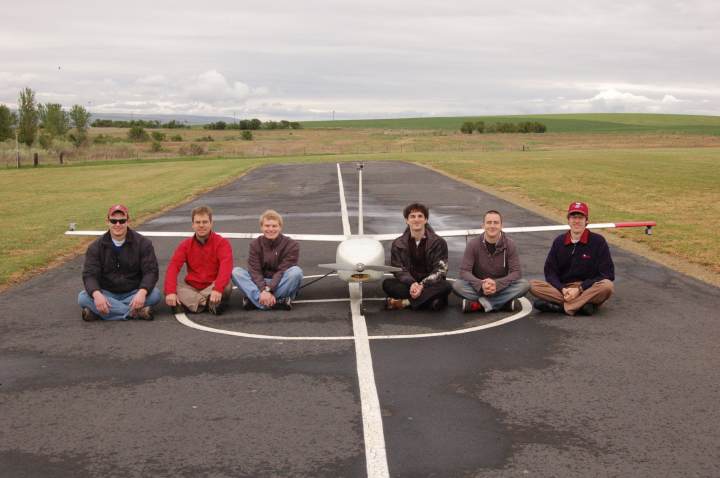
- We are nearing completion of the Genii liquid hydrogen-fueled drone. www.wsuuas.tumblr.com.
- We are measuring mixture properties of cryogenic hydrogen-helium and hydrogen-methane mixtures in a Rubotherm Isosorp 2000.
- We developed the Cryocatalysis Hydrogen Experiment Facility that demonstrated a 50 percent increase in hydrogen cooling capacity is possible for extended rocket stages.
- We are developing an effectively insulation-free liquid hydrogen tank for aerospace vehicles.
- We engineered a solid hydrogen crystal growing chamber for positron moderation studies.
- We designed a low-cost drop-in fueling station that utilizes liquid hydrogen with an estimated station cost of one-fourth of existing fueling station designs.
- We are developing the first-ever generalized cryogenic fluid mixture model.
Notable lab member accomplishments: We have been very lucky to have exceptional students working in the laboratory from the very beginning. To date, we have had four most outstanding students in the department and three most outstanding students in the college. All of the three students who have spent significant time in the lab and graduated have moved on to Blue Origin.
Accomplishments by year:
- 2012: 2nd place in Hydrogen Student Design Competition
- 2013: Successful test flight of the Genii unmanned aerial vehicle on battery power
- 2014: 1st place in Hydrogen Student Design Competition
- 2014: Ian Richardson wins NASA Space Technology Research Fellowship
What I hope to see from the HYPER lab in the future: We’ve had several key accomplishments and received national attention with some of our team wins. This momentum is building towards a culture where students in my classes, teams and clubs work synergistically with my research students on real cryogenic engineering challenges. For example, I’m planning an applied rocketry course for the spring that has the potential to connect all of our strengths. This culture could provide significant return on investment to interested partners.
We are just getting started establishing the FACT service center. The FACT center will have a small helium liquefier for local demand and emergency reserve. We also plan to offer cryogenic load frame, mass flow gauging, and PVT-x and sorption services. These capabilities will complement our three other customizable general use cryostats. Be looking for regular updates and changes to the HYPER lab website soon: www.hydrogen.wsu.edu.
What are you currently working on at the HYPER Lab?
Jacob Fisher
 PhD candidate and a leader on this year’s International Hydrogen Student Design Competition winning team
“I am working on characterizing a twin screw extruder that produces solid hydrogen for fueling fusion tokamaks. I have designed, built and tested the extruder to operate down to 4K. For further cryogenic relevance, a Cryomech PT-415 pulse tube cryocooler provides approximately 12 W of cooling to remove process heat from solid hydrogen extrusions. It is instrumented to provide data for a predictive model that will be used to scale up a design for the ITER tokamak.”
Ian Richardson
 PhD student, NASA Space Technology Research Fellowship winner and team leader of this year’s International Hydrogen Student Design Competition winning team
“I am retrofitting a dual-sinker densimeter to conduct density and sorption measurements of cryogenic fluid mixtures. An established Rubotherm ISOSORP® 2000 magnetic suspension balance has been retrofitted with a vibration isolated Cryomech PT405 cryocooler. This system is capable of conducting PVT-x and sorption measurements at pressures up to 30 MPa and temperatures down to 10K. This system will be used to characterize liquid hydrogen and gaseous helium interactions that occur in rocket fuel tanks during space missions.”