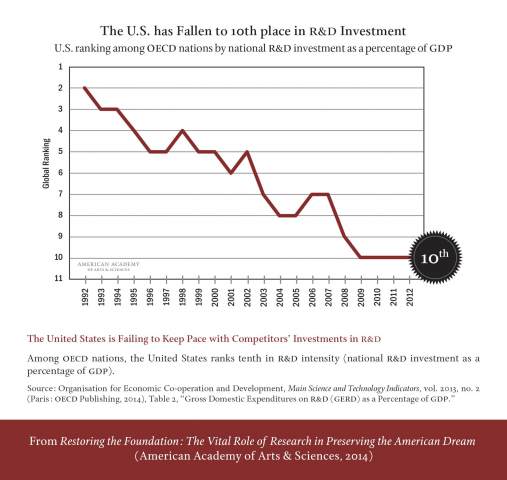
The earlier report focused on the causes of America’s dwindling leadership in science, technology, engineering and math (STEM) and ways of “energizing and employing America for a brighter future.” It was sponsored by the US Congress and written by a distinguished committee headed by Norman Augustine, former CEO of Lockheed Martin and Undersecretary of the US Army. (Editor’s note: See Cold Facts, Winter 2011, pages 14-16, for an interview with Augustine on the update to that report.)
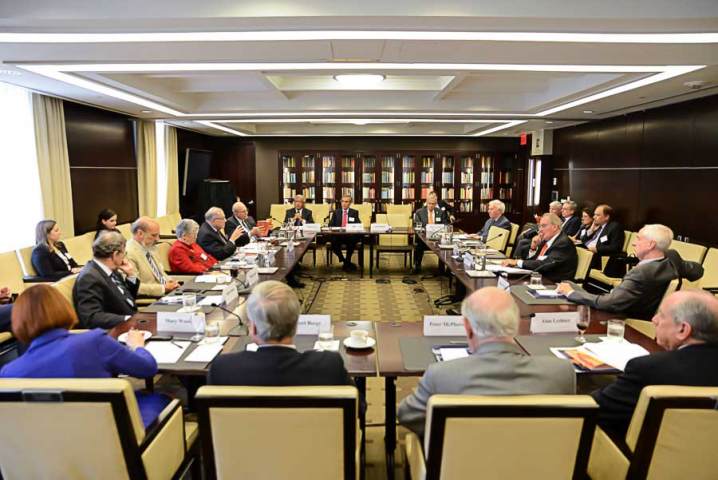
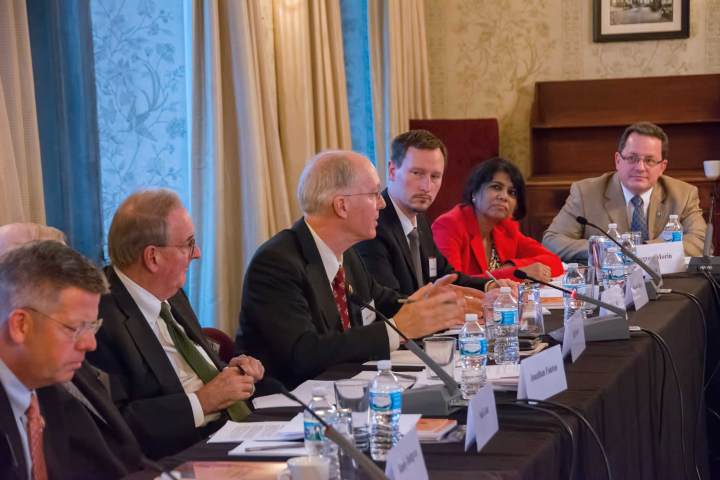
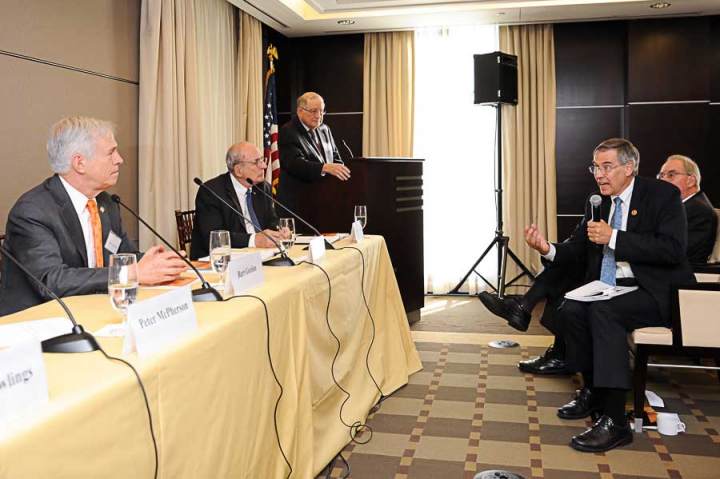
At the September introduction of “Restoring the Foundation,” there was strong consensus that it is absolutely vital that this report be given wide circulation and that the AAAS and committee members work diligently to implement its recommendations. Since then, the Academy has implemented a multilayered approach to build support for the report’s recommendations among stakeholders in government, industry, academia and philanthropy. Among the project’s ongoing efforts are collaborations with scientific and business organizations; media outreach; conversations with leaders in Congress and at federal research agencies; and forums, roundtable discussions and symposia at universities and public halls across the nation.


A workshop on national laboratory partnerships was held in Chicago in November and two public symposia were scheduled for February. “Replenishing the Innovation Pipeline: the Role of University Research,” was held at Stanford University on February 3, featuring Ann Arvin (Stanford), Jonathan Fanton (AAAS president), Peter Kim and Carla Shatz (both Stanford).
A symposium was planned for February 24 at Duke University entitled “The Unstable Biomedical Research Ecosystem: How Can It Be Made More Robust?” Participants were Andrews (Duke), Tania Baker (MIT), Richard Brodhead (president, Duke), Fanton, Mark Fishman (president, Novartis Institutes for BioMedical Research), Sally Kornbluth (Duke), Harold Varmus (director, National Cancer Institute) and Susan Wente (provost, Vanderbilt University).
Other workshops and symposia are being planned and meetings are being arranged with members of Congress from both major parties to discuss the report and explore possible mechanisms for bipartisan cooperation on research issues.
Download a copy of this report or watch a video of the testimony at the introduction ceremony.