

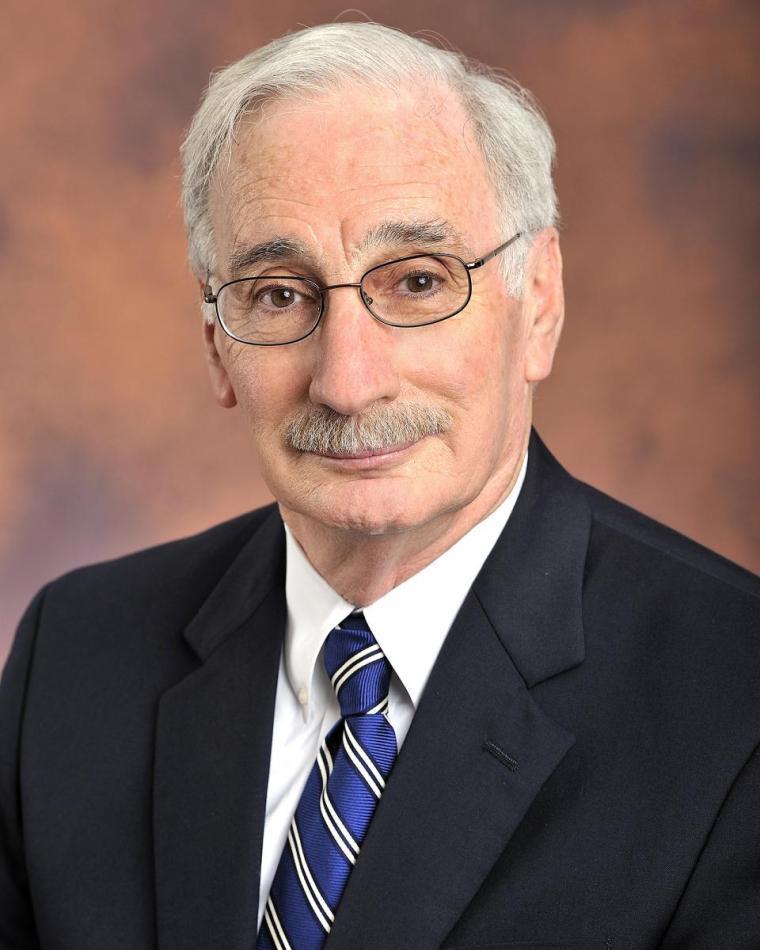
The superconductivity community has lost one of its most devoted stewards with the passing of Bruce P. Strauss, whose career spanned more than five decades and whose influence reached far beyond his own technical work. Bruce was not only a contributor to applied superconductivity; he was a builder of the institutions, relationships, and traditions that sustain the field.
For over 50 years, Bruce worked tirelessly to advance applied superconductivity, bringing clarity and purpose to a discipline often marked by complexity. As recalled by colleagues, he possessed a rare ability to cut through technical fog and identify what truly mattered—the essential insight, the decisive parameter, the practical constraint that determined success. He shared this perspective generously, not to elevate himself, but to help projects succeed and people grow.
Bruce delighted in reminding colleagues that even the most advanced science exists in the real world. He often pointed out that the length of accelerator magnets is limited not by theory, but by the size of trucks that can transport them. To Bruce, such insights were not trivial—they were grounding truths that connected sophisticated engineering to human realities.
His service to the superconductivity community was profound and sustained. Through leadership roles with the IEEE Council on Superconductivity and the Applied Superconductivity Educational Foundation, Bruce helped bring long-term financial stability, expand educational outreach, and strengthen engagement with both specialists and the broader public. In recognition of this exceptional service, he was elevated to IEEE Fellow in 2005 and received the Max Swerdlow Award in 2012, honors reserved for a small number of individuals whose contributions reshape a field.
Bruce believed deeply in what superconductivity enables. MRI systems that save lives, particle accelerators that reveal the structure of the universe—these were not abstractions to him, but examples of science serving humanity. He saw engineering as a moral endeavor when pursued with integrity and care.
At conferences around the world, Bruce was instantly recognizable. He greeted audiences in multiple languages, not as a gesture, but as an expression of genuine welcome. He built a global network that felt like a family because he treated it like one. His humor—wry, generous, and well-timed—lightened even the most serious discussions and reminded colleagues to remain human while doing serious work.
Bruce was also a mentor in the truest sense. For decades, he volunteered his time advising students and early-career engineers about what “they don’t teach you in school.” Countless careers were shaped because Bruce saw potential and chose to nurture it.
Perhaps most fittingly, Bruce spent years organizing in-memoriam presentations at major superconductivity conferences, ensuring that those who came before were remembered. This year, his own photograph will appear among them. The keeper of memory will be held in memory.
Bruce Strauss lived a consequential life—one marked by insight, service, kindness, and purpose. His legacy endures in stronger institutions, a more connected community, and the many lives he touched.
We will be covering Bruce’s life and contributions in greater detail in an upcoming issue of Cold Facts.



4 Comments
Werner Huget
February 1, 2026I am sorry to read about Bruce Strauss passing. He was a big supporter of CSA and a good friend, always very supportive our work.
Pat Kelley
February 2, 2026Bruce has been a colleague and friend for many years. His wisdom and support will be sorely missed.
Philippe Lebrun
February 4, 2026I have known Bruce since the Tevatron years, and appreciated his advice and wisdom in many instances, if only in the Machine Advisory Committee during the LHC construction. The community of applied superconductivity will miss him sorely.
Vicky Bardos
February 5, 2026I have known Bruce for nearly 45 years. Throughout the years he has been a trusted colleague, a valued mentor and a cherished friend who put the world in perspective.