ADVERTISEMENT

Booster 19 Rolls out to Masseys for Cryogenic Proof Testing

written by Ryan Weber  Following Booster 18’s failure during a pressure test, SpaceX went ahead and set a new record for stacking a booster in the Starship Program, to try and get Block 3 and the program at large back on track. And this weekend, crews rolled Booster 19 out to...
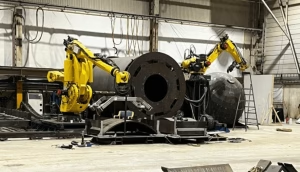

Provaris Delivers on First Phase LCO2 Tank Engineering and Design

By Dominic Ellison  Australian hydrogen and carbon dioxide storage and transport firm Provaris Energy has completed the phase-one delivery of an LCO2 tank front end engineering and design (FEED) program. The programme included detailed engineering and material and weld testing of a 25,000 cbm LCO2 low-pressure tank and class approval with...

New Partnership with Druck set for Major Breakthrough in Hydrogen-Powered Aircraft

The University of Bath has entered a Knowledge Transfer Partnership (KTP) with Druck, a Crane Company business, to develop the world’s first flight-certified cryogenic hydrogen pressure sensor, helping pave the way for net-zero aviation. Hydrogen is one of the most promising solutions to decarbonising air travel, with aviation currently accounting...

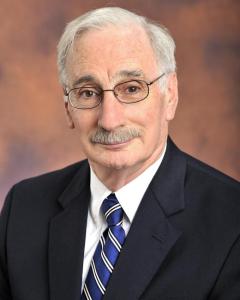
In Memoriam: Dr. Ray Radebaugh

It is with deep sadness that we share the passing of Ray Radebaugh. Ray was a pioneer, mentor, and friend whose influence on cryogenics spanned more than five decades and touched nearly every corner of our field. Ray’s passion for engineering began early. Growing up in Mishawaka, Indiana, he learned...

New Cryogenic Vacuum Chamber Cuts Noise for Quantum Ion Trapping

by John Toon, Georgia Institute of Technology Even very slight environmental noise, such as microscopic vibrations or magnetic field fluctuations a hundred times smaller than Earth’s magnetic field, can be catastrophic for quantum computing experiments with trapped ions. To address that challenge, researchers at the Georgia Tech Research Institute (GTRI)...

Remembering Bruce P. Strauss, a Steward of the Superconductivity Community

The superconductivity community has lost one of its most devoted stewards with the passing of Bruce P. Strauss, whose career spanned more than five decades and whose influence reached far beyond his own technical work. Bruce was not only a contributor to applied superconductivity; he was a builder of the...

ADVERTISEMENT

Dewar

A dewar is a type of cryostat named after Sir James Dewar, the researcher who first developed the concept of a vacuum insulated container with silvered walls to reflect thermal radiation. Dewar was the first to liquefy hydrogen, and he created the device to store his discovery. The thermos bottle...

Stirling and Gifford-McMahon Cryocoolers

Stirling and Gifford-McMahon (GM) cryocoolers are two of the most commonly used cryocoolers in cryogenics. Both devices have a significant industrial base and operate at a wide range of temperatures and capacities. The thermodynamic cycles for both of these cryocoolers are quite similar. The Stirling cycle consists of a compressor,...

Liquefied Natural Gas (LNG)

A significant commercial application of cryogenics is the liquefaction, transport and storage of natural gas. Liquefied Natural Gas (LNG) is generally 95 percent methane with a few percent ethane and much lower concentrations of propane and butane. LNG liquefies at 111.6 K. Unlike many applications of cryogenics, the motivation for...

Wind Tunnels

Dr. Robert Kilgore The development of the cryogenic wind tunnel is one of many significant breakthroughs in both cryogenics and wind-tunnel technology made during the past millennium. Interest in the development of high-speed commercial and military aircraft resulted in a review of problems of flow simulation in transonic wind tunnels...

History of Cryogenics

From the Fall 1999 issue of Cold Facts magazine Millennium Breakthroughs A variety of CSA members give different perspectives on the past millennium: What were the most significant breakthroughs in cryogenics during the past millennium? Prof. R.G. Scurlock, Kryos Technology, scurlock@soton.ac.uk (“Breakthrough” = way through obstacles — Oxford English Dictionary)...

Cryobiology

Andreas Sputtek Past President Society for Cryobiology sputtek@uke.uni-hamburg.de or http://www.sputtek.de/. The word cryobiology (from the Greek words “cryo” = cold, “bios” = life, and “logos” = science) literally signifies the science of life at low temperatures. In practice, this field comprises the study of any biological material or system (e.g.,...

Cryogenic Insulation

James E. Fesmire Cryogenics Test Laboratory NASA Kennedy Space Center james.e.fesmire@nasa.gov Introduction In today’s world, the use of cryogenics and low-temperature refrigeration is taking a more and more significant role. From the food industry, transportation, energy, and medical applications to the Space Shuttle, cryogenic liquids must be stored, handled, and...

Need help with calculating flow rate

I have to maintain a certain mass (some tons) at 100 K by circulating in it GHe (through apposite channels). How can I calculate the flow rate needed? I suppose that the delta T (T inlet and T outlet) and the heat load on the mass are necessary. Knowing the...