ADVERTISEMENT

H2 Storage System Successfully Scaled up

Since September 2023, AMBARtec has been testing its 7.5 kg H2 storage system in full operation with hydrogen. The aim was also to optimise the plant control and find the best system configuration in terms of energy balance.   Maximum energy efficiency: AMBARtec’s storage system + SOECThe energy balance analysis shows...
Oxford Instruments NanoScience Joins Rigetti’s Novera QPU Partner Program

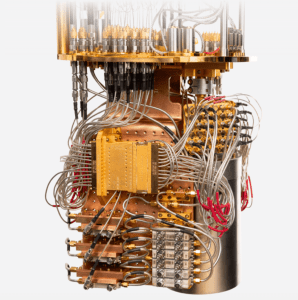
Oxford Instruments NanoScience, a leading provider of cryogenic systems, announced that it has joined the Novera™ QPU Partner Program. This addition strengthens the program’s ecosystem of quantum computing hardware, software, and service providers who build and offer integral components of functional quantum computing systems. The Novera QPU Partner Program, launched...

Saving Florida’s Blighted Corals

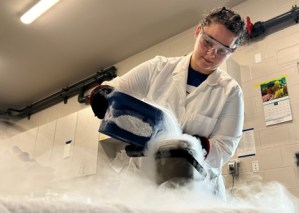
Florida’s coral reefs are critical to the state’s economy. They protect beaches and play a vital role in supporting thriving fisheries. However, time may be running out to witness some types of live coral in the Florida Keys. A severe heat wave in the summer of 2023 killed many species, and...

CEC to Award Two Prestigious Scholarships at 2025 Conference

The Cryogenic Engineering Conference (CEC) will award two distinguished scholarships at the upcoming 2025 CEC/ICMC: the Donna Jung Memorial Scholarship Award and the Klaus and Jean Timmerhaus Scholarship Award. These awards are part of the CEC’s ongoing efforts to encourage the next generation of engineers and scientists in the field...

Beckman Institute Labs Bridge Advanced Imaging and Alzheimer’s Research

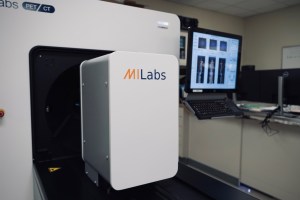
The Beckman Institute for Advanced Science and Technology at the University of Illinois Urbana-Champaign has embarked on a life-changing research project to advance the early detection and diagnosis of Alzheimer’s disease. With the support of a $3 million grant from the US National Institute on Aging of the National Institutes...

Bluefors Lab Offers Cryo Measurements, a Low Risk Model for Experiments

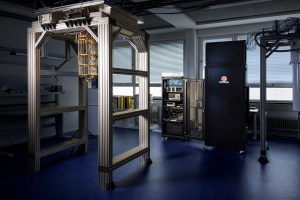
Quantum technology continues to develop at a rapid pace, and the need for access to cryogenic cooling systems for quantum research has never been greater. While established institutions have an increasing number of options to choose from, startups and smaller institutions still face considerable challenges, not least of which are...

ADVERTISEMENT

Dewar

A dewar is a type of cryostat named after Sir James Dewar, the researcher who first developed the concept of a vacuum insulated container with silvered walls to reflect thermal radiation. Dewar was the first to liquefy hydrogen, and he created the device to store his discovery. The thermos bottle...

Stirling and Gifford-McMahon Cryocoolers

Stirling and Gifford-McMahon (GM) cryocoolers are two of the most commonly used cryocoolers in cryogenics. Both devices have a significant industrial base and operate at a wide range of temperatures and capacities. The thermodynamic cycles for both of these cryocoolers are quite similar. The Stirling cycle consists of a compressor,...

Liquefied Natural Gas (LNG)

A significant commercial application of cryogenics is the liquefaction, transport and storage of natural gas. Liquefied Natural Gas (LNG) is generally 95 percent methane with a few percent ethane and much lower concentrations of propane and butane. LNG liquefies at 111.6 K. Unlike many applications of cryogenics, the motivation for...

Magnets

From “Superconductivity: Present and Future Applications” by the Coalition for the Commercial Application of Superconductors. Particle physics uses accelerators to recreate the conditions of the early universe in an attempt to piece together the complex puzzle of how we got to where we are today. These huge machines are used...

Energy Storage

From “Superconductivity: Present and Future Applications” by the Coalition for the Commercial Application of Superconductors. With power lines increasingly congested and prone to instability, strategic injection of brief bursts of real power can play a crucial role in maintaining grid reliability. Small-scale Superconducting Magnetic Energy Storage (SMES) systems, based on...

Astronomy

ASTRONOMY IN SPACE by Peter V. Mason, retired,  Jet Propulsion Laboratory, and Visiting Associate, California Institute of Technology. Pmason@alumni.caltech.edu In thinking about the reasons to perform astronomy in space, we first consider the effect of the earth’s atmosphere.  On a scale of decreasing energy, gamma rays, cosmic rays, X-rays and...

Cryocoolers

What is a Cryocooler? A mechanism that can extract heat from an object (cooler) and by doing so draw its temperature down below approximately 150 Kelvin (cryo). — (Courtesy Dr. Willy Gully) What is the difference between a Cryocooler and a Cryostat? A cryostat is any device designed to maintain...