ADVERTISEMENT

Quantum Design Explores Quantum Frontiers with Precision Measurements

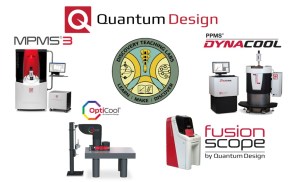
Since 1982, Quantum Design has been providing lab-ready scientific instruments to colleges, universities, government and corporate laboratories around the world. Instruments include the DynaCool® Physical Property Measurement System (PPMS), the MPMS3® SQUID Magnetometer and VersaLab® Physics Education System. The OptiCool® is a large volume, low vibration, low temperature and high...

The Next Generation in Cryogenics and Superconductivity

This feature introduces outstanding young professionals (under 40 years of age) who are doing interesting things in cryogenics and superconductivity and who show promise of making a difference in their fields. Debuted in the 2006 issue, the feature has presented many young persons whom we are proud to see have indeed lived...

Beyond Gravity Leaps Forward in Satellite Monitoring

Beyond Gravity, a leading space supplier, expands its expertise into space data services with the launch of its new Space Situational Awareness (SSA) solution. This innovative service, leveraging over six years of data collection, offers unparalleled accuracy and insights into more than 10,000 active satellites, promising to enhance faster decision-making...

CLARREO Pathfinder’s Cool Breakthrough, from Space to Quantum

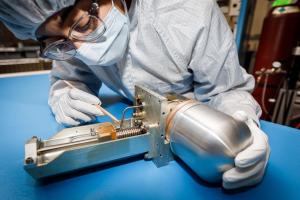
For decades, Northrop Grumman has been making highly dependable cooling systems, cryocoolers, for spacecraft. In spacecraft, a cryocooler is most often essentially a specialized refrigerator deployed on satellites and space telescopes to maintain extremely low temperatures for onboard sensors. This is crucial for capturing high-resolution images of Earth or outer...

How CRYOCO Is Empowering the Next Generation

CRYOCO is at the forefront of cryogenic education, training and consulting, boasting a 45-year legacy of providing unparalleled expertise. With a focus on fostering technical prowess across various sectors, from aerospace to medical industries, the company has been instrumental in shaping the landscape of cryogenic applications. Led by David-John Roth,...

ADVERTISEMENT

Refrigerators and Liquefiers

Two of the most common terms used in cryogenics are “refrigerator” and “liquefier.” These terms describe similar and, as will be seen, in some cases identical components. A refrigerator provides cooling (that is, absorbs heat) at cryogenic temperatures. Refrigerators typically put a working fluid (such as helium) through one of...

Air Separation

Air separation is one of the largest, as well as earliest, industrial applications of cryogenics. In this process, cryogenic temperatures are used to separate air into its constituent gases: nitrogen (78.08%), oxygen (20.95%), argon (0.93%) and carbon dioxide (0.3%). Trace gases such as krypton, neon, xenon and helium total far...

Coefficient of Performance and Figure of Merit

The coefficient of performance (COP) is used to describe the effectiveness of refrigerators, including those operating at cryogenic temperatures. The COP is defined as the amount of heat removed at the cryogenic operating temperature of the refrigerator divided by the amount of work that must be applied to remove the...

Magnets

From “Superconductivity: Present and Future Applications” by the Coalition for the Commercial Application of Superconductors. Particle physics uses accelerators to recreate the conditions of the early universe in an attempt to piece together the complex puzzle of how we got to where we are today. These huge machines are used...

Energy Storage

From “Superconductivity: Present and Future Applications” by the Coalition for the Commercial Application of Superconductors. With power lines increasingly congested and prone to instability, strategic injection of brief bursts of real power can play a crucial role in maintaining grid reliability. Small-scale Superconducting Magnetic Energy Storage (SMES) systems, based on...

Astronomy

ASTRONOMY IN SPACE by Peter V. Mason, retired,  Jet Propulsion Laboratory, and Visiting Associate, California Institute of Technology. Pmason@alumni.caltech.edu In thinking about the reasons to perform astronomy in space, we first consider the effect of the earth’s atmosphere.  On a scale of decreasing energy, gamma rays, cosmic rays, X-rays and...

Cryocoolers

What is a Cryocooler? A mechanism that can extract heat from an object (cooler) and by doing so draw its temperature down below approximately 150 Kelvin (cryo). — (Courtesy Dr. Willy Gully) What is the difference between a Cryocooler and a Cryostat? A cryostat is any device designed to maintain...

An Issue of Pressure and Flow Rate in a Supply Tank

Please help solve this problem: A supply tank requires a vaporizer to generate sufficient pressure to pump stored fluid up into a vehicle or tank. The available head is limited as the tank level falls and it is important to minimize the system pressure drop to maintain the desired flow...

Using MLI on VJ Line Joints or Cryo Storage Tanks

When installing Multi Layer Insulation (MLI) blankets on VJ line joints or cryo storage tanks should they be wrapped and tied down tight or loose? These are usually pre-cut to size. Also should they have an access hole at the point of where the molecular sieve is installed to help...