ADVERTISEMENT

The Next Generation in Cryogenics and Superconductivity

This feature introduces outstanding young professionals (under 40 years of age) who are doing interesting things in cryogenics and superconductivity and who show promise of making a difference in their fields. Debuted in the 2006 issue, the feature has presented many young persons whom we are proud to see have indeed lived...

Great Opportunity: RFI for Black Hole Cooling System

CSA April Newsletter SponsorHigh-performance, highly reliable, long-lasting storage tanks for transporting hydrogen & helium molecules around the globe.​https://www.gardnercryo.com [Contact Jamie Luedtke for Newsletter Sponsorship] Home About Membership Login Calendar Cold Facts Buyer’s Guide News Publications Cryo Careers Resources Donate Join now Log in Cryogenic Society of America, Inc. Twitter Facebook...

Cryogenic Processors to Open Kentucky-Based Freeze-Dry and Packaging Site

Cryogenic freezing specialist Cryogenic Processors will open a new cryogenic freezing and freeze-drying facility in Paducah, Kentucky, at the end of 2024. The plant will feature three isolated pelletising rooms, each equipped with advanced blending systems and a standard conical pelletiser with an increased capacity of 1000kg per hour. Once pelletized,...

Physicists Created an Exotic Superconductor Controlled by Magnetism

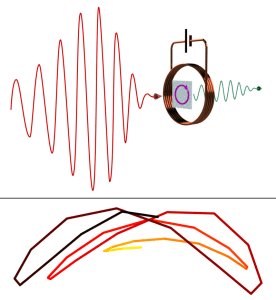
Superconductivity continues to revolutionize technology in so many ways. While some technological advances rely on finding ways to encourage zero-resistance currents at warmer temperatures, engineers are also considering better ways of fine-controlling the super-efficient flow of electrons. Unfortunately, many processes that would work just fine for run-of-the-mill electronics, such as the application...

MIT’s Superconducting Magnets are Ready for Fusion

Harnessing nuclear fusion, the process by which lighter atoms combine into heavier ones, has been a dream of researchers for generations: in theory, it could produce electricity without emitting greenhouse gases and, unlike nuclear fission, generate very little radioactive waste. But making fusion work requires compressing hydrogen plasma fuel at...

Enhancing Fusion Reactor Control Through Combined Plasma Management Techniques

The team’s latest simulations, discussed in their recent publication in Nuclear Fusion, mark the first instance where ECCD and RMP have been used together experimentally. “We are exploring new frontiers with this approach, enhancing our control over plasma behavior,” commented Qiming Hu, a PPPL staff research physicist and the paper’s...

ADVERTISEMENT

Helium II

Helium II (He II) refers to the second liquid phase of the most abundant helium isotope (4He). Helium II is also referred to as superfluid helium. Helium II occurs once the temperature of the liquid helium drops below 2.17K. The phase transition between the first liquid phase of Helium (referred...

Magnetic Levitation

From http://www.superconductors.org. Magnetic-levitation is an application where superconductors perform extremely well. Transport vehicles such as trains can be made to “float” on strong superconducting magnets, virtually eliminating friction between the train and its tracks. Not only would conventional electromagnets waste much of the electrical energy as heat, they would have...

Superconductivity

From Superpower website. History of Superconductivity Superconductivity was discovered in 1911 by the Dutch physicist, Heike Kammerlingh Onnes when he was able to liquefy helium by cooling it to 4 Kelvin, or -452°F. This enabled him to cool other materials close to absolute zero and investigate their electrical properties. He...

Medical Applications of Cryogenics

Neutron Therapy Cryogenics is at the heart of nuclear accelerators. Accelerators such as Fermilab’s Tevatron make neutron therapy for cancer possible. From Fermilab Today 4/20/09: Fermilab currently offers neutron therapy. But staff at Fermilab designed and built the proton accelerator used by the nation’s first hospital-based treatment center to use...

Nuclear Physics

Al Zeller National Superconducting Cyclotron Lab (NSCL) at Michigan State University zeller@nscl.msu.edu Cryogenics has a long history in nuclear physics. The technology has its origins in the use of cold traps for maintaining a vacuum, which is required to prevent beam loss and for generating high voltages used in acceleration....

An Issue of Pressure and Flow Rate in a Supply Tank

Please help solve this problem: A supply tank requires a vaporizer to generate sufficient pressure to pump stored fluid up into a vehicle or tank. The available head is limited as the tank level falls and it is important to minimize the system pressure drop to maintain the desired flow...

Using MLI on VJ Line Joints or Cryo Storage Tanks

When installing Multi Layer Insulation (MLI) blankets on VJ line joints or cryo storage tanks should they be wrapped and tied down tight or loose? These are usually pre-cut to size. Also should they have an access hole at the point of where the molecular sieve is installed to help...