
ADVERTISEMENT

NASA Completes Flight Readiness Review for GOES-U Mission

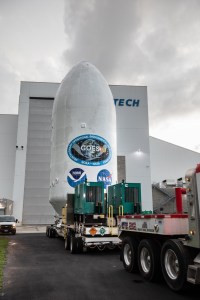
NASA, NOAA (National Oceanic and Atmospheric Administration), SpaceX, and GOES-U (Geostationary Operational Environmental Satellite-U) mission managers met on June 20 to conduct a Flight Readiness Review at NASA’S Kennedy Space Center in Florida. During the review, teams provided an update on the mission status and certified the readiness to proceed with...
Space Systems Command Grants Contracts for Space Laser Communication Prototypes

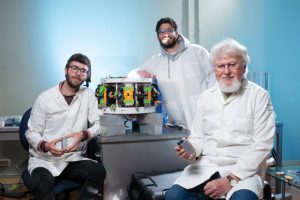
The EST program, part of SSC’s Space Domain Awareness and Combat Power Program Executive Office, aims to create on-orbit crosslink compatibility among future space systems. This will be achieved through a standardized enterprise waveform implemented in a long-range space optical communications terminal that is low in size, weight, power, and...

100 Years of Quantum Is Just the Beginning

Recognizing the importance of quantum science and the need for wider awareness of its past and future impact, dozens of national scientific societies gathered together to support marking 100 years of quantum mechanics with a U.N.-declared international year. The timeline of endorsements for this international year also included the International Union of Pure and...

Cool It Down–Isochoric Preservation

If you’ve ever made the mistake of putting certain fresh fruits or vegetables in the freezer, then you’re already familiar with the effects of freezing on biological tissue. Banana skins turn black and slimy. Whole oranges leak and deflate. Lettuce comes out limp and soggy. The cause of all this...

Advancing Spin Qubit Technology With Cryogenic Probing

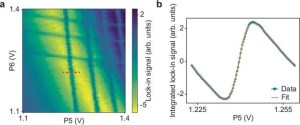
In a recent article published in Nature, researchers developed a 300-mm cryogenic probing process to obtain high-volume data on spin qubit devices across full wafers. They optimized an industry-compatible process to fabricate spin qubit devices on a low-disorder host material, enabling automated probing of single electrons in spin qubit arrays across...

ADVERTISEMENT

Mixed Refrigerant Cycles

Most cryogenic refrigeration systems, both large scale systems and cryocoolers, use helium as a working fluid. There are a number of advantages to helium, not the least of which is that helium remains a fluid down to the lowest achievable temperatures. In order to freeze helium, pressures of over 20...

Fountain Pumps and He II Phase Separators

Helium II (He II), the second liquid phase of the 4He isotope described in this column in Cold Facts Spring 2010 (http://2csa.us/he2), can be modeled as consisting of two interpenetrating fluids. One, the superfluid component, has zero viscosity and entropy and the other, the normal fluid component, has nonzero viscosity...

Turboexpanders

A vital technology in the refrigerators and liquefiers described in Cold Facts Volume 31 Number 3 is that of turboexpanders. These devices are rotating machines in which the process fluid (e.g., helium) does work against the turboexpander while moving from high pressure to a lower pressure and thus is cooled....

Air Separation and Liquefaction

by Nils Tellier, PE, President, EPSIM Corporation (CSA CSM) nils@epsim.us All illustrations courtesy EPSIM Corporation Background History of Air Separation and Liquefaction This section builds on a rich history of methods to develop deep refrigeration and cryogenic liquefaction during the 19th Century. You are encouraged to read Cryo Central’s History...

Bose-Einstein Condensate

A Bose-Einstein condensate, first proposed in 1925 by Albert Einstein based on work done by Satyendra Nath Bose (the same Bose from whom the term boson is derived), is a super-cold state of matter in which almost all of the individual atoms have “condensed” down to the lowest possible quantum...

Cold Technology for Pest Control

While it does not reach temperatures cold enough to be called cryogenic, carbon dioxide snow is at the heart of a new way of dealing with unwanted pests. It utilizes a quick freezing process that takes advantage of the properties of carbon dioxide snow and has a number of benefits...

Cryogenic Finishing

The following 3 articles discuss the uses and procedures of various type of cryogenic finishing. 1) By Robin A. Rhodes, Cryogenic Institute of New England, Inc. rrhodes@nitrofreeze.com Cryogenic Deflashing is employed to remove undesired residual mold flash that remains on molded parts after they are removed or ejected from the...




