ADVERTISEMENT

MIT’s Superconducting Magnets are Ready for Fusion

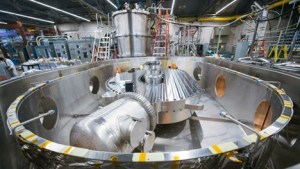
Harnessing nuclear fusion, the process by which lighter atoms combine into heavier ones, has been a dream of researchers for generations: in theory, it could produce electricity without emitting greenhouse gases and, unlike nuclear fission, generate very little radioactive waste. But making fusion work requires compressing hydrogen plasma fuel at...
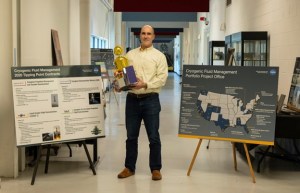
Shuttle, Family Inspire NASA’s Cryogenic Technology Manager

Jeremy Kenny squinted his eyes as he looked toward the brilliant light. Then came the deafening sound waves that vibrated his body. This was the moment he’d dreamed about since childhood. It was Nov. 16, 2009, at NASA’s Kennedy Space Center in Florida, and Kenny and his wife were watching space...

Bluefors Launches Helium Recovery Solution for Single Unit NMR Systems

Bluefors has introduced its latest advancement: the Cryomech HeRL02-RM. This cutting-edge helium reliquefier, specifically engineered for helium recovery from individual nuclear magnetic resonance (NMR) units, marks a significant stride in helium conservation and management. The Cryomech HeRL02-RM establishes a closed-loop, zero-boiloff system for NMR magnets, ensuring optimal helium utilization. Boiled-off helium...

The LSST Camera Set to Unveil the Cosmos

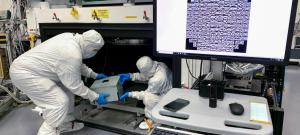
The completion of the Legacy Survey of Space and Time (LSST) Camera, after two decades of collaborative work involving scientists and engineers at the Department of Energy’s SLAC National Accelerator Laboratory and international partners, signifies a significant milestone in the construction of the Vera C. Rubin Observatory in Chile. The...

Scientists Uncover a Hidden Electronic State

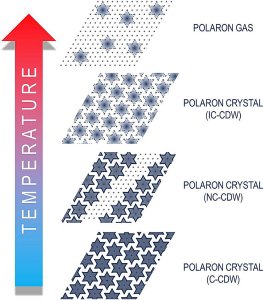
Research often unfolds as a multistage process. The solution to one question can spark several more, inspiring scientists to reach further and look at the larger problem from several different perspectives. Such projects can often be the catalyst for collaborations that leverage the expertise and capabilities of different teams and...

ADVERTISEMENT

Dewar

A dewar is a type of cryostat named after Sir James Dewar, the researcher who first developed the concept of a vacuum insulated container with silvered walls to reflect thermal radiation. Dewar was the first to liquefy hydrogen, and he created the device to store his discovery. The thermos bottle...

Stirling and Gifford-McMahon Cryocoolers

Stirling and Gifford-McMahon (GM) cryocoolers are two of the most commonly used cryocoolers in cryogenics. Both devices have a significant industrial base and operate at a wide range of temperatures and capacities. The thermodynamic cycles for both of these cryocoolers are quite similar. The Stirling cycle consists of a compressor,...

Liquefied Natural Gas (LNG)

A significant commercial application of cryogenics is the liquefaction, transport and storage of natural gas. Liquefied Natural Gas (LNG) is generally 95 percent methane with a few percent ethane and much lower concentrations of propane and butane. LNG liquefies at 111.6 K. Unlike many applications of cryogenics, the motivation for...

Cryogenics in Space

Peter Kittel University of California-Berkeley pkittel@cal.berkeley.edu Space Cryogenics is the application of cryogenics to space missions. These applications fall into two broad areas, supporting space science missions and supporting the space transportation infrastructure. Science applications: The atmosphere is opaque to much of the electro-magnetic spectrum. In space, the absence of...

Cryosurgery

Review of Cryosurgery Boris Rubinsky, PhD Hebrew University School of Science and Engineering Research Center for Biomedical Engineering 78b Ross Building Givat Ram, Jerusalem 91904 Israel rubinsky@cs.huji.ac.il as published in Annual Review of Biomedical Engineering, August 2000, Vol. 2, pp. 157-187. Abstract: Cryosurgery is a surgical technique that employs freezing...

Liquefied Natural Gas

Liquefied Natural Gas as it relates to the Field of Cryogenics John W. Bonn VJ Systems, LLC johnbonn@vjsystems-lic.com Today the world is looking for a cleaner fuel and Liquefied Natural Gas (LNG) plays a large part in achieving this goal. LNG in a liquid form is at -162°C (-259°F) and...

Food Processing

Cryogenics and Food The industrial gas industry provides a host of products and services related to food. The various gases have useful and sometimes fascinating applications in food industry. “The food industry is not a homogenous industry. The needs of customers processing hamburger vs. poultry vs. strawberries vs. seafood, for...

What is the temperature range of cryogenics?

Could you please tell me what is the temperature range of cryogenics? In other words, is -100°F considered cryogenic, or does it start lower? Could I expect to see some extended life in D2 stamping dies? What would the recipe be to achieve the desired results using cryogenics?