ADVERTISEMENT

Lockheed Martin Looks to Space with Australian-Developed Composite Tanks

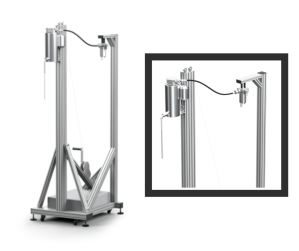
In a groundbreaking collaboration, Lockheed Martin, Omni Tanker and UNSW Sydney have joined forces to pioneer and commercialize world-first composite tank technologies. This ambitious project, supported by a grant from the Federal Government’s Advanced Manufacturing Growth Centre (AMGC), aims to tackle the challenges associated with using composites for the transportation...

Cryospain Introduces Vacuum Insulated Pipes in Rotterdam

Cryospain demonstrates its dedication to pioneering cryogenic equipment through the design and production of state-of-the-art super-insulated pipes for cryogenics employing high vacuum technology. Positioned at the forefront of progress toward a more sustainable future, Cryospain continues to assert its central role in advancing innovative solutions. The latest endeavor in Rotterdam...

Beckman Institute Welcomes New Ultra-High-Performance PET-CT Scanner

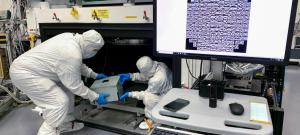
The Molecular Imaging Laboratory at the Beckman Institute for Advanced Science and Technology, with support from the Roy J. Carver Charitable Trust, has added to its imaging repertoire a new ultra-high-performance positron emission tomography and X-ray computed tomography scanner, opening new possibilities for cutting-edge research. PET imaging is a highly...

Cryogenics Airmen Supply Cool Fuel for Climatic Munition Test

During the intense heat of summer and throughout the humid Florida fall, Airmen donned protective gear to handle, manage, and deliver over 19,000 gallons of liquid nitrogen at temperatures below minus 300 degrees Fahrenheit to support a three-month munition test at Eglin Air Force Base. The 96th Logistics Readiness Squadron’s...

NASA’s Cryo Efforts Beyond the Atmosphere

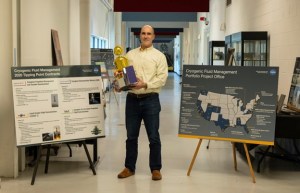
Establishing sustained operations on the moon and Mars presents a multitude of opportunities and challenges NASA has yet to encounter. Many of these activities require new technologies and processes to ensure the agency is prepared for its ambitious Artemis missions and those beyond. One of those challenges is working with cryogenic...

Indirect Cryogenic Grinding Enhances Steel Alloy Properties

The machining process covers many material removal procedures; among them, grinding is one of the most important. Improved grinding is crucial to improve the overall machining process; hence, many researches focused on enhancing the performance of grinding operations by focusing on factors like wear, chattering vibrations, grinding wheel topography, temperature,...

ADVERTISEMENT

Dewar

A dewar is a type of cryostat named after Sir James Dewar, the researcher who first developed the concept of a vacuum insulated container with silvered walls to reflect thermal radiation. Dewar was the first to liquefy hydrogen, and he created the device to store his discovery. The thermos bottle...

Stirling and Gifford-McMahon Cryocoolers

Stirling and Gifford-McMahon (GM) cryocoolers are two of the most commonly used cryocoolers in cryogenics. Both devices have a significant industrial base and operate at a wide range of temperatures and capacities. The thermodynamic cycles for both of these cryocoolers are quite similar. The Stirling cycle consists of a compressor,...

Liquefied Natural Gas (LNG)

A significant commercial application of cryogenics is the liquefaction, transport and storage of natural gas. Liquefied Natural Gas (LNG) is generally 95 percent methane with a few percent ethane and much lower concentrations of propane and butane. LNG liquefies at 111.6 K. Unlike many applications of cryogenics, the motivation for...

Magnetic Levitation

From http://www.superconductors.org. Magnetic-levitation is an application where superconductors perform extremely well. Transport vehicles such as trains can be made to “float” on strong superconducting magnets, virtually eliminating friction between the train and its tracks. Not only would conventional electromagnets waste much of the electrical energy as heat, they would have...

Superconductivity

From Superpower website. History of Superconductivity Superconductivity was discovered in 1911 by the Dutch physicist, Heike Kammerlingh Onnes when he was able to liquefy helium by cooling it to 4 Kelvin, or -452°F. This enabled him to cool other materials close to absolute zero and investigate their electrical properties. He...

Medical Applications of Cryogenics

Neutron Therapy Cryogenics is at the heart of nuclear accelerators. Accelerators such as Fermilab’s Tevatron make neutron therapy for cancer possible. From Fermilab Today 4/20/09: Fermilab currently offers neutron therapy. But staff at Fermilab designed and built the proton accelerator used by the nation’s first hospital-based treatment center to use...

Nuclear Physics

Al Zeller National Superconducting Cyclotron Lab (NSCL) at Michigan State University zeller@nscl.msu.edu Cryogenics has a long history in nuclear physics. The technology has its origins in the use of cold traps for maintaining a vacuum, which is required to prevent beam loss and for generating high voltages used in acceleration....

Need help comparing chest freezers and upright freezers

Currently we use in our Biobank an upright -80 freezer to store all our samples. We are planning to buy a fully automated bio-repository storage that will do the picking of samples under restricted conditions. But in the meantime I foresee that we have to pick the samples manually. The...

Need recommendations for cryogenic vials

I am looking into standardizing our range of bio storage tubes (cryogenic vials). These will be for both blood and tissue samples and their derivatives. Any recommendations, comments on Micronics, Nalgene, Nunc and or others that are suitable for long term -80 C and -196 C storage, DNA/RNA suitable, would...

We need a custom machine for flash freezing of water

We are an ice making company and have started a new project, which is related to flash freezing of water. It is based on cryogenics technology and we need a custom made machine. I would kindly ask you to pass me a few companies who would be interested in such...

Looking for a pump suitable for cold liquids

I would like to construct a small cooling circuit (appr. 50 x 50 cm) pumping liquid at a temperature down to -120°C from a cold reservoir to the specimen to be cooled. The tubes and connections are not a problem, but does somebody know a pump (suction/compression for circulation) suitable...