ADVERTISEMENT

NASA’s Cryo Efforts Beyond the Atmosphere

Establishing sustained operations on the moon and Mars presents a multitude of opportunities and challenges NASA has yet to encounter. Many of these activities require new technologies and processes to ensure the agency is prepared for its ambitious Artemis missions and those beyond. One of those challenges is working with cryogenic...

Indirect Cryogenic Grinding Enhances Steel Alloy Properties

The machining process covers many material removal procedures; among them, grinding is one of the most important. Improved grinding is crucial to improve the overall machining process; hence, many researches focused on enhancing the performance of grinding operations by focusing on factors like wear, chattering vibrations, grinding wheel topography, temperature,...

GenH2 Supplies Cryostat CS500 System to University

GenH2 has signed an agreement with the University of Melbourne to provide the Cryostat CS500 simulation platform for cryogenic and hydrogen R&D projects. GenH2’s Cryostat CS500 system is capable of testing a wide range of thermal insulation systems, materials, composites, or panels under both cryogenic-vacuum conditions and real-world conditions. The University...

Scaling Up Cryogenics for Quantum Computing

As we enter 2024, the field of quantum computing continues to develop rapidly. Accessibility to quantum processing and the scaling of systems are key factors in the growing industry. Cloud-based services offer one potential access route to quantum processing, but systems are also being deployed for customers to host on-premises....

‘First-Ever’ Cryogenic Refueling space Mission Announced

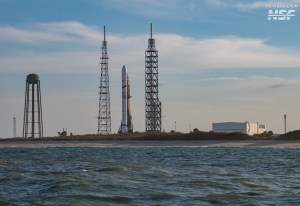
Two space infrastructure specialists, Space Machines Company and Spaceium, have joined forces to embark on what they believe to be the first-ever cryogenic refueling space mission in space in 2025. Under terms of a signed agreement, Canada’s Spaceium will integrate its cryogenic storage technology into Space Machine’s platform. Spaceium will then...

Air Products to Build Europe’s Largest Blue Hydrogen Plant

Air Products announced it will build, own and operate a state-of-the-art carbon capture and carbon dioxide (CO2) treatment facility at its existing hydrogen production plant in Rotterdam, the Netherlands. The facility is expected to be on-stream in 2026, and the resulting “blue” hydrogen product to serve ExxonMobil’s (Esso) Rotterdam refinery...

ADVERTISEMENT

Dewar

A dewar is a type of cryostat named after Sir James Dewar, the researcher who first developed the concept of a vacuum insulated container with silvered walls to reflect thermal radiation. Dewar was the first to liquefy hydrogen, and he created the device to store his discovery. The thermos bottle...

Stirling and Gifford-McMahon Cryocoolers

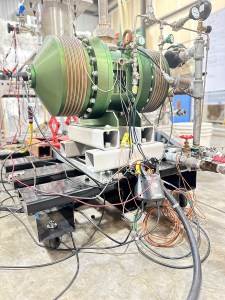
Stirling and Gifford-McMahon (GM) cryocoolers are two of the most commonly used cryocoolers in cryogenics. Both devices have a significant industrial base and operate at a wide range of temperatures and capacities. The thermodynamic cycles for both of these cryocoolers are quite similar. The Stirling cycle consists of a compressor,...

Liquefied Natural Gas (LNG)

A significant commercial application of cryogenics is the liquefaction, transport and storage of natural gas. Liquefied Natural Gas (LNG) is generally 95 percent methane with a few percent ethane and much lower concentrations of propane and butane. LNG liquefies at 111.6 K. Unlike many applications of cryogenics, the motivation for...

Magnetic Levitation

From http://www.superconductors.org. Magnetic-levitation is an application where superconductors perform extremely well. Transport vehicles such as trains can be made to “float” on strong superconducting magnets, virtually eliminating friction between the train and its tracks. Not only would conventional electromagnets waste much of the electrical energy as heat, they would have...

Superconductivity

From Superpower website. History of Superconductivity Superconductivity was discovered in 1911 by the Dutch physicist, Heike Kammerlingh Onnes when he was able to liquefy helium by cooling it to 4 Kelvin, or -452°F. This enabled him to cool other materials close to absolute zero and investigate their electrical properties. He...

Medical Applications of Cryogenics

Neutron Therapy Cryogenics is at the heart of nuclear accelerators. Accelerators such as Fermilab’s Tevatron make neutron therapy for cancer possible. From Fermilab Today 4/20/09: Fermilab currently offers neutron therapy. But staff at Fermilab designed and built the proton accelerator used by the nation’s first hospital-based treatment center to use...

Nuclear Physics

Al Zeller National Superconducting Cyclotron Lab (NSCL) at Michigan State University zeller@nscl.msu.edu Cryogenics has a long history in nuclear physics. The technology has its origins in the use of cold traps for maintaining a vacuum, which is required to prevent beam loss and for generating high voltages used in acceleration....