ADVERTISEMENT

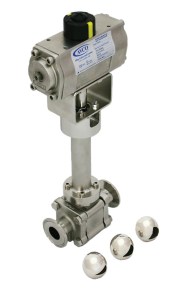
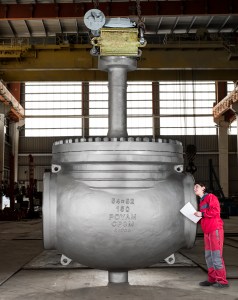
Pioneering High-Performance Valve Solutions

Ampo Poyam Valves (AMPO), with a history spanning nearly six decades, has established itself as a significant player in the realm of highly engineered valves and fluid handling solutions tailored for demanding applications and services. Drawing from its extensive experience, the company has earned a reputation for handling international projects...
Why Are Quantum Technologies So Cool?

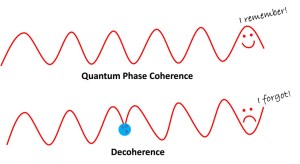
Efforts to build a useful quantum computer are underway, with startup companies competing alongside the big leaders in information technology. Other quantum technologies are already part of our everyday lives, from MRI scanners in hospitals to atomic clocks, which are used to keep precise track of time on GPS satellites...

Cryogenics Impacts Life Sciences

“It’s too hot, it’s too cold.” We have all heard those famous words from family, friends, coworkers or feedback from instrumentation. Whether it is to control temperature in a confined environment, rotating equipment, or bioprocessing, cryogens are utilized throughout industries.  At times, valves are overlooked as an integral part of...

Ovarian Tissue Cryopreservation Offers Hope in Canada

A monumental program centered on ovarian tissue cryopreservation is offering hope to women and girls across Canada. Dr. James Benson, a world-renowned cryobiology expert, leads this transformative initiative. This medical procedure safeguards healthy ovarian tissue before cancer treatments can harm it, ultimately enabling female patients to have biological children in...

ADVERTISEMENT

Joule-Thomson Effect

The Joule-Thomson (JT) effect is a thermodynamic process that occurs when a fluid expands from high pressure to low pressure at constant enthalpy (an isenthalpic process). Such a process can be approximated in the real world by expanding a fluid from high pressure to low pressure across a valve. Under...

Current Leads

One of the challenges of using superconducting magnets is the connection of the magnet to a room temperature power supply. This is accomplished via current leads. The trick is that current leads should ideally have a low heat leak, since they connect room temperature to cryogenic temperature, while at the...

Multilayer Insulation

Multilayer insulation (also referred to as superinsulation) is a key component in the reduction of heat leak to cryogenic systems due to thermal radiation. MLI consists of a series of uncooled reflective surfaces placed in the vacuum space between two surfaces, one warmer than the other. Generally speaking, for ideal...

Air Separation and Liquefaction

by Nils Tellier, PE, President, EPSIM Corporation (CSA CSM) nils@epsim.us All illustrations courtesy EPSIM Corporation Background History of Air Separation and Liquefaction This section builds on a rich history of methods to develop deep refrigeration and cryogenic liquefaction during the 19th Century. You are encouraged to read Cryo Central’s History...

Bose-Einstein Condensate

A Bose-Einstein condensate, first proposed in 1925 by Albert Einstein based on work done by Satyendra Nath Bose (the same Bose from whom the term boson is derived), is a super-cold state of matter in which almost all of the individual atoms have “condensed” down to the lowest possible quantum...

Cold Technology for Pest Control

While it does not reach temperatures cold enough to be called cryogenic, carbon dioxide snow is at the heart of a new way of dealing with unwanted pests. It utilizes a quick freezing process that takes advantage of the properties of carbon dioxide snow and has a number of benefits...

Cryogenic Finishing

The following 3 articles discuss the uses and procedures of various type of cryogenic finishing. 1) By Robin A. Rhodes, Cryogenic Institute of New England, Inc. rrhodes@nitrofreeze.com Cryogenic Deflashing is employed to remove undesired residual mold flash that remains on molded parts after they are removed or ejected from the...

Power usage: cryogenic systems vs. regular refrigerators

A recent project highlighted to me that closed cycle cryogenic cooling systems use far more electrical power to reduce temperatures by a few watts than regular refrigerators. I am sure it must be something to do with the extra difficulty of removing the heat from the liquid nitrogen or similar...

Redundancy strategies for mechanical -80C freezers

I was wondering what kind of redundancy strategies are people using for their mechanical -80C freezers? I am aware of the following. Please add if you are doing something different. 1) 1 Backup freezer for every 10 freezers – Empty and maintained at -80C at all times 2) Backup C02...

Method to move components in a cryogenic environment

Does anyone know of a method with which to reliably move components in a cryogenic environment? We are interested in moving detectors in a cryogenically cooled (2K) vacuum chamber, which is contained within a larger cryostat/isolation vacuum with thermal shields. As the desired horizontal or vertical displacement is between 10...