
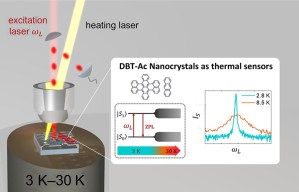
New Thermometer Measures Cryogenic Temperatures at Submicron Scales
Taking the temperature of a sample can be tricky—especially in the regimes of the very small and the very cold. The smaller the sample, the greater the influence the thermometer itself may exert on the measurement. And in the ultracold regime, even tiny amounts of heat can significantly alter the...
SpaceWrap™ is Now AstraWrap™
CSA April Newsletter SponsorHigh-performance, highly reliable, long-lasting storage tanks for transporting hydrogen & helium molecules around the globe.https://www.gardnercryo.com [Contact Jamie Luedtke for Newsletter Sponsorship] Home About Membership Login Calendar Cold Facts Buyer’s Guide News Publications Cryo Careers Resources Donate Join now Log in Cryogenic Society of America, Inc. Twitter Facebook...
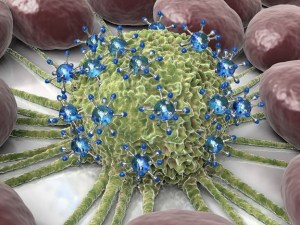
Nanoparticles Show Quick and Easy Way to Target Cancer
Researchers have been exploring the use of injectable nanoparticles that can quickly home in on a microscopic tumor. It’s a novel technique that could pave the way for the early detection of small tumors that may not show up on traditional imaging technologies. In a study published in the October issue of...

Researchers Simplify Switching for Quantum Electronics
A quantum cousin of the Hall effect could open the door to energy-efficient electronics, better sensors, and more-powerful quantum computers. Researchers have now broken a key barrier to its practical application by controlling the phenomenon electrically, rather than magnetically, for the first time. The Hall effect, discovered by physicist Edwin...
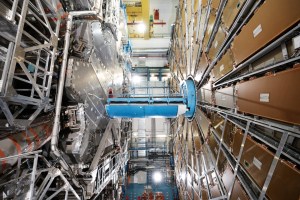
ATLAS Measures Strength of the Strong Force with Record Precision
Binding together quarks into protons, neutrons and atomic nuclei is a force so strong, it’s in the name. The strong force, which is carried by gluon particles, is the strongest of all fundamental forces of nature – the others being electromagnetism, the weak force and gravity. Yet, it’s the least...

Dewar
A dewar is a type of cryostat named after Sir James Dewar, the researcher who first developed the concept of a vacuum insulated container with silvered walls to reflect thermal radiation. Dewar was the first to liquefy hydrogen, and he created the device to store his discovery. The thermos bottle...

Stirling and Gifford-McMahon Cryocoolers
Stirling and Gifford-McMahon (GM) cryocoolers are two of the most commonly used cryocoolers in cryogenics. Both devices have a significant industrial base and operate at a wide range of temperatures and capacities. The thermodynamic cycles for both of these cryocoolers are quite similar. The Stirling cycle consists of a compressor,...

Liquefied Natural Gas (LNG)
A significant commercial application of cryogenics is the liquefaction, transport and storage of natural gas. Liquefied Natural Gas (LNG) is generally 95 percent methane with a few percent ethane and much lower concentrations of propane and butane. LNG liquefies at 111.6 K. Unlike many applications of cryogenics, the motivation for...
Magnets
From “Superconductivity: Present and Future Applications” by the Coalition for the Commercial Application of Superconductors. Particle physics uses accelerators to recreate the conditions of the early universe in an attempt to piece together the complex puzzle of how we got to where we are today. These huge machines are used...
Energy Storage
From “Superconductivity: Present and Future Applications” by the Coalition for the Commercial Application of Superconductors. With power lines increasingly congested and prone to instability, strategic injection of brief bursts of real power can play a crucial role in maintaining grid reliability. Small-scale Superconducting Magnetic Energy Storage (SMES) systems, based on...
Astronomy
ASTRONOMY IN SPACE by Peter V. Mason, retired, Jet Propulsion Laboratory, and Visiting Associate, California Institute of Technology. Pmason@alumni.caltech.edu In thinking about the reasons to perform astronomy in space, we first consider the effect of the earth’s atmosphere. On a scale of decreasing energy, gamma rays, cosmic rays, X-rays and...
Cryocoolers
What is a Cryocooler? A mechanism that can extract heat from an object (cooler) and by doing so draw its temperature down below approximately 150 Kelvin (cryo). — (Courtesy Dr. Willy Gully) What is the difference between a Cryocooler and a Cryostat? A cryostat is any device designed to maintain...
Seeking recommendations for commercial sensors
I would like to measure vibrations in small LHe cryostats. Could anybody recommend commercial sensors which would be suitable for the purpose? I am interested in the frequency range between 1Hz and a couple of KHz, with particular attention to the low frequency side.
Estimating cost of carbon steel, pure helium storage tanks
In order to perform an indicative cost assessment of our helium cryogenic plant (still in the design phase), I need an estimation of the cost of carbon steel room temperature pure helium storage tanks. The storage pressure is 20 bar. Can anyone give me suggestions about how to estimate the...
Supplier of pressure sensor that works down to 4.2 K
In an actual experiment we would like to measure the static pressure in a cryostat in the range between one and four bar. Therefore we are looking for some (more or less) cheap pressure sensors that work in liquid helium in the pressure range up to five bar. Unfortunately all...

Looking for reference/textbook suggestions
Can you suggest some reference textbooks for practical thermodynamics applications in cryogenic fields? I need textbooks with cryogenics calculations and examples, dimensioning procedures, second principle applications in cryogenics, heat load calculations, cryogenic pump application, etc. Do such books exist? Does any similar source of information exist?